
Comparing Custom vs Prefabricated Cabinets: Cost Implications for Your Kitchen Remodeling
Imagine Sarah, a homeowner in Plano, TX, dreaming of a kitchen refresh. She’s been scrolling through Pinterest, admiring sleek designs, but the looming cost of kitchen remodeling has her scratching her head.
- Comparing Custom vs Prefabricated Cabinets: Cost Implications for Your Kitchen Remodeling
Imagine Sarah, a homeowner in Plano, TX, dreaming of a kitchen refresh. - She’s been scrolling through Pinterest, admiring sleek designs, but the looming cost of kitchen remodeling has her scratching her head.
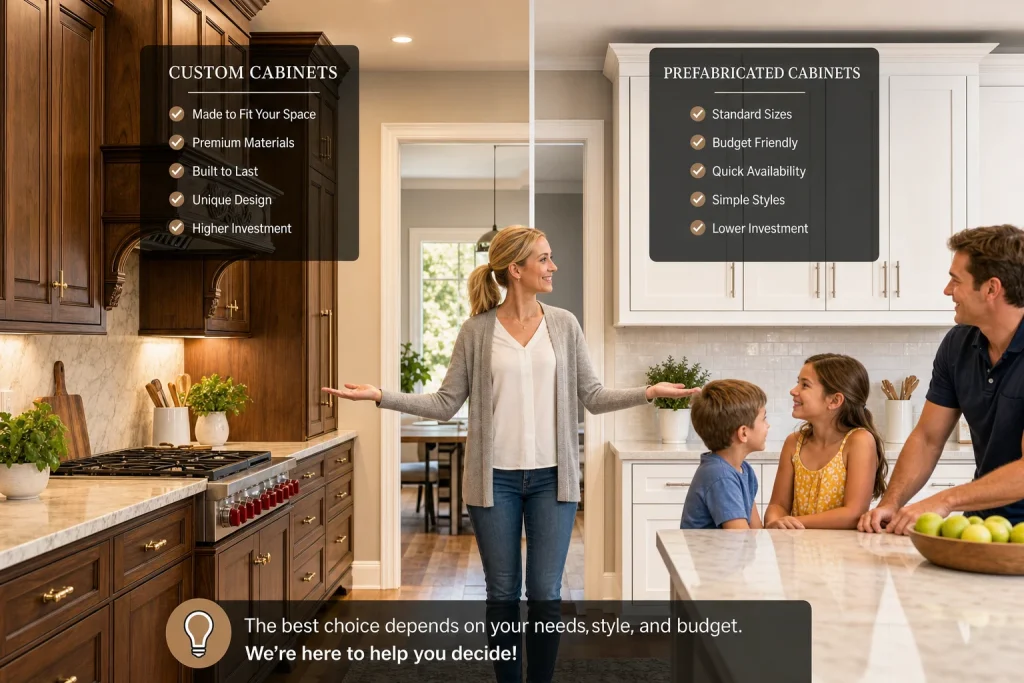
- She’s heard whispers about custom cabinets being astronomically expensive and prefabricated options being “good enough.” The truth is, custom cabinets typically cost 30-50% more than prefabricated options, ranging from $500 to $1,200 per linear foot compared to $150 to $600 per linear foot for prefab.
- This significant difference stems from labor, materials, and design flexibility, with custom offering unparalleled personalization and unique sizing, while prefabricated provides quicker installation and standardized aesthetics.
- Sarah’s dilemma highlights a common friction point: balancing budget with the desire for a truly unique space.
Comparing Custom vs Prefabricated Cabinets: Cost Implications for Your Kitchen Remodeling
Imagine Sarah, a homeowner in Plano, TX, dreaming of a kitchen refresh. She’s been scrolling through Pinterest, admiring sleek designs, but the looming cost of kitchen remodeling has her scratching her head. She’s heard whispers about custom cabinets being astronomically expensive and prefabricated options being “good enough.” The truth is, custom cabinets typically cost 30-50% more than prefabricated options, ranging from $500 to $1,200 per linear foot compared to $150 to $600 per linear foot for prefab. This significant difference stems from labor, materials, and design flexibility, with custom offering unparalleled personalization and unique sizing, while prefabricated provides quicker installation and standardized aesthetics. Sarah’s dilemma highlights a common friction point: balancing budget with the desire for a truly unique space.
DELVING DEEPER INTO THE COST DRIVERS
Understanding why custom cabinets command a higher price tag isn’t just about the sticker shock; it’s about appreciating the intricate dance of craftsmanship and material selection. Think of it like tailoring a suit versus buying one off the rack. A custom suit, much like custom cabinetry, is cut and sewn to your exact measurements, ensuring a flawless fit and finish that simply can’t be replicated by mass production. This personalized approach extends to every facet of the cabinet-making process.
For instance, the labor involved in custom cabinetry is significantly more intensive. Skilled artisans spend hours meticulously cutting, sanding, assembling, and finishing each piece by hand. This isn’t an assembly line operation; it’s a bespoke creation. Consider a kitchen in a historic home in Charleston, SC, where walls are rarely perfectly plumb or square. Custom cabinets can be designed to seamlessly integrate into these unique architectural quirks, requiring precise measurements and on-site adjustments that prefabricated units simply cannot accommodate. This level of detail and problem-solving is baked into the higher labor costs.
“The true cost of custom cabinetry isn’t just in the wood, but in the hands that shape it and the vision that guides it.”
Material choices also play a starring role in the cost drama. With custom cabinets, you’re not limited to a few standard wood species or finishes. You can opt for exotic hardwoods like rift-sawn white oak or rich cherry, specialized veneers, or even eco-friendly bamboo. Furthermore, the internal components can be upgraded to premium hardware, such as soft-close hinges and drawer slides from European manufacturers, which offer superior durability and a smoother user experience. Prefabricated options, while offering a decent range, typically stick to more common materials and hardware to keep production costs down.
THE HIDDEN VALUE OF CUSTOMIZATION
While the initial outlay for custom cabinets might seem daunting, their long-term value often outweighs the upfront investment. Beyond the aesthetic appeal, custom solutions offer unparalleled functionality tailored to your specific lifestyle. Imagine a dedicated pull-out spice rack perfectly sized for your collection of gourmet seasonings, or a cleverly integrated charging station for all your family’s devices, hidden behind a discreet panel. These aren’t just pretty features; they’re practical solutions that enhance daily living.
Consider a busy family in Denver, CO, with a passion for baking. Their custom kitchen might include a dedicated baking station with a marble slab countertop, pull-out shelves for mixers, and deep drawers for flour and sugar bins. A prefabricated kitchen, while functional, would likely require workarounds or compromises to accommodate these specific needs. This ability to design for precise workflows and storage requirements is where custom truly shines, transforming a generic space into a highly efficient culinary command center.
Moreover, custom cabinets are often built to a higher standard of quality and durability. The construction methods typically involve solid wood frames, dovetail joinery, and robust finishes that are designed to withstand years of heavy use. This means fewer repairs and replacements down the line, potentially saving money in the long run. A mini case study involved a homeowner in Portland, OR, who installed custom cabinets in 2005. Despite daily wear and tear from a growing family, the cabinets remain in excellent condition today, requiring only minor touch-ups, a testament to their enduring quality.
Conversely, prefabricated cabinets, while offering a quicker turnaround, often come with a trade-off in terms of longevity. Their construction typically relies on particleboard or MDF (medium-density fiberboard) with laminate or thermofoil finishes. While these materials are cost-effective and can look appealing initially, they are more susceptible to moisture damage, chipping, and delamination over time. For instance, a rental property owner in Phoenix, AZ, opted for prefabricated cabinets in a kitchen renovation to minimize upfront costs. Within five years, several cabinet doors showed signs of peeling thermofoil near the dishwasher, necessitating early replacement. This illustrates that while the initial cost is lower, the total cost of ownership might increase due to a shorter lifespan and potential for earlier replacement or repair.
The installation process also contributes to the overall cost and value proposition. Prefabricated cabinets are designed for straightforward, modular installation, which reduces labor time and expense. They arrive in standard sizes, ready to be mounted. However, if a kitchen has uneven walls or unusual dimensions, installers might need to use fillers or custom trim pieces to bridge gaps, which can sometimes look less integrated. Custom cabinets, on the other hand, are built to fit the exact contours of your kitchen. The installation often involves more skilled labor and precise adjustments on-site, ensuring a seamless, built-in appearance. This meticulous fitting eliminates unsightly gaps and maximizes every inch of available space, a crucial advantage in smaller kitchens or those with challenging layouts, such as a galley kitchen in a historic brownstone in Boston, MA.
Ultimately, the decision between custom and prefabricated cabinets hinges on a careful evaluation of your budget, aesthetic aspirations, and long-term functional needs. While prefabricated options offer an accessible entry point into kitchen remodeling, providing a decent upgrade for many homeowners, custom cabinetry represents an investment in enduring quality, personalized design, and optimized functionality. The higher initial expenditure for custom often translates into a kitchen that not only perfectly reflects your style but also enhances your daily life and potentially increases your home’s resale value due to its superior craftsmanship and bespoke features. Data from a 2022 industry report suggests that kitchens with custom cabinetry can see an average return on investment of 70-80% at resale, compared to 50-60% for those with standard prefabricated units, highlighting the long-term financial benefits.
Maximizing Your Investment in Kitchen Remodeling
When considering the significant cost of kitchen remodeling, it’s essential to look beyond the immediate price tag and evaluate the overall value and longevity of your choices. Opting for custom cabinets, despite their higher initial outlay, can be a strategic investment that pays dividends in both daily enjoyment and potential resale value. The ability to dictate every detail, from the wood species and finish to the internal storage solutions and hardware, ensures that your kitchen is not just a functional space but a true reflection of your personal style and operational needs. This level of personalization is particularly appealing to discerning buyers who value unique, high-quality features that stand out from standard offerings.
For instance, a homeowner in San Francisco, CA, with a compact kitchen, might find custom cabinets invaluable for maximizing storage in an otherwise constrained area. Custom designs can incorporate narrow pull-out pantries, corner solutions, and vertical storage that prefabricated units simply cannot match, effectively adding square footage through intelligent design. This optimization of space is a tangible benefit that enhances daily living and can be a significant selling point. Furthermore, the robust construction methods and premium materials used in custom cabinetry contribute to a longer lifespan, reducing the need for premature replacements or costly repairs. This durability means your kitchen will maintain its aesthetic appeal and functionality for decades, offering a superior return on your investment compared to options that may degrade more quickly.
Conversely, if your budget is the primary driver and you prioritize speed and affordability, prefabricated cabinets offer a viable solution. They provide a quick and relatively inexpensive way to update a kitchen’s appearance, making them suitable for rental properties, starter homes, or situations where a rapid refresh is needed. While they may not offer the same level of customization or material quality, advancements in manufacturing have led to a wider array of styles and finishes, making them more aesthetically pleasing than in years past. However, it’s crucial to understand their limitations in terms of fit, finish, and long-term durability. A homeowner in Austin, TX, looking to quickly flip a property, might choose prefabricated cabinets to keep renovation costs low and accelerate the sale process, accepting the trade-off in bespoke features for a faster, more budget-friendly update.
Ultimately, the decision between custom and prefabricated cabinets for your kitchen remodeling project is a personal one, influenced by your financial capacity, design preferences, and long-term goals for your home. If you envision a kitchen that is a unique masterpiece, perfectly tailored to your lifestyle and built to last, custom cabinetry is the clear choice. If you need a functional, attractive update on a tighter budget and quicker timeline, prefabricated options can certainly meet those needs. The key is to weigh the initial cost against the enduring value, functionality, and aesthetic satisfaction each option provides. Consider how long you plan to stay in your home, your daily kitchen usage, and the overall architectural style of your property to make the most informed decision.
Crafting Your Ideal Kitchen: What’s Your Vision?
As you navigate the choices for your kitchen, reflect on what truly matters for your daily life and future aspirations. Do you dream of a culinary haven where every utensil has its designated, perfectly fitted spot, or a stylish, functional space that offers a fresh look without breaking the bank? Your vision for the heart of your home should guide your investment, ensuring that the cost of kitchen remodeling aligns with your expectations for both immediate satisfaction and lasting value.
Bottom Line: Custom cabinets typically cost 30-50% more than prefabricated options due to superior materials, intensive labor, and unparalleled design flexibility, offering bespoke solutions and greater longevity. While prefabricated cabinets provide a quicker, more affordable update with standardized aesthetics, custom options deliver higher quality, tailored functionality, and a stronger long-term return on investment for your kitchen remodeling project.
Frequently Asked Questions
What factors most influence the cost of kitchen remodeling?
The primary factors influencing kitchen remodeling costs are cabinet choice (custom vs. prefabricated), material quality for countertops and flooring, appliance upgrades, and labor rates. Custom cabinets and high-end finishes significantly increase expenses, while basic updates with standard materials keep costs lower.
How much more expensive are custom cabinets compared to prefabricated ones?
Custom cabinets typically cost 30-50% more than prefabricated options. This difference stems from personalized design, higher quality materials, and the skilled labor involved in their bespoke creation, ranging from $500-$1,200 per linear foot compared to $150-$600 for prefab.
Do custom cabinets increase home value more than prefabricated cabinets?
Yes, custom cabinets generally increase home value more significantly than prefabricated options. Their superior quality, durability, and tailored design appeal to buyers, often yielding a higher return on investment at resale, estimated at 70-80% compared to 50-60% for prefab.