
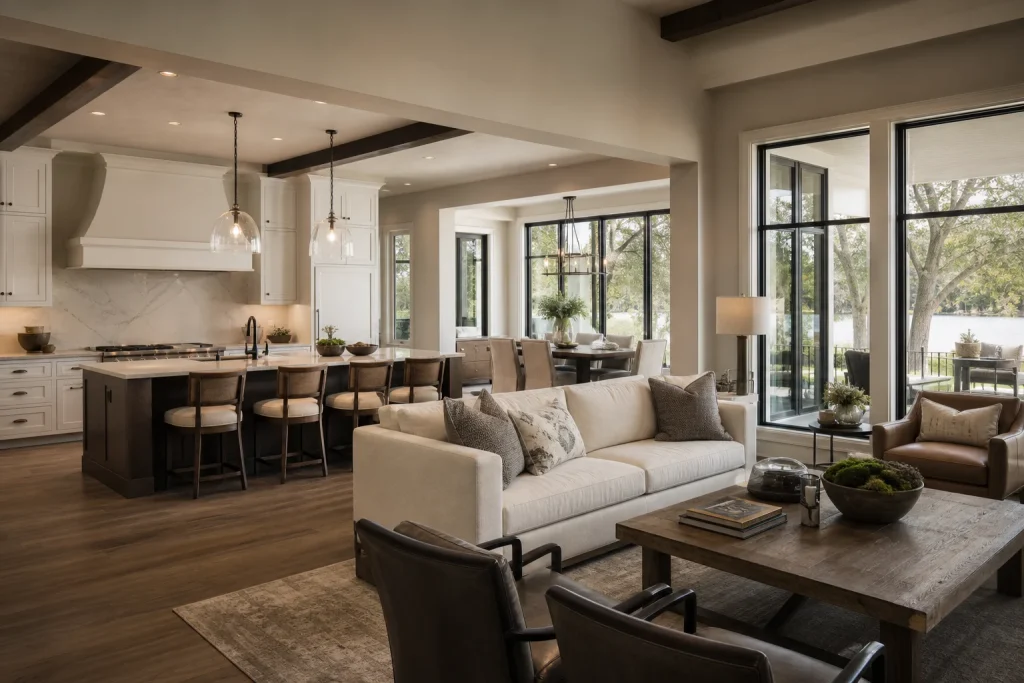
Designing effective luxury home floor plans is crucial for maximizing both entertaining potential and comfortable family living, focusing on open-concept layouts, strategic zoning, and seamless indoor-outdoor transitions. These plans typically integrate expansive great rooms, gourmet kitchens with large islands, and dedicated entertainment zones like media…
- An exceptional luxury home floor plan is characterized by its thoughtful integration of aesthetics, functionality, and advanced technological considerations, moving beyond mere square footage to create an environment that enhances daily life.
- Beyond the foundational principles, specific elements consistently appear in the most sought-after luxury home floor plans.
- Modern luxury home floor plans increasingly incorporate elements that promote wellness and sustainability, reflecting a growing awareness among homeowners about health and environmental impact.
- When embarking on the journey of designing a luxury home floor plan, it is essential to move beyond generic ideas and truly envision how your family will live and thrive within the space.
- The primary goal is to create a living environment that maximizes both entertaining potential and comfortable family living.
Luxury Home Floor Plans: Maximizing Space and Flow for Entertaining and Family Living in luxury home building
Designing effective luxury home floor plans is crucial for maximizing both entertaining potential and comfortable family living, focusing on open-concept layouts, strategic zoning, and seamless indoor-outdoor transitions. These plans typically integrate expansive great rooms, gourmet kitchens with large islands, and dedicated entertainment zones like media rooms or wine cellars, ensuring every square foot contributes to a sophisticated yet functional lifestyle. For example, a well-designed plan for a 4,000-square-foot luxury home in Plano, TX, might feature a central living area that flows directly into a covered patio with an outdoor kitchen, creating an effortless environment for hosting gatherings while maintaining distinct private spaces for family members. This approach to luxury home building prioritizes both aesthetic appeal and practical utility, reflecting a growing demand for homes that adapt to diverse social and personal needs.
What Defines an Exceptional Luxury Home Floor Plan? luxury home building
An exceptional luxury home floor plan is characterized by its thoughtful integration of aesthetics, functionality, and advanced technological considerations, moving beyond mere square footage to create an environment that enhances daily life. It prioritizes open sightlines, natural light, and a logical flow between spaces, ensuring that each area serves a distinct purpose while contributing to the home’s overall harmony. For instance, a truly luxurious design often incorporates a grand foyer that immediately establishes the home’s character, leading into a spacious great room with soaring ceilings and expansive windows that frame picturesque views. According to a 2023 survey by the National Association of Home Builders, 85% of luxury homeowners prioritize open-concept living areas, emphasizing the desire for interconnected spaces that facilitate both large-scale entertaining and intimate family moments. This design philosophy extends to private quarters, where master suites are often envisioned as serene retreats, complete with spa-like bathrooms, oversized walk-in closets, and private balconies.
Beyond the visual appeal, the best luxury floor plans demonstrate a deep understanding of how families live and interact within their homes. This includes strategic placement of utility areas, such as a well-appointed mudroom near the garage entrance or a discreetly located laundry room, minimizing disruption to primary living spaces. Consider a family with young children: a floor plan might include a dedicated playroom adjacent to the kitchen, allowing parents to supervise while preparing meals. For those who frequently entertain, a butler’s pantry or a secondary prep kitchen can be invaluable, keeping catering activities separate from guest areas. In our experience at NovaStar Construction, working with clients across DFW, we’ve observed that homeowners increasingly request flexible spaces that can adapt over time, such as a den that can transition from a home office to a guest bedroom, reflecting a long-term investment in their luxury home building project.
Furthermore, an exceptional luxury floor plan anticipates future needs and integrates smart home technology seamlessly from the outset. This means planning for integrated wiring for lighting control, climate systems, security, and entertainment, rather than retrofitting solutions later. For example, a modern luxury home might feature automated shades that adjust with the sun’s position, or a whole-home audio system that can be controlled from a central tablet. The layout itself can optimize energy efficiency, with strategic window placement for passive solar heating or cooling, and zones that can be independently climate-controlled. These considerations not only enhance comfort and convenience but also contribute to the long-term value and sustainability of the property, a key factor for discerning homeowners in the Plano and broader DFW area.
Key Elements of a Well-Designed Luxury Floor Plan
Beyond the foundational principles, specific elements consistently appear in the most sought-after luxury home floor plans. These features are not merely add-ons but are integrated into the very fabric of the design, enhancing both daily living and special occasions. One such element is the strategic placement of primary suites on the main level, offering convenience and accessibility, particularly for multi-generational families or those planning to age in place. This thoughtful positioning ensures privacy while maintaining easy access to central living areas, a significant advantage over designs that relegate all bedrooms to an upper floor.
Another crucial component is the inclusion of dedicated zones for various activities. This goes beyond just a media room; it encompasses spaces like a home gym, a dedicated craft room, or a quiet study separate from the main home office. For instance, a luxury floor plan might feature a “flex room” near the entry that can serve as a formal dining room, a library, or even a music room, adapting to the homeowner’s evolving interests. This adaptability is a hallmark of true luxury, allowing the home to grow and change with its occupants without requiring extensive renovations.
Optimizing Flow and Connectivity
The seamless transition between indoor and outdoor spaces is paramount in luxury home design. Large sliding glass doors, expansive windows, and covered patios with outdoor kitchens and living areas extend the usable footprint of the home, blurring the lines between interior comfort and natural beauty. Imagine a scenario where a family hosts a summer barbecue: guests can effortlessly move from the gourmet kitchen to the outdoor dining area, then relax by a fire pit, all within a cohesive and beautifully designed environment. This integration is not just about aesthetics; it significantly enhances the home’s functionality and entertainment capabilities, making it feel larger and more connected to its surroundings.
Furthermore, the connectivity within the interior spaces themselves is meticulously planned. Open sightlines from the kitchen to the great room and dining area foster a sense of togetherness, allowing family members to interact even when engaged in different activities. However, this openness is balanced with the provision of private retreats. For example, a well-designed luxury home might feature a “pocket office” or a small, enclosed study off the main living area, offering a quiet space for focused work without feeling isolated. This balance between communal and private zones is essential for creating a home that supports both lively gatherings and peaceful solitude.
Integrating Wellness and Sustainability
Modern luxury home floor plans increasingly incorporate elements that promote wellness and sustainability, reflecting a growing awareness among homeowners about health and environmental impact. This includes designing for optimal natural light and ventilation, which not only reduces energy consumption but also enhances mood and well-being. Consider a home with strategically placed skylights and operable windows that allow for cross-ventilation, minimizing the need for artificial lighting and air conditioning during milder months. Such features are not just eco-friendly; they create a more comfortable and invigorating living environment.
Beyond passive design strategies, active wellness features are also becoming standard. This might involve dedicated spaces for meditation or yoga, or even the integration of advanced air and water filtration systems throughout the home. For example, a luxury floor plan might include a spa-like bathroom with a large soaking tub, a steam shower, and ample space for personal care rituals, transforming a functional area into a sanctuary. These elements underscore a holistic approach to luxury, where the home supports not just a lavish lifestyle, but also the physical and mental health of its inhabitants.
The integration of sustainable practices extends to material selection, favoring locally sourced, recycled, or rapidly renewable resources where possible. For instance, a luxury home might feature reclaimed wood flooring, low-VOC paints, or energy-efficient windows with advanced glazing, all contributing to a healthier indoor environment and reduced ecological footprint. These choices are not merely aesthetic; they represent a conscious decision to invest in the long-term health of both the occupants and the planet. According to a 2022 report by the U.S. Green Building Council, homes with green certifications command an average of 9% higher resale value, indicating that sustainability is increasingly a driver of market demand in the luxury sector. This trend is particularly evident in areas like DFW, where homeowners are seeking properties that offer both opulence and environmental responsibility.
Envisioning Your Ideal Luxury Home Floor Plan
When embarking on the journey of designing a luxury home floor plan, it is essential to move beyond generic ideas and truly envision how your family will live and thrive within the space. This involves a deep dive into daily routines, entertainment preferences, and long-term aspirations. Consider the practicalities: how many cars need garage space, do you require a dedicated pet washing station, or is a soundproof home theater a non-negotiable? For example, a family with a passion for culinary arts might prioritize a professional-grade kitchen with a walk-in pantry and a separate scullery, while a family of avid readers might desire a multi-level library with custom shelving and a cozy reading nook. The goal is to create a blueprint that is not just beautiful, but profoundly personal and functional, reflecting the unique rhythm of your life. This bespoke approach ensures that every design decision contributes to a home that feels tailor-made, a hallmark of true luxury home building.
The process of translating these visions into a tangible floor plan often begins with extensive consultations with architects and designers who specialize in luxury residences. These professionals can offer insights into optimizing natural light, maximizing views, and incorporating advanced systems that enhance comfort and efficiency. They can also guide you through the complexities of local zoning laws and building codes, ensuring that your dream home is not only aesthetically pleasing but also structurally sound and compliant. For instance, in the Plano area, specific regulations might influence the permissible height of a structure or the setback from property lines, factors that must be considered early in the design phase. Engaging with experienced professionals from the outset can prevent costly revisions and ensure a smoother construction process, ultimately delivering a home that exceeds expectations in both form and function.
Ultimately, an exceptional luxury home floor plan is a living document, evolving through collaboration and thoughtful consideration. It balances grandeur with intimacy, public spaces with private retreats, and cutting-edge technology with timeless design principles. The result is a home that not only impresses but also nurtures, providing a backdrop for a life well-lived. Whether it’s a sprawling estate designed for grand galas or a serene sanctuary focused on family well-being, the underlying principle remains the same: to create a space that is perfectly attuned to the desires and needs of its occupants, embodying the pinnacle of luxury home building.
What to Consider When Planning Your Luxury Home
When planning your luxury home, several key considerations will shape the effectiveness and enjoyment of your floor plan. First, assess your lifestyle and future needs. Do you frequently host large gatherings, or do you prefer intimate family dinners? Are you planning for children, aging parents, or a growing collection of hobbies? These factors will influence the number and type of dedicated spaces, such as guest suites, home offices, or specialized workshops. Second, evaluate the specific characteristics of your chosen lot. The orientation of the property, existing trees, and potential views should all inform the placement of windows, outdoor living areas, and even the main entrance. A well-designed plan leverages these natural assets, maximizing sunlight in living areas and framing picturesque vistas. Third, consider the integration of smart home technology from the ground up. Planning for automation, security, and entertainment systems during the design phase is far more efficient and effective than retrofitting later, ensuring seamless operation and aesthetic integration. Finally, prioritize sustainability and energy efficiency. Incorporating features like high-performance insulation, energy-efficient appliances, and passive solar design not only reduces long-term operating costs but also contributes to a healthier and more comfortable living environment.
Bottom Line: An exceptional luxury home floor plan seamlessly integrates aesthetics, functionality, and advanced technology, prioritizing open-concept living, strategic zoning, and indoor-outdoor flow to enhance daily life and adapt to evolving needs.
Frequently Asked Questions
What is the primary goal of a luxury home floor plan?
The primary goal is to create a living environment that maximizes both entertaining potential and comfortable family living. This involves balancing expansive communal areas with private retreats, ensuring every space contributes to a sophisticated yet functional lifestyle.
How do luxury floor plans incorporate technology?
Luxury floor plans integrate smart home technology from the outset, planning for integrated wiring for lighting, climate control, security, and entertainment systems. This ensures seamless operation, aesthetic integration, and often contributes to energy efficiency.
Why is indoor-outdoor flow important in luxury homes?
Seamless indoor-outdoor flow extends the usable living space, blurring the lines between interior comfort and natural beauty. It enhances entertainment capabilities and makes the home feel larger and more connected to its surroundings, often through large glass doors and covered patios.
What role does sustainability play in modern luxury home design?
Sustainability is increasingly vital, with designs incorporating optimal natural light, ventilation, and eco-friendly materials. This reduces energy consumption, enhances occupant well-being, and contributes to the long-term value and environmental responsibility of the property.