
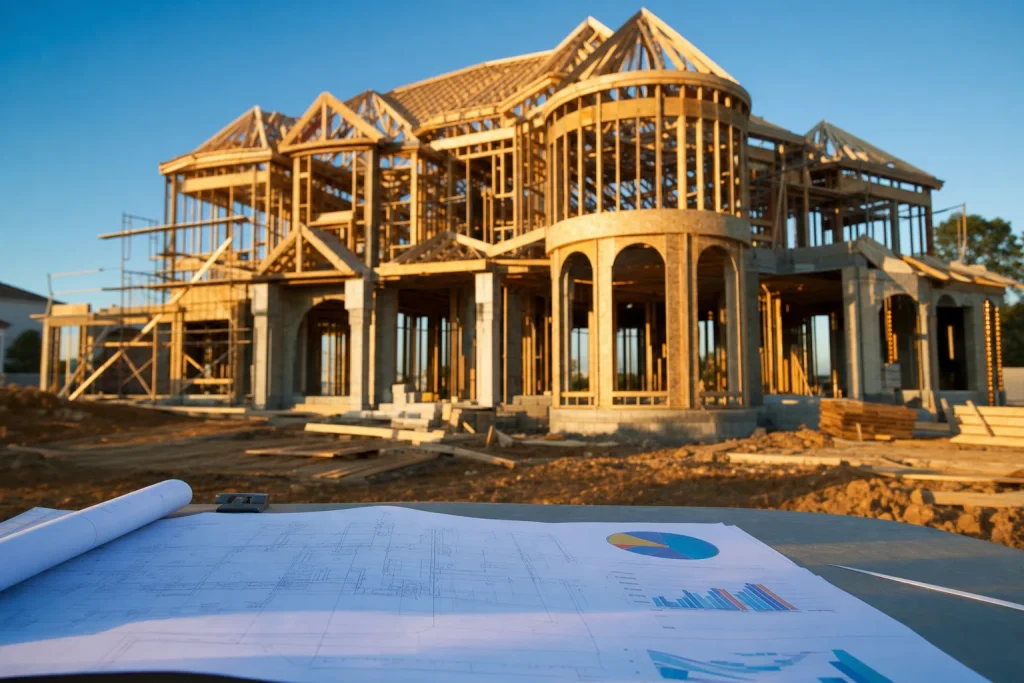
For individuals embarking on a luxury home building project, securing the right financing is paramount. The most suitable construction loans for high-value properties typically include one-time close construction-to-permanent loans, two-time close construction loans, and specialized portfolio loans offered by private banks or credit unions.
- One-time close loans streamline the financing process, converting construction loans to permanent mortgages seamlessly.
- The financial structure of a luxury home construction loan is significantly influenced by its interest rate and the associated draw schedule.
- Financing a luxury home build typically involves more stringent equity requirements compared to standard residential construction.
- Choosing the right lender for a luxury home building project is as crucial as selecting the architect or builder.
- Luxury home construction loans generally require a higher equity contribution, often ranging from 25% to 40% of the total project cost.
Best Construction Loans for Luxury Homes: Comparing Options for High-Value Properties for luxury home building
For individuals embarking on a luxury home building project, securing the right financing is paramount. The most suitable construction loans for high-value properties typically include one-time close construction-to-permanent loans, two-time close construction loans, and specialized portfolio loans offered by private banks or credit unions. One-time close loans simplify the process by converting directly into a permanent mortgage upon completion, reducing closing costs and paperwork. Two-time close loans involve separate closings for the construction phase and the permanent mortgage, offering more flexibility in lender choice for the permanent financing. Portfolio loans are often tailored for unique, high-net-worth projects, providing custom terms and higher loan amounts that traditional lenders might not offer. Understanding the nuances of each option, including interest rates, draw schedules, and equity requirements, is crucial for managing the significant investment involved in constructing a bespoke residence.
Key Insights
- One-time close loans streamline the financing process, converting construction loans to permanent mortgages seamlessly.
- Two-time close loans offer flexibility, allowing borrowers to shop for the best permanent mortgage rates after construction.
- Portfolio loans provide customized solutions for unique, high-value properties, often with more flexible underwriting.
- Understanding draw schedules and interest rate structures is critical for managing project cash flow effectively.
- Lender experience with luxury construction projects is a key factor in successful financing.
UNDERSTANDING INTEREST RATES AND DRAW SCHEDULES
The financial structure of a luxury home construction loan is significantly influenced by its interest rate and the associated draw schedule. Interest rates for construction loans are often variable, tied to a benchmark like the prime rate or SOFR (Secured Overnight Financing Rate), plus a margin. This means the rate can fluctuate throughout the construction period, impacting the total cost of borrowing. Some lenders may offer an option to lock in a rate for a certain period, or even for the entire construction phase, which can provide budget certainty. It’s essential to compare not just the initial rate, but also the caps on rate increases and the frequency of adjustments. A slight difference in the margin can translate into substantial savings or additional costs over the life of a multi-million dollar loan.
Draw schedules dictate when and how funds are disbursed to the builder. These schedules are typically tied to specific construction milestones, such as foundation completion, framing, rough-ins (plumbing, electrical, HVAC), drywall, and final finishes. Before each draw, the lender will usually send an inspector to verify that the work has been completed to satisfaction and that the project is progressing according to the approved plans and budget. For high-value properties, these inspections are often more rigorous, ensuring the quality and adherence to bespoke specifications. A well-structured draw schedule protects both the borrower and the lender, ensuring that funds are released only as work is performed, thereby mitigating risk and maintaining project momentum. Delays in inspections or approvals can, however, impact cash flow, so understanding the lender’s process for draw requests is crucial.
EQUITY REQUIREMENTS AND LOAN-TO-VALUE RATIOS
Financing a luxury home build typically involves more stringent equity requirements compared to standard residential construction. Lenders often require a higher down payment or a greater percentage of equity in the land to mitigate their risk on high-value projects. While a conventional construction loan might require 20% down, a luxury home construction loan could demand 25% to 40% equity. This equity can come from cash, the value of the land if it’s already owned outright, or a combination thereof. For instance, if a borrower owns a prime piece of land valued at $1 million and the total construction cost is $3 million, they might only need to bring an additional $200,000 in cash to meet a 30% equity requirement for a $2 million loan.
The loan-to-value (LTV) ratio is a critical metric in this context, representing the loan amount as a percentage of the property’s appraised value upon completion. For luxury properties, lenders are particularly focused on the “as-completed” appraised value, which considers the quality of materials, custom features, and the prestige of the location. A lower LTV ratio signifies less risk for the lender and often translates into more favorable loan terms. Borrowers should be prepared for a thorough appraisal process that accounts for the unique aspects of a high-end custom build, ensuring the projected value supports the requested loan amount. Understanding these equity requirements upfront helps in accurately budgeting for the project and selecting a lender whose criteria align with the borrower’s financial capacity.
Beyond the initial equity, lenders also scrutinize the borrower’s overall financial health, including their debt-to-income ratio and liquidity. For a multi-million dollar luxury home, a borrower might need to demonstrate substantial liquid assets, often equivalent to several months or even a year of mortgage payments, to assure the lender of their capacity to manage the loan during and after construction. This is particularly true for portfolio loans, where underwriting can be more flexible but still demands a robust financial profile. For example, a high-net-worth individual seeking a $5 million construction loan might be expected to show $1 million or more in readily accessible funds, separate from the equity invested in the project. This financial scrutiny is a standard practice in high-value lending, reflecting the significant capital outlay and inherent risks associated with bespoke construction.
The appraisal process for luxury properties is distinct, often involving specialized appraisers with experience in high-end real estate. These professionals consider not only comparable sales but also the unique architectural plans, custom finishes, and premium amenities that define a luxury home. They might factor in the cost of imported materials, smart home technology integrations, elaborate landscaping, and bespoke interior design elements. The goal is to arrive at an accurate “as-completed” value that justifies the loan amount and provides a clear picture of the asset’s worth. A discrepancy between the projected value and the appraisal can lead to a reduction in the loan amount or a requirement for the borrower to inject more equity, underscoring the importance of realistic budgeting and working with an experienced builder and architect who understand the valuation process for high-value residences.
Navigating Lender Selection for Your Luxury Home Building Project
Choosing the right lender for a luxury home building project is as crucial as selecting the architect or builder. Not all financial institutions possess the expertise or product offerings necessary to effectively finance high-value custom homes. Traditional banks may have rigid lending criteria that do not accommodate the unique aspects of luxury construction, such as extended timelines, specialized materials, or complex architectural designs. Instead, borrowers should seek out lenders with a proven track record in this niche market. These often include private banks, regional banks with strong local ties, or credit unions that offer portfolio lending options. Such institutions are typically more adept at understanding the intricacies of bespoke projects and can provide the personalized service and flexible terms that high-net-worth individuals require. For instance, a lender specializing in luxury real estate might have a dedicated team of loan officers who understand the nuances of custom home appraisals and draw schedules, streamlining a process that can otherwise be fraught with delays.
When evaluating potential lenders, it is vital to inquire about their experience with projects similar in scope and value to your own. Ask for references from previous luxury home clients and investigate their reputation within the high-end construction community. A lender’s familiarity with the local market for luxury properties is also a significant advantage, as they will have a better grasp of regional construction costs, property values, and preferred contractors. For example, a lender in Aspen, Colorado, would likely have extensive experience with multi-million dollar mountain homes, understanding the specific challenges and valuation metrics unique to that market, whereas a lender focused on suburban tract housing might not. Furthermore, consider the lender’s capacity for communication and responsiveness. Given the dynamic nature of construction, timely responses to draw requests and clear communication regarding project milestones are paramount. A lender that offers a dedicated point of contact throughout the construction phase can significantly reduce stress and keep the project on schedule, which is particularly valuable when managing a multi-year build.
Beyond experience and communication, scrutinize the specific loan products offered and how they align with your financial strategy. Compare the interest rate structures, including whether they offer fixed-rate options or competitive variable rates with reasonable caps. Understand the fees associated with each loan, such as origination fees, appraisal fees, and inspection costs, as these can add up significantly on a high-value loan. Some lenders may offer incentives or reduced fees for clients with established banking relationships or substantial assets under management. It is also prudent to assess their flexibility regarding changes to the construction plan or budget, as unforeseen circumstances can arise during a complex build. A lender willing to work collaboratively to adjust terms or draw schedules, within reason, can be an invaluable partner. For example, if a unique material becomes unavailable and a more expensive alternative is required, a flexible lender might be more accommodating in adjusting the budget, provided the overall project value remains sound. This level of partnership is often a hallmark of lenders who truly specialize in luxury home construction financing.
Preparing for Your Luxury Home Building Loan Application
The application process for a luxury home construction loan demands meticulous preparation and a comprehensive presentation of your financial standing and project details. Lenders will require an extensive array of documents, including detailed architectural plans, a comprehensive construction budget broken down by line item, and a timeline for completion. You will also need to provide personal financial statements, tax returns for several years, proof of income, and documentation of all assets and liabilities. For high-net-worth individuals, this might also include trust documents, investment portfolios, and business financial statements. The more thoroughly organized and complete your application package, the smoother and faster the approval process is likely to be. A common pitfall is underestimating the level of detail required for the construction budget; lenders need to see a realistic and well-supported cost breakdown to ensure the project is viable and that funds will be disbursed appropriately. For instance, a budget that simply lists “finishes” at a lump sum of $500,000 will likely be rejected, whereas one detailing specific flooring, cabinetry, fixture, and appliance costs will be well-received.
Engaging a reputable and experienced builder and architect is not only crucial for the construction itself but also significantly strengthens your loan application. Lenders often have approved lists of builders or prefer to work with contractors who have a proven track record of successfully completing high-end projects. The builder’s reputation, financial stability, and insurance coverage will be thoroughly vetted by the lender. Similarly, the architect’s plans must be detailed, compliant with local building codes, and reflect a design that is both aesthetically pleasing and structurally sound. A well-regarded team lends credibility to your project and assures the lender that the construction will be managed professionally and completed to a high standard. For example, a builder with a portfolio of award-winning luxury homes and strong financial statements will instill far more confidence in a lender than a newer contractor with limited experience in high-value builds. This due diligence on the part of the lender protects their investment and ensures the project’s success.
Finally, understanding the appraisal process for the “as-completed” value is paramount. Before applying, it can be beneficial to have a preliminary discussion with an appraiser experienced in luxury properties to get a realistic estimate of your proposed home’s future value. This helps in setting a realistic budget and loan amount, avoiding potential shortfalls later in the process. Be prepared to articulate the unique features and high-quality materials that will contribute to the property’s value. For instance, if your plans include a geothermal heating system, custom-milled cabinetry, or a smart home automation system, ensure these are clearly documented and their value proposition is understood. The lender’s appraiser will use these details to determine the loan-to-value ratio, which directly impacts the loan terms. A proactive approach to understanding and influencing the appraisal process can significantly improve your chances of securing favorable financing for your luxury home building endeavor.
Bottom Line: Securing the best construction loan for a luxury home building project involves carefully comparing one-time close, two-time close, and portfolio loan options, understanding variable interest rates and draw schedules, and meeting higher equity requirements, all while partnering with a lender experienced in high-value custom builds.
Frequently Asked Questions
What is the typical equity requirement for a luxury home construction loan?
Luxury home construction loans generally require a higher equity contribution, often ranging from 25% to 40% of the total project cost. This can be satisfied through cash, the value of owned land, or a combination, reflecting the increased risk associated with high-value properties.
How do draw schedules work for luxury home construction?
Draw schedules disburse funds at specific construction milestones, such as foundation or framing completion. Lenders typically conduct rigorous inspections before each draw to verify work progress and quality, ensuring funds are released only as work is performed according to approved plans.
Why are portfolio loans often preferred for luxury home building?
Portfolio loans, offered by private banks or credit unions, are often preferred for luxury home building due to their customized terms, higher loan amounts, and more flexible underwriting. They can accommodate unique, high-net-worth projects that traditional lenders might not finance.