
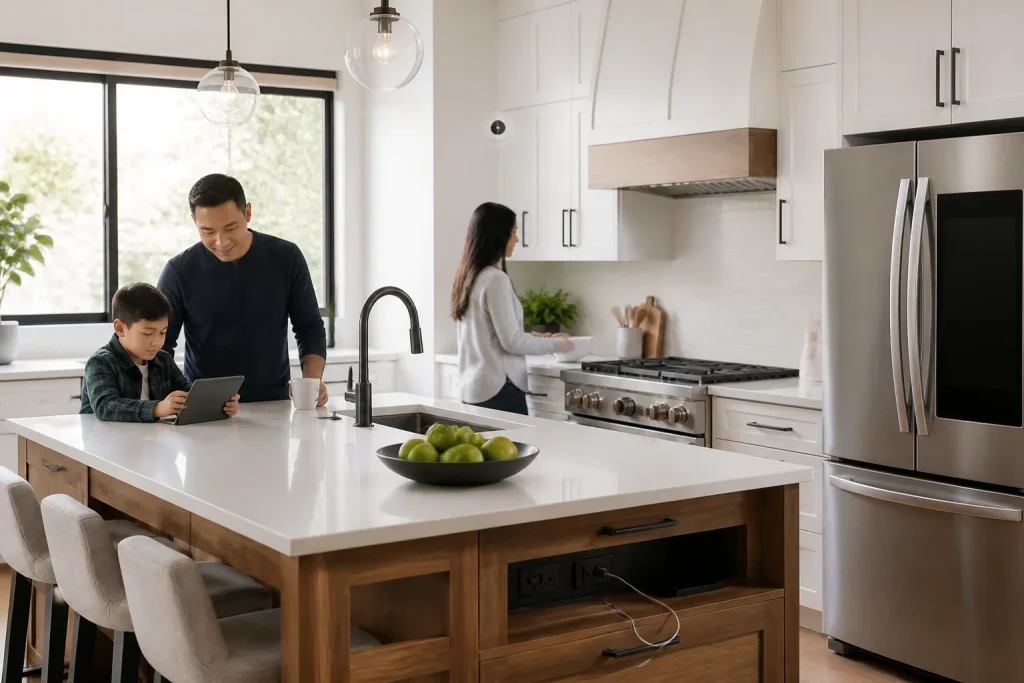
Remodeling a kitchen in 2026 offers significant advantages, primarily enhancing home value, improving functionality, and boosting energy efficiency. Homeowners can expect an average return on investment (ROI) of 50-70% for a minor to mid-range kitchen remodel, according to industry norms as of this year, making…
- A kitchen remodel significantly enhances a home's market value and overall appeal, making it a prime investment for homeowners considering future resale.
- To truly maximize the benefits of remodeling a kitchen in 2026, homeowners should approach the project with a clear vision and strategic planning.
- Homeowners can expect an average return on investment (ROI) of 50-70% for a minor to mid-range kitchen remodel in 2026.
What Are The Benefits Of Remodeling A Kitchen In 2026?
Remodeling a kitchen in 2026 offers significant advantages, primarily enhancing home value, improving functionality, and boosting energy efficiency. Homeowners can expect an average return on investment (ROI) of 50-70% for a minor to mid-range kitchen remodel, according to industry norms as of this year, making it a sound financial decision. Beyond monetary gains, a well-planned renovation can dramatically improve daily living by optimizing workflow, increasing storage, and integrating modern appliances that simplify meal preparation and entertaining. Furthermore, upgrading to contemporary, energy-efficient appliances and lighting can lead to substantial savings on utility bills, aligning with current sustainability trends and reducing a household’s carbon footprint. These combined benefits make a kitchen remodel a compelling project for homeowners looking to invest in their property and quality of life.
How Does a Kitchen Remodel Enhance Home Value and Appeal? the benefits of remodeling a kitchen in 2026
A kitchen remodel significantly enhances a home’s market value and overall appeal, making it a prime investment for homeowners considering future resale. Real estate professionals consistently highlight the kitchen as one of the most critical rooms for potential buyers, often serving as the focal point during property viewings. A modern, well-maintained kitchen signals to buyers that the home has been cared for and is move-in ready, reducing perceived future expenses. For instance, a 2023 report by the National Association of Realtors indicated that kitchen upgrades consistently rank among the top projects for increasing buyer interest and offer prices. This is particularly true for kitchens that incorporate contemporary design elements, durable materials like quartz or granite countertops, and efficient layouts that cater to modern lifestyles. The visual impact of a refreshed kitchen can create a strong first impression, often swaying a buyer’s decision more than other renovated spaces.
Beyond the immediate financial uplift, a remodeled kitchen contributes to the home’s long-term appeal by staying relevant with evolving design trends and technological advancements. Outdated kitchens, characterized by worn cabinetry, inefficient appliances, or poor lighting, can deter buyers and even lead to lower appraisal values. Conversely, a kitchen updated in 2026 with features like smart appliances, touchless faucets, or integrated charging stations appeals to a broader demographic seeking convenience and innovation. Consider a typical 3-bedroom home built in the 1990s with its original kitchen. A comprehensive remodel that replaces laminate countertops with solid surfaces, upgrades to stainless steel appliances, and reconfigures the island for better flow could increase its market value by tens of thousands of dollars, depending on the local real estate market. This investment not only recoups a significant portion of its cost but also positions the home more competitively in a dynamic housing market.
The aesthetic improvements from a kitchen remodel also play a crucial role in its appeal. A cohesive design, fresh paint, and updated fixtures create a welcoming atmosphere that resonates with potential buyers. For example, replacing dark, heavy cabinetry with lighter, more open shelving or glass-front cabinets can make a kitchen feel larger and brighter, a highly desirable trait. Incorporating a consistent color palette and modern hardware can transform a dated space into a stylish hub. Furthermore, the quality of materials chosen for the remodel directly impacts perceived value. While budget-friendly options exist, investing in mid-range to high-end finishes, such as custom tile backsplashes or energy-efficient LED lighting, often yields a better return because these elements convey durability and luxury. A well-executed remodel demonstrates attention to detail and a commitment to quality, factors that buyers are willing to pay a premium for in 2026.
How Does a Kitchen Remodel Improve Functionality and Lifestyle?
Beyond aesthetics and financial returns, a kitchen remodel significantly elevates the daily functionality and overall lifestyle within a home. A thoughtfully redesigned kitchen can transform a previously cumbersome space into an efficient, enjoyable hub for cooking, dining, and socializing. This improvement often stems from optimizing the kitchen’s layout, a critical factor in how smoothly tasks are performed. For example, adhering to the “work triangle” principle—the spatial relationship between the sink, refrigerator, and stove—can drastically reduce the steps taken during meal preparation, making cooking less strenuous and more intuitive. In 2026, modern kitchen designs often expand upon this concept to include dedicated zones for specific activities, such as a baking station with a lower countertop and integrated mixer lift, or a coffee bar with built-in plumbing.
The integration of smart technology and ergonomic design elements further enhances functionality. Consider smart appliances that can be controlled remotely, preheating an oven on the commute home or monitoring a slow cooker from another room. Touchless faucets, popular for their hygiene benefits, also add a layer of convenience, especially when hands are messy. Storage solutions have also evolved, moving beyond simple cabinets to include pull-out pantries, deep drawers with custom organizers, and corner solutions that maximize every inch of space. For a family with young children, a remodel might incorporate a durable, easy-to-clean island surface that doubles as a homework station, or lower cabinets with child-proof locks and soft-close hinges to prevent pinched fingers. These practical upgrades directly contribute to a more organized, safer, and less stressful home environment.
A remodeled kitchen also plays a pivotal role in enhancing social interactions and entertaining. Modern kitchen designs frequently feature open-concept layouts that seamlessly connect the kitchen with dining and living areas, fostering a more inclusive atmosphere during gatherings. A large island with seating, for instance, provides a natural gathering point where guests can converse with the host while meals are being prepared, rather than being confined to separate rooms. This shift from a purely utilitarian space to a central living area reflects contemporary lifestyle trends where the kitchen is often the heart of the home. For a typical homeowner who enjoys hosting dinner parties, a remodel might include a dedicated wine fridge, a larger range with multiple ovens, or an integrated sound system, all designed to make entertaining more effortless and enjoyable. These enhancements not only improve the homeowner’s quality of life but also make the home more appealing to potential buyers who value social living spaces.
What Are the Energy Efficiency Benefits of a Kitchen Remodel?
Upgrading a kitchen in 2026 presents a prime opportunity to significantly boost a home’s energy efficiency, leading to tangible savings on utility bills and a reduced environmental footprint. The primary drivers of this efficiency gain are modern, energy-efficient appliances, improved lighting, and better insulation. Older appliances, particularly refrigerators and dishwashers from a decade or more ago, consume substantially more electricity and water than their contemporary counterparts. For example, an ENERGY STAR certified refrigerator can use 9% less energy than a non-certified model, while an ENERGY STAR dishwasher can save 3,870 gallons of water over its lifetime compared to older models. Replacing these outdated units with high-efficiency alternatives is one of the most impactful steps in reducing a kitchen’s energy consumption.
Beyond major appliances, the choice of lighting fixtures also plays a crucial role in energy savings. Traditional incandescent bulbs are notoriously inefficient, converting most of their energy into heat rather than light. A kitchen remodel provides the perfect chance to switch to LED lighting, which consumes up to 85% less energy and lasts significantly longer than incandescent bulbs. Integrating smart lighting systems allows for further optimization, enabling homeowners to control brightness, color temperature, and even schedule lighting to turn off automatically when not needed. For instance, a kitchen with multiple recessed lights and under-cabinet task lighting can see a dramatic reduction in electricity usage by converting all fixtures to LED. This not only lowers monthly bills but also reduces the frequency of bulb replacements, adding to convenience.
Improved insulation and ventilation are often overlooked but vital components of an energy-efficient kitchen remodel. Ensuring proper insulation in walls and ceilings, especially if the kitchen is adjacent to an exterior wall or an unconditioned space, helps maintain a stable indoor temperature, reducing the workload on HVAC systems. Upgrading windows to double or triple-pane, low-emissivity (Low-E) glass can further prevent heat transfer, keeping the kitchen cooler in summer and warmer in winter. Furthermore, installing an energy-efficient range hood that effectively vents cooking fumes and heat to the outside prevents the HVAC system from working harder to cool or dehumidify the air. These combined efforts create a more comfortable living environment while simultaneously contributing to substantial long-term energy savings and aligning with broader sustainability goals.
What are the benefits of remodeling a kitchen in 2026? The strategic integration of these energy-saving measures not only contributes to a healthier planet but also offers a compelling financial incentive through reduced operational costs for the homeowner. The cumulative effect of these upgrades can lead to hundreds of dollars in annual savings, a significant return that continues to accrue long after the initial investment. This makes an energy-efficient kitchen remodel a forward-thinking decision for any homeowner in 2026.
Maximizing Your Kitchen Remodel Investment in 2026
To truly maximize the benefits of remodeling a kitchen in 2026, homeowners should approach the project with a clear vision and strategic planning. This involves not only selecting aesthetically pleasing elements but also making informed decisions about materials, appliances, and design choices that offer long-term value and align with current market demands. For instance, while high-end, custom cabinetry can be appealing, a mid-range option with smart storage solutions might offer a better return on investment for many homes, especially if the goal is resale. According to a 2024 industry analysis by Remodeling Magazine, projects that balance cost with perceived value tend to yield the highest ROI. This means focusing on upgrades that are broadly appealing and durable, rather than overly niche or trendy selections that might quickly become dated. Consider the longevity of materials like quartz countertops, which offer both durability and a timeless aesthetic, making them a wise investment compared to less resilient options.
Engaging with experienced professionals, such as certified kitchen designers and reputable contractors, is another crucial step in maximizing your remodel’s benefits. These experts can provide invaluable insights into optimizing layouts, navigating complex building codes, and sourcing quality materials at competitive prices. A well-executed design plan can prevent costly mistakes and ensure that the final product meets both functional and aesthetic goals. For example, a professional designer might suggest reconfiguring a pantry space to include pull-out shelves and vertical dividers, significantly increasing storage capacity in a way that a homeowner might not have envisioned. Furthermore, a skilled contractor ensures that the installation is up to standard, which is vital for the longevity and performance of new appliances and fixtures. The investment in professional expertise often pays for itself by avoiding rework, staying within budget, and delivering a superior outcome that enhances the home’s overall value and the homeowner’s satisfaction.
Finally, considering future trends and personal lifestyle needs ensures that your kitchen remodel remains relevant and enjoyable for years to come. While avoiding overly specific fads, incorporating adaptable features can extend the life and appeal of your new kitchen. This could include flexible lighting schemes, modular storage systems, or even pre-wiring for future smart home integrations. For a growing family, a large, multi-functional island might be a priority, serving as a meal prep area, dining spot, and homework station. For empty nesters, a focus on accessibility and low-maintenance materials might take precedence. By balancing current desires with an eye toward the future, homeowners can create a kitchen that not only delivers immediate satisfaction but also continues to provide significant benefits, adapting to evolving needs and maintaining its appeal in the dynamic housing market of 2026 and beyond.
Planning Your Kitchen Transformation for Lasting Value
Embarking on a kitchen remodel is a significant undertaking that offers numerous rewards, from financial gains to an improved daily living experience. To ensure your project yields the best possible outcomes, begin by defining your primary objectives. Are you aiming for a higher resale value, enhanced functionality, or greater energy efficiency? A clear understanding of your goals will guide your design choices and budget allocation. Research current trends in kitchen design and technology, but always prioritize timeless elements and practical solutions that align with your home’s overall style and your personal needs. Consult with at least three reputable contractors and designers to compare proposals, ensuring they are licensed and insured, and ask for references. A detailed contract outlining timelines, materials, and payment schedules is essential for a smooth process. By taking these deliberate steps, you can transform your kitchen into a space that not only looks stunning but also serves as a valuable, functional, and energy-efficient heart of your home for many years.
Bottom Line: Remodeling a kitchen in 2026 significantly enhances home value, improves daily functionality, and boosts energy efficiency, offering a compelling return on investment and an elevated quality of life for homeowners.
Frequently Asked Questions
What is the typical ROI for a kitchen remodel in 2026?
Homeowners can expect an average return on investment (ROI) of 50-70% for a minor to mid-range kitchen remodel in 2026. This makes it one of the most financially sound home improvement projects, recouping a significant portion of its cost upon resale.
How does a kitchen remodel improve daily life?
A kitchen remodel improves daily life by optimizing workflow, increasing storage, and integrating modern appliances. This leads to more efficient meal preparation, easier entertaining, and a more organized and less stressful home environment for all occupants.
What energy-efficient upgrades are most impactful in a kitchen remodel?
The most impactful energy-efficient upgrades include replacing old appliances with ENERGY STAR certified models, switching to LED lighting, and improving insulation and ventilation. These changes significantly reduce electricity and water consumption, leading to lower utility bills.
Do smart kitchen features increase home value?
Yes, smart kitchen features like touchless faucets, smart appliances, and integrated charging stations can increase home value and appeal. They cater to a broader demographic seeking convenience and innovation, making the home more competitive in the 2026 housing market.