
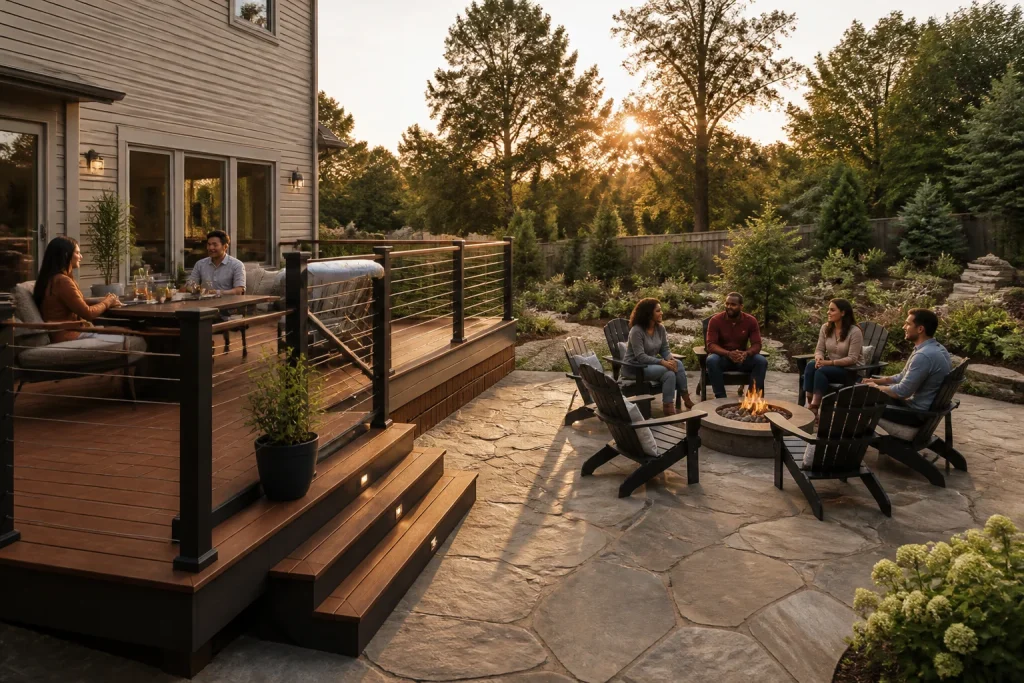
When considering the best upgrades to increase home value, homeowners often weigh the merits of adding a deck versus a patio. Generally, a well-designed and professionally installed deck tends to add more resale value to a property than a patio, particularly in regions where outdoor…
- Decks generally offer a higher return on investment (ROI) compared to patios when selling a property.
- The decision between a deck and a patio as one of the best upgrades to increase home value is multifaceted, influenced by several key factors that prospective buyers consider.
- When considering which outdoor living space offers the best upgrades to increase home value, homeowners should begin with a clear assessment of their property's unique characteristics and their personal lifestyle needs.
- The lifespan of a deck or patio depends heavily on the materials and maintenance.
Deck vs. Patio: Which Outdoor Living Space Adds More Value When Selling Your Property?
When considering the best upgrades to increase home value, homeowners often weigh the merits of adding a deck versus a patio. Generally, a well-designed and professionally installed deck tends to add more resale value to a property than a patio, particularly in regions where outdoor entertaining is highly valued. Decks typically offer a higher return on investment (ROI) because they are often perceived as a more substantial structural addition, elevating the living space and providing a distinct area for recreation. For instance, a composite deck can yield an ROI of around 60-70% upon resale, according to industry surveys as of 2024, while a basic concrete patio might offer a slightly lower return, often in the 50-60% range. This difference stems from factors like elevation, material cost, and the complexity of installation, all contributing to the perceived luxury and functionality of the outdoor space.
Key Insights
- Decks generally offer a higher return on investment (ROI) compared to patios when selling a property.
- Material choice significantly impacts value, with composite decks often outperforming wood in long-term appeal and maintenance.
- Patios can be more cost-effective initially and offer excellent value in specific landscape designs or for accessibility.
- The local real estate market and buyer preferences play a crucial role in determining which outdoor feature adds more value.
- Professional installation and quality craftsmanship are essential for maximizing the value of either a deck or a patio.
What Factors Influence the Value of Outdoor Living Spaces?
The decision between a deck and a patio as one of the best upgrades to increase home value is multifaceted, influenced by several key factors that prospective buyers consider. One primary factor is the material choice. For decks, options range from pressure-treated lumber, which is cost-effective but requires regular maintenance, to high-end composite materials like Trex or Azek, which offer superior durability, low maintenance, and a longer lifespan, albeit at a higher initial cost. Composite decks, for example, are increasingly favored by buyers in the DFW area due to their resistance to rot, insects, and fading, translating into less upkeep for the new homeowner. For patios, materials can vary from basic poured concrete to more aesthetically pleasing options like pavers, natural stone (such as flagstone or travertine), or stamped concrete, each offering different levels of visual appeal and longevity. According to a national industry survey from 2023, properties with composite decks sold, on average, 15% faster than those with older wooden decks, highlighting the market’s preference for modern, low-maintenance solutions.
Another significant influence is the elevation and integration with the home. Decks are typically elevated structures, often built off the back of a house, seamlessly extending the indoor living space outdoors, especially when the main living areas are on a second story or significantly above ground level. This elevation can provide better views and a sense of privacy, making the outdoor area feel like a true extension of the home. Patios, conversely, are ground-level structures, often built directly on the earth or a concrete slab. While they integrate well with garden landscapes and offer easy access, they may not provide the same elevated perspective or seamless transition from higher-level indoor spaces. A well-integrated deck, designed to complement the home’s architecture and accessible from a kitchen or living room, can significantly enhance a property’s perceived value. For instance, a luxury home remodeling project in Plano, TX, that includes a multi-level deck with built-in seating and lighting, often sees a higher appraisal value compared to a similar home with a basic ground-level patio, as the deck provides a more dynamic and functional outdoor experience.
The local market demand and climate also play a crucial role in determining which outdoor feature offers the best return. In regions like Plano, TX, where warm weather allows for extended outdoor living, both decks and patios are highly desirable. However, buyer preferences can lean towards one over the other based on lifestyle. Families with young children or pets might prefer a ground-level patio for easier access and play, while those who frequently entertain or desire a sophisticated outdoor dining area might favor a spacious deck. Furthermore, the overall quality of construction and design is paramount. A poorly constructed deck or an uneven, cracked patio can detract from a home’s value, regardless of the material. Professional installation, ensuring proper drainage, structural integrity, and aesthetic appeal, is critical. NovaStar Construction, specializing in luxury home remodeling, emphasizes that quality craftsmanship in exterior home upgrades not only enhances curb appeal but also ensures longevity and safety, which are key selling points for discerning buyers in the DFW area. A well-executed project, whether a deck or a patio, signals to potential buyers that the home has been meticulously maintained and thoughtfully upgraded.
Cost-Benefit Analysis: Decks vs. Patios
Understanding the financial implications of adding a deck versus a patio is crucial for homeowners focused on maximizing resale value. While decks generally offer a higher ROI, their initial investment is also typically greater. The cost of a new deck can range significantly based on size, materials, and complexity. A basic pressure-treated wood deck might cost between $15 and $25 per square foot, whereas a composite deck, known for its longevity and low maintenance, can range from $30 to $60 per square foot or more, including installation. These figures can escalate with custom designs, multi-level structures, built-in features like benches or planters, and premium railings. For example, a 300-square-foot composite deck in a metropolitan area could easily cost upwards of $12,000 to $18,000.
Patios, on the other hand, often present a more budget-friendly entry point. A simple poured concrete patio might cost as little as $5 to $10 per square foot. Opting for more decorative materials like pavers or stamped concrete will increase the cost, typically ranging from $15 to $30 per square foot. Natural stone patios, such as those made from flagstone or travertine, represent the higher end of patio costs, potentially reaching $30 to $50 per square foot, rivaling some deck options. A 300-square-foot paver patio, for instance, might cost between $4,500 and $9,000. When evaluating these costs, it’s important to consider not just the immediate outlay but also the long-term maintenance expenses. While a composite deck has a higher upfront cost, its minimal maintenance requirements over its lifespan can offset the initial investment compared to a wood deck that needs regular staining and sealing.
Maximizing Value Through Design and Functionality
Beyond material and elevation, the design and functionality of an outdoor living space significantly impact its appeal and, consequently, its value. A well-designed deck or patio should not only be aesthetically pleasing but also highly functional, catering to various activities. For decks, this might involve incorporating distinct zones for dining, lounging, or even an outdoor kitchen. Features like built-in lighting, pergolas, privacy screens, and integrated storage can transform a simple platform into a sophisticated extension of the home. For example, a deck designed with multiple levels can create visual interest and define separate areas without the need for physical barriers, enhancing the sense of spaciousness and luxury. In a typical suburban home, a deck that includes a shaded dining area and an open sun deck for relaxation offers versatile utility that appeals to a broader range of buyers.
For patios, functionality can be enhanced through thoughtful landscaping, fire pits, water features, and outdoor kitchens. The integration of a patio with the surrounding garden can create a cohesive outdoor environment, making the space feel larger and more inviting. Consider a patio that flows seamlessly into a lush garden, perhaps with a winding path leading to a secluded seating area. This kind of design creates an immersive outdoor experience. Accessibility is another key functional aspect; a ground-level patio is inherently more accessible for individuals with mobility challenges or for moving heavy items like grills. Ultimately, the most valuable outdoor spaces are those that are thoughtfully planned to complement the home’s architecture, suit the local climate, and provide a versatile environment for relaxation and entertainment, thereby appealing to the lifestyle aspirations of potential buyers.
The choice between a deck and a patio also hinges on the intended use and the lifestyle it supports. For instance, a family in the DFW area with a sloped backyard might find a deck to be the most practical solution for creating a level, usable outdoor space, especially if they envision a dining area with a view. Conversely, a homeowner who enjoys gardening and wants to seamlessly integrate their outdoor living space with flower beds and pathways might find a patio more suitable. Patios are often preferred for features like built-in fire pits or pizza ovens, which require a stable, non-combustible base. A recent survey from a national real estate association in 2024 indicated that homes with well-designed outdoor kitchens, whether on a deck or patio, saw an average increase in perceived value of 8-10%, underscoring the importance of functionality. The key is to align the outdoor space with the home’s overall aesthetic and the owner’s vision for how they will use it, ensuring it feels like an organic extension rather than an afterthought. This thoughtful integration is what truly elevates a property’s appeal and its market value.
Ultimately, the decision of which outdoor living space adds more value when selling your property comes down to a careful evaluation of several interconnected factors. While decks often lead in terms of ROI due to their structural nature and elevated appeal, patios offer versatility and can be more cost-effective, particularly for ground-level integration. The materials chosen, the quality of installation, the local market’s preferences, and the specific design elements all contribute to the final value proposition. For example, a luxury home in Frisco, TX, with a custom-designed composite deck featuring integrated lighting and a built-in grill station, will likely command a higher premium than a similar home with a basic concrete patio, simply because the deck offers a more sophisticated and complete outdoor living experience. However, a beautifully landscaped patio with natural stone pavers and a custom fire pit can also be a significant draw, especially for buyers prioritizing accessibility and a seamless connection to garden spaces. The goal is to create an outdoor area that not only enhances the home’s curb appeal but also provides tangible lifestyle benefits that resonate with potential buyers.
Enhancing Your Home’s Appeal: Next Steps for Outdoor Upgrades
When considering which outdoor living space offers the best upgrades to increase home value, homeowners should begin with a clear assessment of their property’s unique characteristics and their personal lifestyle needs. Start by evaluating your backyard’s topography; a sloped yard might naturally lend itself to a deck, while a flat, expansive area could be ideal for a patio. Next, consider how you envision using the space. Do you dream of elevated dining with panoramic views, or a cozy, ground-level gathering spot around a fire pit? Research local market trends in your area, as buyer preferences can vary significantly. For instance, in a densely populated urban environment, a compact, low-maintenance composite deck might be more appealing than a sprawling patio. Consult with experienced contractors who specialize in both deck and patio construction. They can provide insights into material costs, design possibilities, and local building codes, helping you understand the feasibility and potential ROI of each option. A professional can also help you visualize how the new structure will integrate with your home’s existing architecture and landscaping, ensuring a cohesive and attractive outcome. This initial planning phase is crucial for making an informed decision that maximizes both enjoyment and resale value.
Once you have a clear vision, focus on the details that elevate an outdoor space from functional to exceptional. For decks, this might include selecting durable, low-maintenance materials like high-quality composite decking, which, as of 2024, continues to be a top choice for its longevity and aesthetic appeal. Incorporate features such as integrated lighting for evening ambiance, custom railings that complement your home’s style, or even a built-in pergola for shade. For patios, consider permeable pavers to improve drainage and reduce runoff, or natural stone for a luxurious, timeless look. Thoughtful landscaping around the patio can soften its edges and integrate it seamlessly into your garden. Adding elements like an outdoor kitchen, a fire feature, or comfortable, weather-resistant furniture can significantly enhance the functionality and perceived value of either a deck or a patio. Remember, quality craftsmanship is paramount. A well-built structure not only looks better but also lasts longer and requires less maintenance, which are strong selling points for future buyers. Investing in professional design and installation ensures that your outdoor living space is a true asset, providing both immediate enjoyment and a strong return on investment when it’s time to sell.
Considering Your Outdoor Living Space for Future Value
As you plan your outdoor living space, think about its long-term impact on your property’s value. A well-executed deck or patio is not just an immediate enhancement; it’s an investment that continues to pay dividends. Consider the maintenance requirements of your chosen materials. While a wooden deck might offer a lower initial cost, the ongoing expense and effort of staining, sealing, and repairs can add up over time. Composite materials, despite a higher upfront cost, often prove more economical in the long run due to their minimal maintenance needs. Furthermore, consider the versatility of the space. Can it adapt to different uses, from quiet relaxation to lively entertaining? A flexible design that accommodates various activities will appeal to a wider range of potential buyers. For example, a deck with ample open space can be easily furnished for dining or lounging, while a patio with a designated area for a fire pit and comfortable seating offers distinct zones for different functions. By focusing on durability, adaptability, and timeless design, you ensure that your outdoor living space remains a valuable asset for years to come, contributing significantly to your home’s overall market appeal and making it one of the best upgrades to increase home value.
Bottom Line: While both decks and patios enhance home value, a well-designed and professionally installed deck generally offers a higher return on investment due to its perceived structural value and elevated living space, especially when using low-maintenance materials like composite.
Frequently Asked Questions
Do decks or patios last longer?
The lifespan of a deck or patio depends heavily on the materials and maintenance. Composite decks can last 25-30 years with minimal upkeep. Concrete or natural stone patios can last 30-50 years or more, often outlasting wood decks which typically last 10-15 years with regular maintenance.
What is the average ROI for a deck addition?
A deck addition typically yields an ROI of around 60-70% upon resale, especially for composite decks. This return can vary based on the quality of materials, design, and local market demand, with higher-end materials often seeing better returns.
Are permits required for building a deck or patio?
Permits are almost always required for decks due to their structural nature and elevation. For patios, permits may be required if they involve significant excavation, drainage changes, or are attached to the house. Always check local building codes before starting any project.
Which is better for sloped yards, a deck or a patio?
Decks are generally better suited for sloped yards as they can be built to create a level, usable space above the incline. Patios, being ground-level, often require extensive and costly excavation and retaining walls to be installed on a significant slope.