
How to Select Cost-Effective Countertops for Your Kitchen
Imagine Sarah, a Plano homeowner, staring at her chipped, outdated kitchen countertops, dreaming of a fresh look without breaking the bank. She's already tried painting them, which lasted about as long as a New Year's resolution, and now she's researching the overall cost of kitchen remodeling.
- How to Select Cost-Effective Countertops for Your Kitchen
Imagine Sarah, a Plano homeowner, staring at her chipped, outdated kitchen countertops, dreaming of a fresh look without breaking the bank. - She's already tried painting them, which lasted about as long as a New Year's resolution, and now she's researching the overall cost of kitchen remodeling.
- Selecting cost-effective countertops for your kitchen involves balancing material price, installation complexity, and long-term durability.
- Laminate, butcher block, and tile are generally the most budget-friendly options, often ranging from $20 to $60 per square foot installed, offering significant savings compared to premium choices like natural stone or quartz.
- The key is to consider not just the upfront cost but also the maintenance and lifespan, ensuring your choice aligns with both your wallet and your lifestyle.
How to Select Cost-Effective Countertops for Your Kitchen
Imagine Sarah, a Plano homeowner, staring at her chipped, outdated kitchen countertops, dreaming of a fresh look without breaking the bank. She’s already tried painting them, which lasted about as long as a New Year’s resolution, and now she’s researching the overall cost of kitchen remodeling. Selecting cost-effective countertops for your kitchen involves balancing material price, installation complexity, and long-term durability. Laminate, butcher block, and tile are generally the most budget-friendly options, often ranging from $20 to $60 per square foot installed, offering significant savings compared to premium choices like natural stone or quartz. The key is to consider not just the upfront cost but also the maintenance and lifespan, ensuring your choice aligns with both your wallet and your lifestyle.
What Factors Influence the Cost of Kitchen Remodeling for Countertops?
When embarking on a kitchen renovation, understanding the various elements that contribute to the overall cost of new countertops is crucial. It’s not just about the material itself; several other factors play a significant role in the final price tag. For instance, the complexity of your kitchen layout can dramatically affect installation costs. A kitchen with many corners, angles, or cutouts for sinks and cooktops will require more intricate fabrication and installation, driving up labor expenses. According to industry data from 2023, custom cuts for unique kitchen designs can add anywhere from 15% to 30% to the total installation cost compared to a straightforward, linear layout. Think of it like tailoring a suit: a standard size is less expensive than a bespoke creation with unique features. Furthermore, the thickness of the countertop material also impacts pricing. Thicker slabs, often chosen for their luxurious appearance and perceived durability, typically cost more per square foot and are heavier, potentially requiring additional structural support and specialized handling during installation. For example, a 3cm quartz slab will generally be more expensive than a 2cm slab of the same material, reflecting both the increased material volume and the added labor for its weight.
Beyond the material and layout, the edge profile you choose can also influence the cost. While a standard eased or bullnose edge might be included in the base price, more elaborate profiles like ogee, waterfall, or mitered edges require additional fabrication time and specialized machinery, leading to higher costs. These decorative edges can add a touch of elegance but come with a premium, sometimes increasing the per-linear-foot cost by $10 to $30. Another often-overlooked factor is the removal and disposal of your old countertops. This service is usually an additional charge, and the cost can vary depending on the material being removed. Heavy materials like granite or concrete require more labor and specialized disposal, which can add several hundred dollars to your project budget. For example, removing an old granite countertop from a typical 10×10 kitchen might cost between $200 and $500, depending on local labor rates and disposal fees in areas like Dallas-Fort Worth. Always ensure your quote includes these “hidden” costs to avoid surprises down the line. Lastly, the brand and supplier of the material can also affect pricing. Premium brands or exclusive distributors might charge more for their products, even for similar materials, due to their reputation, warranty, or unique color selections. Researching multiple suppliers and obtaining several quotes is a smart strategy to find the best value.
While focusing on countertops, remember that a larger renovation might require professional oversight. Understanding The Role of General Contractors in Kitchen Remodeling can help streamline your project and manage various aspects, including material procurement and installation.
The geographic location of your home also plays a role in the overall cost. Labor rates for skilled tradespeople, including countertop fabricators and installers, can vary significantly from one region to another. In metropolitan areas like Plano, Texas, where the demand for home remodeling and renovation contractor services is high, labor costs might be higher than in more rural areas. This regional variation is a critical component of the overall cost of kitchen remodeling. For instance, a 2024 survey indicated that countertop installation labor costs in major Texas cities could be 10-15% higher than the national average. Additionally, the type of sink you choose and how it’s integrated into the countertop can impact costs. An undermount sink, while aesthetically pleasing and easier to clean, requires a precise cutout and polished edge, which adds to fabrication labor. Drop-in sinks, on the other hand, are simpler to install and generally incur lower fabrication costs. Even the choice of backsplash material and its integration with the countertop can influence the overall project expense. A seamless transition from countertop to backsplash, often achieved with the same material, requires careful planning and execution, potentially adding to the complexity and cost. Considering all these interconnected factors ensures a comprehensive understanding of your countertop investment.
Exploring Budget-Friendly Countertop Materials
When the goal is to achieve a stunning kitchen transformation without emptying your savings, focusing on cost-effective materials is paramount. These options prove that beauty and durability don’t always come with a hefty price tag. Laminate, for instance, has come a long way from its humble beginnings. Modern laminates offer an incredible array of patterns, textures, and colors, mimicking the look of natural stone, wood, or even concrete with surprising realism. They are essentially layers of plastic bonded to particleboard or MDF, making them lightweight and relatively easy to install. A typical laminate countertop might cost between $20 and $40 per square foot, making it a fantastic choice for those who love to update their kitchen aesthetic frequently without major financial commitment. They are also non-porous, offering good stain resistance, which is a huge plus for busy households.
Butcher block countertops, crafted from strips of wood glued together, offer a warm, inviting, and undeniably classic look. Materials like maple, oak, or walnut are popular choices, each bringing its unique grain and character to the kitchen. While they require regular oiling to maintain their beauty and prevent drying or cracking, their ability to be sanded and refinished means they can last for decades, evolving with your home. The cost for butcher block typically ranges from $30 to $60 per square foot, depending on the wood species and thickness. They are also a favorite among DIY enthusiasts, as they can be cut and installed with basic woodworking tools, potentially saving on labor costs. Imagine a cozy farmhouse kitchen in McKinney, Texas, where a rich walnut butcher block island becomes the heart of family gatherings – a testament to its enduring appeal and practical charm.
Tile countertops, while perhaps less common in new builds today, remain a highly customizable and budget-friendly option. Ceramic or porcelain tiles offer an almost limitless palette of colors, sizes, and patterns, allowing for truly unique designs. They are incredibly durable, heat-resistant, and easy to clean, making them practical for everyday use. The cost for tile can vary widely, from as low as $15 per square foot for basic ceramic tiles to $50 or more for intricate mosaic patterns or high-end porcelain, including installation. The main consideration with tile is the grout lines, which require sealing and regular cleaning to prevent staining and mildew. However, for those who appreciate a personalized touch and aren’t afraid of a little grout maintenance, tile offers unparalleled creative freedom. Consider a homeowner in Frisco who transformed their kitchen with vibrant, hand-painted Mexican tiles, creating a focal point that perfectly reflects their personality and cultural heritage, all within a sensible budget.
“Choosing a cost-effective countertop isn’t about sacrificing style; it’s about smart choices that reflect your personal taste and financial comfort zone.”
Considering Long-Term Value and Maintenance
While the initial purchase price is a significant factor, a truly cost-effective countertop choice also considers the long-term value, maintenance requirements, and overall lifespan. A material that seems cheap upfront but demands constant repairs or specialized cleaning might end up costing more over time. For example, while laminate is incredibly affordable and low-maintenance for daily spills, it’s not heat-resistant and can be prone to scratching or chipping if not cared for properly. Once damaged, it’s often difficult to repair seamlessly, usually requiring replacement of the entire section. This means that while the initial outlay is minimal, a mishap could lead to unexpected replacement costs down the line.
Butcher block, on the other hand, requires consistent care, including regular oiling to prevent drying and cracking, and immediate cleanup of spills to avoid stains. However, its ability to be sanded and refinished means that minor damage, scratches, or even stubborn stains can often be removed, restoring the surface to its original beauty. This reparability significantly extends its lifespan, making it a sustainable and ultimately cost-effective choice for those willing to invest a little time in its upkeep. A family in Plano, for instance, installed a maple butcher block island ten years ago. Despite a few knife marks and a forgotten coffee cup stain, a weekend of sanding and re-oiling brought it back to life, looking almost new, proving its long-term resilience and value.
Tile countertops, while durable and resistant to heat and scratches, present their own maintenance considerations, primarily concerning the grout. Grout lines are porous and can absorb spills, leading to staining if not sealed properly and cleaned regularly. Over time, grout can also crack or crumble, requiring re-grouting. However, individual tiles can often be replaced if damaged, which is a significant advantage over solid slab materials. This modularity can save money on repairs, as you only need to replace the affected area rather than an entire section. Understanding these nuances of maintenance and repair for each material is crucial for making a decision that truly aligns with your lifestyle and budget, ensuring your chosen countertops remain a source of joy, not frustration, for years to come.
Ultimately, the most cost-effective countertop is one that not only fits your initial budget but also aligns with your willingness to maintain it and your expectations for its longevity. A homeowner in Dallas might prioritize a low-maintenance laminate for a rental property, understanding that its lower upfront cost and easy cleaning outweigh its shorter lifespan compared to a more durable, but higher-maintenance, butcher block in their primary residence. Conversely, a family planning to stay in their Plano home for decades might see the value in the reparability of butcher block or the long-term resilience of tile, despite the ongoing care requirements. The true measure of cost-effectiveness extends beyond the price tag, encompassing the total cost of ownership over the years you’ll enjoy your kitchen.
Making Informed Choices for Your Kitchen’s Future
Selecting the right countertop material involves a thoughtful evaluation of your lifestyle, aesthetic preferences, and financial parameters. It’s about finding that sweet spot where affordability meets functionality and visual appeal. Consider how you use your kitchen daily: are you a meticulous cook who cleans up immediately, or do spills sometimes linger? Do you entertain frequently, requiring a highly durable and stain-resistant surface, or is your kitchen primarily for light meal prep? These practical considerations are just as important as the material’s price per square foot. For instance, a busy family with young children in Frisco might find the non-porous and easy-to-clean nature of modern laminate or certain porcelain tiles more appealing, even if they lack the natural warmth of wood. Conversely, a couple who enjoys baking and values a natural, tactile surface might gravitate towards butcher block, understanding the commitment to regular oiling.
Beyond daily use, think about the overall design aesthetic you wish to achieve. Cost-effective materials offer a surprising range of design versatility. Laminate can mimic high-end materials, allowing you to achieve a luxurious look without the associated cost. Butcher block brings a timeless, organic feel that complements various styles from rustic to contemporary. Tile offers unparalleled creative freedom, enabling custom patterns and color schemes that truly personalize your space. A recent trend analysis from 2023 showed that while natural stone and quartz remain popular, there’s a growing appreciation for the design flexibility and improved aesthetics of budget-friendly options, with laminate and butcher block seeing a 10% increase in market share for kitchen renovations under $15,000. This indicates a shift towards smarter spending without compromising on style. Don’t be afraid to explore samples, visualize them in your kitchen’s lighting, and consider how they integrate with your existing cabinetry and flooring.
Finally, remember that the installation quality significantly impacts both the appearance and longevity of your chosen countertops. Even the most durable material can fail prematurely if installed incorrectly. When working with budget-friendly options, it’s tempting to cut corners on installation, but this can lead to costly repairs down the line. For example, improper sealing of grout lines in tile countertops can lead to moisture penetration and mildew, while poorly installed laminate can lift or chip at the seams. Always seek out reputable installers, even for more affordable materials, and ensure they provide a warranty for their workmanship. Obtaining multiple quotes and checking references, especially for specialized tasks like custom cuts or complex layouts, is a prudent step. A well-executed installation ensures that your cost-effective countertops not only look great but also perform reliably for years, truly maximizing your investment in the cost of kitchen remodeling.
Your Next Steps to a Beautiful, Budget-Friendly Kitchen
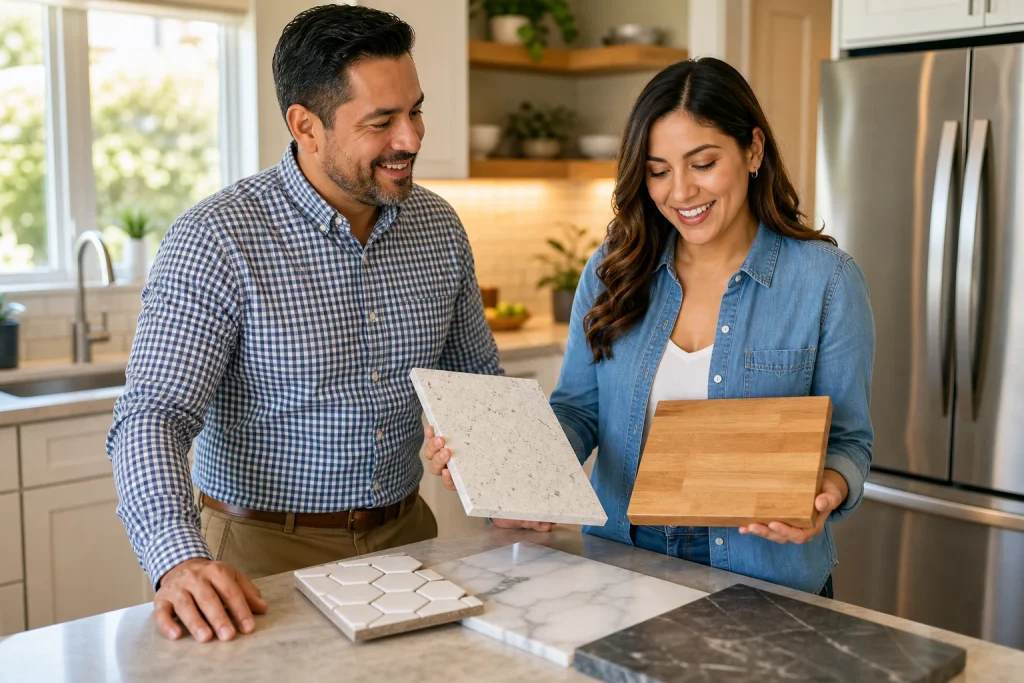
To begin your journey toward selecting the perfect cost-effective countertops, start by assessing your current kitchen layout and measuring your countertop areas. This will give you a preliminary idea of the square footage needed. Next, research the various budget-friendly materials discussed, such as laminate, butcher block, and tile, considering their aesthetic appeal, durability, and maintenance requirements in relation to your lifestyle. Collect samples of your preferred materials to see how they look in your home’s lighting and against your existing cabinetry. Finally, obtain at least three detailed quotes from different suppliers and installers, ensuring each quote itemizes material costs, fabrication, installation, and the removal of old countertops. This comprehensive approach will empower you to make an informed decision that balances your budget with your vision for a refreshed kitchen.
Bottom Line: Selecting cost-effective kitchen countertops involves balancing initial material price, installation complexity, and long-term maintenance, with options like laminate, butcher block, and tile offering significant savings and diverse aesthetic possibilities when chosen thoughtfully.
Frequently Asked Questions
What is the most budget-friendly countertop material?
Laminate is generally the most budget-friendly countertop material, often ranging from $20 to $40 per square foot installed. It offers a wide variety of styles and is easy to clean, making it a popular choice for cost-conscious renovations.
Do butcher block countertops require a lot of maintenance?
Yes, butcher block countertops require regular maintenance, including oiling every few weeks to prevent drying and cracking. Spills should be wiped immediately to avoid stains, but they can be sanded and refinished to repair damage.
Are tile countertops a good option for a busy kitchen?
Tile countertops can be a good option for a busy kitchen due to their durability, heat resistance, and ease of cleaning. However, the grout lines require sealing and regular cleaning to prevent staining and mildew buildup, which is a key maintenance consideration.