
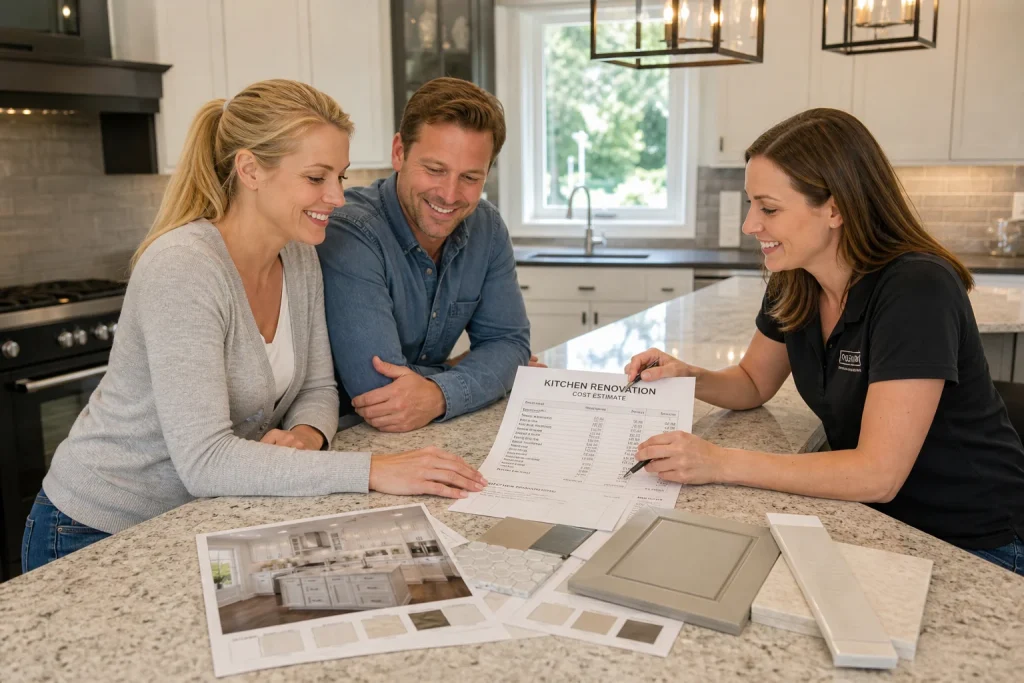
Understanding Material Costs in Kitchen Renovations: How Materials Shape the cost of kitchen remodeling
Plano first-time homeowner Maya opened her spreadsheet and realized the cost of kitchen remodeling is mostly a materials math problem: price each major line item (cabinets, counters, appliances, fixtures, finishes), pick a quality tier, then add realistic waste, delivery, and tax so the “pretty choices” match the real invoice. She had already tried piecing together prices from IKEA, Home Depot, and Lowe’s, but the numbers kept changing because materials are not one item; they are a stack of interlocking decisions.
- Understanding Material Costs in Kitchen Renovations: How Materials Shape the cost of kitchen remodeling
Plano first-time homeowner Maya opened her spreadsheet and realized the cost of kitchen remodeling is mostly a materials math problem: price each major line item (cabinets, counters, appliances, fixtures, finishes), pick a quality tier, then add realistic waste, delivery, and tax so the “pretty choices” match the real invoice. - She had already tried piecing together prices from IKEA, Home Depot, and Lowe’s, but the numbers kept changing because materials are not one item; they are a stack of interlocking decisions.
- A clear way to understand material costs is to (1) list every visible surface and “behind-the-scenes” component, (2) assign a unit price (per cabinet box, per square foot, per fixture
foot), and (3) multiply by your real quantities so the final number is boringly predictable.
- Once Maya treated her kitchen like a small construction estimate instead of a shopping cart, the “why is this so expensive?” mystery started to behave.
- Build a Materials Takeoff That Actually Works cost of kitchen remodeling
A materials takeoff is just a fancy way of saying “count everything before you fall in love with it.” The trick is to measure in the same units vendors price in.
Understanding Material Costs in Kitchen Renovations: How Materials Shape the cost of kitchen remodeling
Plano first-time homeowner Maya opened her spreadsheet and realized the cost of kitchen remodeling is mostly a materials math problem: price each major line item (cabinets, counters, appliances, fixtures, finishes), pick a quality tier, then add realistic waste, delivery, and tax so the “pretty choices” match the real invoice.
She had already tried piecing together prices from IKEA, Home Depot, and Lowe’s, but the numbers kept changing because materials are not one item; they are a stack of interlocking decisions. A clear way to understand material costs is to (1) list every visible surface and “behind-the-scenes” component, (2) assign a unit price (per cabinet box, per square foot, per fixture
foot), and (3) multiply by your real quantities so the final number is boringly predictable. Once Maya treated her kitchen like a small construction estimate instead of a shopping cart, the “why is this so expensive?” mystery started to behave.
Build a Materials Takeoff That Actually Works cost of kitchen remodeling
A materials takeoff is just a fancy way of saying “count everything before you fall in love with it.” The trick is to measure in the same units vendors price in. Cabinets often price by the box (or by the linear foot in some semi-custom lines), countertops by the square foot, tile by the square foot (plus trim pieces), flooring by the square foot (plus underlayment), and hardware by the piece. If you mix units, your spreadsheet becomes performance art.
Beyond just materials, a comprehensive understanding of your budget requires considering all Factors Influencing the Cost of Kitchen Remodeling, from labor to permits and unexpected issues.
Start with a quick sketch of the room and add dimensions you can defend. In a typical galley or L-shaped kitchen, you will use a blend of linear feet (runs of cabinets), square feet (tops and floors), and counts (doors, drawers, fixtures). When in doubt, use the “measure twice, order once” rule, because returning special-order materials can be harder than returning a bad joke.
Keep “hidden” materials on the list from day one. Things like plywood build-ups under thin countertops, scribe molding, filler strips, panels that finish cabinet ends, toe-kick skins, and the little corner accessories that stop drawers from colliding with plumbing all add cost without adding obvious sparkle. They still show up on invoices, though, and they love to arrive when your budget is feeling confident.
Budgeting tip: the materials you don’t see (substrates, trim, fasteners, adhesives, and delivery) are often the difference between “we nailed it” and “why did we go over by 18%?”
A simple counting method you can repeat
Use a three-column approach: quantity, unit cost, and “real-world multiplier.” That multiplier is where you bake in overage, waste, and breakage so you are not pretending every tile cuts perfectly and every cabinet lands without damage.
- List each material category (cabinets, counters, flooring, backsplash, appliances, plumbing fixtures, lighting, paint, trim, sink, faucet, hardware).
- Add measurement units that match how they are sold (sq ft, linear ft, per item).
- Apply an overage factor: 10% for most tile and flooring, 15% for complicated layouts, and 5% to 10% for countertop slab yield depending on seams and cutouts.
Cabinets: Where Quality Tiers Quietly Control the Bill
Cabinet costs swing wildly because “cabinet” can mean anything from a basic box with a thin melamine interior to a plywood box with solid-wood frames, dovetailed drawers, and soft-close everything. The visible door style is only part of the story; the box construction, drawer hardware, and finish system do the heavy lifting for durability and price.
To compare apples to apples, ask yourself three practical questions: What is the box made of (particleboard, furniture board, plywood)? What kind of drawer slides are included (side-mount vs. under-mount, soft-close or not)? And what finish is on the doors (thermofoil, painted, stained, lacquered)? The difference shows up over time as much as it shows up on day-one cost.
Don’t forget the “cabinet-adjacent” purchases that feel small until you total them: panels to cover exposed sides, crown or light-rail molding, toe-kick material, and filler strips to make everything fit walls that are rarely perfectly square. Even a simple 3-inch filler can be the thing that keeps a refrigerator door from slamming into a cabinet pull like it is trying to start a feud.
Hardware and storage inserts: the sneaky line items
Pulls, knobs, hinges, trash pull-outs, spice roll-outs, and corner solutions are the kitchen equivalent of toppings: individually affordable, collectively dramatic. A kitchen with 25 doors/drawers can easily need 25 to 35 pieces of hardware, and specialty organizers can cost as much as a small base cabinet. Decide early where you want “premium convenience” so it does not ambush you after the cabinets are already ordered.
Mini case study: Maya priced two cabinet paths for a 12-foot run plus an island: a value-tier box with standard slides and minimal panels, and a mid-tier box with plywood construction, soft-close drawer slides, and matching end panels. The mid-tier option raised the cabinet line item by several thousand dollars, but it also reduced add-ons because panels and better drawer hardware were included. Her “cheaper” cabinet quote became less cheap once she added panels, upgraded slides, and extra trim to make it look finished.
Countertops: Price Is Mostly About Material, Edges, and Cutouts
Countertops are a rare category where two kitchens with the same square footage can land in completely different price zones. Material choice drives the base rate, then fabrication details pile on: edge profile upgrades, sink cutouts, faucet holes, cooktop cutouts, seam placement, and whether the installer needs to level cabinets or build up substrate to meet thickness requirements.
If you want a quick reality check, count cutouts like you count pets: each one is another responsibility. An undermount sink cutout, a cooktop cutout, and a couple of extra faucet or accessory holes can add meaningful fabrication cost even when your square footage stays the same.
A compact comparison to keep decisions sane
| Countertop material | Typical cost drivers | Maintenance mindset | Common budget surprises |
|---|---|---|---|
| Laminate | Edge style, backsplash return, seam count | Low maintenance, heat and cut resistance vary | Sink upgrades and thicker-look edges add cost |
| Quartz | Color tier, thickness, edge profile, cutouts | Low sealing needs, wipe-and-go | Seams and oversized islands can require extra slabs |
| Granite (natural stone) | Slab selection, movement in pattern, sealing | Periodic sealing, stain awareness | Higher waste on dramatic patterns and vein matching |
| Butcher block | Species, thickness, finish type, sink area detailing | Regular oiling or sealed finish upkeep | Water protection around sinks and dishwashers |
| Solid surface | Color, integrated sink options, seam invisibility | Easy cleaning, can be refinished | Custom shapes and integrated details increase labor |
Thickness decisions matter because they change the whole ecosystem. A thinner top may need a plywood subtop, which adds material and labor. A thicker-looking edge can be created with build-ups, which can look great, but it is not free. If your quote seems “too good,” check whether those build-ups, cutouts, and edge upgrades are included or waiting in the wings.
Fixtures, Finishes, and the “Small Stuff” That Adds Up Fast
This is the category where budgets go to do cardio. Sinks, faucets, lighting, tile, grout, paint, trim, and flooring each feel manageable until you add them together. The way to stay in control is to group by function and finish level: pick one “hero” finish (for example, a statement faucet or bold tile), then keep supporting materials simple and consistent.
Tile is a classic example. The tile itself might be reasonably priced per square foot, but the full system includes thinset, grout, spacers, backer board (or another substrate), edge trim, sealer (for certain grout types), and transition pieces. If you choose a small mosaic or a complicated pattern, labor can rise because installation time rises. Even in a materials-focused budget, it helps to flag patterns that increase cuts, because extra cuts often mean extra waste.
For plumbing fixtures, pay attention to valve compatibility and rough-in requirements. A faucet might be the star of the show, but if it requires a special adapter, a specific hole count, or an air gap for a dishwasher setup in certain jurisdictions, the accessories can quietly increase your materials list. Similarly, for lighting, the fixture cost is only part of the package; dimmers, under-cabinet drivers, and matching trims are real line items.
Appliances: treat them like a spec sheet, not a vibe
Appliance pricing is more predictable when you compare specifications instead of aesthetics. Focus on dimensions (especially depth for refrigerators and ranges), electrical requirements, ventilation needs, and whether installation kits are included. A range hood, for instance, may require ducting, a roof or wall cap, and a makeup air solution depending on local code and airflow. Those are materials, not wishes.
If you are trying to keep the spend steady, one playful but practical trick is to “lock the big rectangles first”: refrigerator, range, dishwasher. Once those are fixed, cabinetry fillers, countertop seams, and panel choices become easier to estimate because your openings and clearances stop moving.
Hidden Multipliers: Waste, Delivery, Tax, and Timing
Even a perfect takeoff can miss the multipliers that show up between the store and your kitchen. Waste and overage are the obvious ones, but delivery fees, fuel surcharges, stair carries, inside delivery, and jobsite protection materials can all appear depending on how and where you live. In metro areas, delivery windows and building access rules can also influence cost if you need extra handling.
Timing matters because material costs can fluctuate, and lead times can change what you are forced to buy. If the tile you chose is backordered, you might switch to a pricier alternative to keep the schedule intact. If a cabinet line extends to a longer lead time, you might pay more for a faster program. Neither is “wrong,” but both are budget impacts that are easier to absorb when you plan a contingency.
A practical standard used by many experienced remodelers is to carry a materials contingency that reflects complexity: simpler refreshes often need less buffer, while full renovations with layout changes and multiple specialty finishes need more. Think of it as insurance against broken tile, chipped counters during install, or the sudden realization that you need three extra panels because your fridge wall is visible from the dining room.
Turn “multipliers” into line items (so they stop acting mysterious)
The easiest way to tame budget creep is to stop treating extra costs as bad luck and start treating them as predictable materials. If a countertop installer needs two tubes of color-matched silicone, rosin paper to protect floors, and shims to level a run of cabinets, those are not “incidental.” They are consumables that appear on real invoices, especially when a project spans multiple trades and multiple deliveries.
A helpful mindset is to create a small “jobsite materials” bucket in your takeoff. It can include protective coverings, fasteners, adhesives, caulk, patching compounds, and disposal bags. You do not need perfect quantities; you need visibility. When you can see these items, you can decide whether to standardize them (one paintable caulk for trim, one silicone for wet zones) instead of buying a different tube for every problem like a panicked art supply run.
Documentation tip: write down your assumptions right on the estimate (overage %, delivery method, and what “installed” includes). Six weeks later, your future self will not remember why you added 12% to tile, but the invoice will remember for you.
A quick quote-audit checklist (before you commit)
Material quotes vary because two vendors can include different “little” components while using the same headline product. A cabinet quote might include toe-kick skins and end panels while another treats them as upgrades. A tile quote might include backer board and trim, or it might be only the tile boxes. You are not comparing prices until you are comparing scope.
- Confirm what is included: ask whether the quote includes trim pieces, panels, underlayment, edge profiles, sealers, installation kits, and disposal of packaging.
- Match quantities to your plan: verify counts (doors, drawers, lighting points) and areas (square footage of floor, backsplash height and length) against your sketch.
- Check “minimums” and rounding: some suppliers sell by full box, full slab, or minimum fabrication charge; make sure your spreadsheet rounds the same way.
- Flag any “TBD” items: if the sink model, hood CFM, or faucet hole count is not final, treat that as a risk line item, not a footnote.
| Multiplier category | What triggers it | How to plan for it in materials |
|---|---|---|
| Lot/dye variation | Tile, LVP, hardwood, grout color differences across batches | Buy planned overage in a single lot when possible; store a few extras for repairs |
| Handling and access | Stairs, long carries, elevators, tight hallways, gated delivery windows | Ask for “inside delivery” pricing up front; include protective corner guards and floor paper |
| Fabrication add-ons | Extra seams, edge upgrades, additional cutouts/holes | Count cutouts and seams explicitly; sketch seam intent for islands and long runs |
| Substrate requirements | Uneven floors, wall tile needing backer, countertop thickness build-ups | Add underlayment/backer board and fasteners early; budget patch/leveling compound |
| Returns and restocking | Special orders, opened boxes, discontinued finishes | Limit “special order roulette” by finalizing selections before ordering; keep packaging intact |
Mini case study: Maya chose a backsplash tile that looked identical online across multiple listings. She ordered the field tile from one supplier and the trim from another to save a little money. When both arrived, the “same” white read slightly different under her under-cabinet LEDs. The fix was not complicated, but it was expensive: she reordered enough trim from the same lot as the field tile and kept the mismatched pieces as garage shelf spares. Her lesson was simple: if a finish must match on the same wall, buy it like a set, not like a scavenger hunt.
Timing risks you can measure (instead of hoping away)
Lead time is a cost lever even when sticker prices do not change. If your cabinet delivery slips three weeks, you may pay for temporary kitchen setups, extra jobsite protection, or additional storage. If the right countertop slab is available only in a premium tier today, waiting might reduce cost—or it might push you into a different material entirely to keep the schedule intact. Either way, timing changes what you buy.
A practical approach is to assign “schedule sensitivity” to each material in your takeoff. Cabinets, countertops, appliances, and specialty tile tend to be long-lead; paint, basic trim, and many fixtures tend to be short-lead. When long-lead items are not locked, your best budget tool is a contingency that acknowledges reality: substitutions happen most often where lead times are longest.
Storage, damage, and the “where does this live?” problem
Materials cost money even before they are installed because they have to exist somewhere safely. Boxes of tile left on a damp garage slab can wick moisture into cardboard and turn into a mushy Jenga tower. Hardwood stored in a space with the wrong humidity can acclimate poorly. Appliances delivered too early can become expensive coat racks. None of this is glamorous, but all of it affects how many “replacement” purchases show up later.
If you want to keep materials loss low, treat storage as part of the plan: pick a dry, stable location; keep items off concrete; label boxes by room; and do a quick damage check at delivery so you are not discovering broken corners after return windows close. This is especially important for fragile items like sinks, large-format tile, and decorative lighting.