
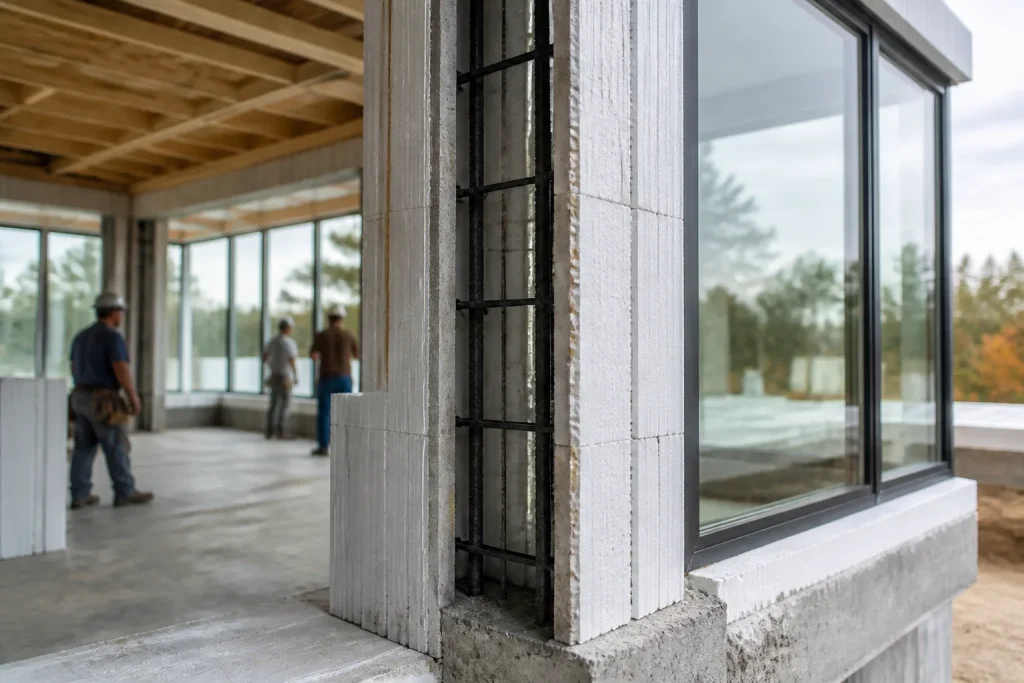
Advanced construction techniques for luxury home building involve integrating cutting-edge materials, innovative structural designs, and sophisticated smart home technologies to create residences that offer unparalleled comfort, efficiency, and aesthetic appeal. These methods often include the use of high-performance insulation, sustainable energy systems like geothermal heating…
- Advanced construction in luxury home building is characterized by a commitment to innovation, sustainability, and superior craftsmanship that goes beyond conventional building practices.
- The concept of a precision-engineered building envelope is central to advanced construction, focusing on creating a highly controlled indoor environment.
- The trajectory of advanced construction in luxury home building points towards even greater integration of technology, hyper-personalization, and a deeper commitment to environmental stewardship.
- ICFs are hollow foam blocks filled with concrete, used to build highly insulated and durable walls.
The Definitive Handbook on Advanced Construction Techniques for Luxury Residences
Advanced construction techniques for luxury home building involve integrating cutting-edge materials, innovative structural designs, and sophisticated smart home technologies to create residences that offer unparalleled comfort, efficiency, and aesthetic appeal. These methods often include the use of high-performance insulation, sustainable energy systems like geothermal heating and solar panels, and robust structural components such as insulated concrete forms (ICFs) or structural insulated panels (SIPs). Furthermore, advanced techniques extend to precision-engineered building envelopes that minimize thermal bridging, ensuring superior energy efficiency and indoor air quality. The goal is to deliver a bespoke living experience that combines architectural grandeur with long-term operational savings and environmental responsibility, setting a new standard for residential excellence. This approach ensures durability, reduces maintenance, and provides a healthier living environment for occupants, distinguishing luxury properties from standard builds.
What Defines Advanced Construction in Luxury Home Building?
Advanced construction in luxury home building is characterized by a commitment to innovation, sustainability, and superior craftsmanship that goes beyond conventional building practices. It involves a holistic approach, where every component, from the foundation to the finishes, is selected and installed with meticulous attention to detail and performance. For instance, many luxury projects now incorporate passive house principles, aiming for ultra-low energy consumption. This often means employing continuous insulation layers, airtight construction, and high-performance windows, which can reduce heating and cooling demands by up to 90% compared to traditional homes. A prime example is the use of triple-pane windows with low-emissivity coatings, which significantly improve thermal performance and sound insulation, creating a quieter and more comfortable interior environment. These elements are not merely upgrades; they are fundamental to the structural integrity and long-term value of a luxury residence.
The integration of smart home technology is another hallmark of advanced construction. Modern luxury homes are often equipped with sophisticated automation systems that control lighting, climate, security, and entertainment from a centralized interface or even remotely. Consider a scenario where a homeowner can adjust the indoor temperature, arm the security system, and even monitor energy usage from their smartphone while traveling. This level of integration enhances convenience, security, and energy management. For example, advanced HVAC systems can learn occupant preferences and adjust settings automatically, optimizing comfort while minimizing energy waste. According to industry reports from 2023, the adoption rate of integrated smart home systems in new luxury builds has surpassed 70%, reflecting a strong demand for intelligent living spaces. This trend underscores the shift towards homes that are not only beautiful but also highly functional and responsive to the occupants’ needs.
Material science plays a crucial role in defining advanced construction. Luxury builders frequently utilize innovative materials that offer enhanced durability, aesthetic appeal, and environmental benefits. This includes everything from engineered wood products that provide superior strength and stability to advanced composite materials used for exterior cladding that resist weathering and require minimal maintenance. For instance, high-strength, low-carbon concrete mixes are increasingly being specified for foundations and structural elements, reducing the carbon footprint of the build while ensuring exceptional longevity. Another example is the use of advanced waterproofing membranes and drainage systems that protect the building envelope from moisture intrusion, a common issue that can lead to costly repairs in less meticulously constructed homes. These material choices contribute significantly to the overall resilience and sustainability of the luxury residence, ensuring it stands the test of time both structurally and aesthetically.
Precision Engineering and Building Envelopes
The concept of a precision-engineered building envelope is central to advanced construction, focusing on creating a highly controlled indoor environment. This involves meticulous design and execution of the exterior shell of the home, including the roof, walls, windows, and foundation, to achieve optimal thermal performance, airtightness, and moisture management. The goal is to minimize unwanted air infiltration and exfiltration, which can lead to significant energy loss and compromise indoor air quality. For instance, advanced building envelopes often incorporate continuous insulation layers that wrap around the entire structure, eliminating thermal bridges—points where heat can easily escape or enter due to breaks in the insulation. This approach is critical for maintaining stable indoor temperatures with minimal energy input, a key characteristic of high-performance luxury homes.
Beyond insulation, precision engineering extends to the sealing of every joint and penetration in the building envelope. Techniques such as blower door tests are routinely employed during construction to measure the airtightness of the structure, allowing builders to identify and seal any leaks before they become problematic. A typical luxury home built with advanced techniques might achieve an air leakage rate significantly lower than conventional builds, often measured in air changes per hour (ACH) at a specific pressure. For example, a passive house standard often targets 0.6 ACH at 50 Pascals, a level far superior to standard building codes. This rigorous attention to detail not only enhances energy efficiency but also contributes to a quieter interior by reducing sound transmission from the outside, further elevating the comfort and serenity of the living space.
Sustainable Energy Systems and Resource Management
The integration of sustainable energy systems is a cornerstone of advanced construction in luxury residences, moving beyond mere efficiency to active energy generation and responsible resource management. Geothermal heating and cooling systems, for example, leverage the stable underground temperatures to provide highly efficient climate control, significantly reducing reliance on fossil fuels. These systems involve a network of underground pipes that exchange heat with the earth, offering both heating in winter and cooling in summer with remarkable efficiency. Similarly, photovoltaic (solar) panels are increasingly sophisticated, often integrated seamlessly into the architectural design rather than simply mounted on the roof, preserving aesthetic appeal while generating clean electricity. A well-designed solar array can offset a substantial portion, if not all, of a luxury home’s electricity consumption, leading to near-zero energy bills and a reduced carbon footprint.
Resource management in advanced construction also encompasses water conservation and waste reduction. Rainwater harvesting systems, for instance, collect and filter rainwater for irrigation or non-potable indoor uses, reducing demand on municipal water supplies. Greywater recycling systems take this a step further, treating water from sinks and showers for reuse in toilets or landscaping. On the construction site, advanced builders prioritize waste diversion, recycling a high percentage of construction debris rather than sending it to landfills. This commitment to sustainability extends to the selection of materials, favoring those with low embodied energy, recycled content, or certifications from organizations like the Forest Stewardship Council (FSC) for wood products. These practices collectively ensure that the luxury residence is not only opulent but also environmentally conscious throughout its lifecycle.
The integration of sustainable energy systems is a cornerstone of advanced construction in luxury residences, moving beyond mere efficiency to active energy generation and responsible resource management. Geothermal heating and cooling systems, for example, leverage the stable underground temperatures to provide highly efficient climate control, significantly reducing reliance on fossil fuels. These systems involve a network of underground pipes that exchange heat with the earth, offering both heating in winter and cooling in summer with remarkable efficiency. Similarly, photovoltaic (solar) panels are increasingly sophisticated, often integrated seamlessly into the architectural design rather than simply mounted on the roof, preserving aesthetic appeal while generating clean electricity. A well-designed solar array can offset a substantial portion, if not all, of a luxury home’s electricity consumption, leading to near-zero energy bills and a reduced carbon footprint.
Resource management in advanced construction also encompasses water conservation and waste reduction. Rainwater harvesting systems, for instance, collect and filter rainwater for irrigation or non-potable indoor uses, reducing demand on municipal water supplies. Greywater recycling systems take this a step further, treating water from sinks and showers for reuse in toilets or landscaping. On the construction site, advanced builders prioritize waste diversion, recycling a high percentage of construction debris rather than sending it to landfills. This commitment to sustainability extends to the selection of materials, favoring those with low embodied energy, recycled content, or certifications from organizations like the Forest Stewardship Council (FSC) for wood products. These practices collectively ensure that the luxury residence is not only opulent but also environmentally conscious throughout its lifecycle.
The Future of Luxury Home Building
The trajectory of advanced construction in luxury home building points towards even greater integration of technology, hyper-personalization, and a deeper commitment to environmental stewardship. Emerging trends include the widespread adoption of artificial intelligence (AI) for predictive maintenance and optimized energy management. Imagine a home that not only learns your preferences but also anticipates potential system failures, scheduling preventative maintenance before issues arise. For example, AI-powered sensors could monitor the performance of HVAC systems, identifying minor anomalies that indicate a need for service, thereby extending equipment lifespan and preventing costly breakdowns. Furthermore, advancements in modular and prefabricated construction techniques are beginning to offer luxury builders new avenues for achieving unparalleled precision and efficiency, reducing on-site construction time and minimizing waste, while still allowing for highly customized designs. This evolution ensures that luxury residences will continue to push the boundaries of what is possible in residential architecture and living.
Another significant area of growth is the incorporation of biophilic design principles, which seek to connect occupants more closely with nature through natural light, ventilation, and views, as well as the use of natural materials and patterns. This approach is increasingly recognized for its positive impact on occupant well-being, reducing stress and improving cognitive function. For instance, a luxury home might feature expansive glass walls that blur the lines between indoor and outdoor spaces, or incorporate living walls and indoor gardens that enhance air quality and provide a sense of tranquility. The emphasis on creating healthier indoor environments is also driving innovation in air and water purification systems, with advanced filtration technologies becoming standard. According to a 2023 report by the Global Wellness Institute, wellness real estate, including homes designed with biophilic principles, is a rapidly expanding market segment, reflecting a growing consumer demand for residences that actively contribute to health and happiness.
Crafting Your Vision for Tomorrow’s Home
Considering the rapid advancements in construction, what elements will define your ideal luxury residence in the coming years? Will it be the seamless integration of AI, the ultimate in energy independence, or a sanctuary designed to enhance your well-being through biophilic principles? Reflecting on these possibilities can help clarify priorities for those embarking on a luxury home building journey. The choices made today will shape not just a dwelling, but a lifestyle for decades to come, balancing cutting-edge innovation with timeless comfort and responsibility.
Bottom Line: Advanced construction in luxury home building is defined by a holistic integration of innovative materials, smart technologies, and sustainable practices, resulting in residences that offer superior comfort, efficiency, and long-term value beyond conventional builds.
Frequently Asked Questions
What are insulated concrete forms (ICFs)?
ICFs are hollow foam blocks filled with concrete, used to build highly insulated and durable walls. They provide superior thermal performance, sound insulation, and structural strength compared to traditional wood framing, contributing to a more energy-efficient and resilient luxury home.
How do smart home systems enhance luxury living?
Smart home systems integrate control over lighting, climate, security, and entertainment, offering unparalleled convenience and efficiency. They allow for remote management, personalized automation, and optimized energy usage, creating a responsive and comfortable living environment tailored to occupant needs.
What is a precision-engineered building envelope?
A precision-engineered building envelope refers to the meticulously designed and constructed exterior shell of a home, including walls, roof, windows, and foundation. Its purpose is to achieve optimal thermal performance, airtightness, and moisture management, ensuring superior energy efficiency and indoor air quality.
Why are sustainable energy systems important in luxury homes?
Sustainable energy systems like geothermal and solar panels reduce reliance on fossil fuels, lower operational costs, and minimize environmental impact. They provide efficient climate control and clean electricity generation, aligning luxury living with environmental responsibility and long-term savings.