
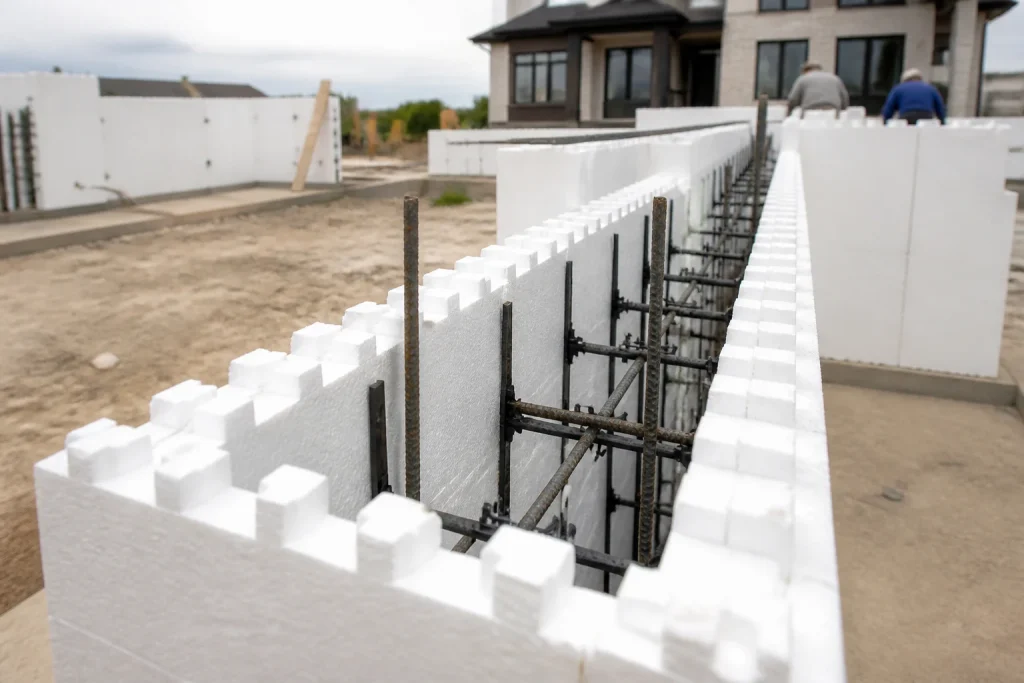
Insulated Concrete Forms (ICF) offer significant benefits for luxury home building, primarily by enhancing energy efficiency, structural integrity, and indoor comfort. These systems, which consist of hollow foam blocks filled with reinforced concrete, create exceptionally strong and well-insulated walls.
- The inherent strength of ICF construction stems from its monolithic concrete core, reinforced with steel rebar, creating a continuous structural shell.
- One often-overlooked benefit of ICF in luxury homes is its remarkable sound attenuation properties.
- Choosing Insulated Concrete Forms for luxury home building represents a strategic investment in long-term value, extending beyond immediate energy savings and comfort.
- Initially, ICF construction can have a slightly higher upfront cost, typically 3% to 7% more than conventional wood-frame building.
What are the Benefits of Using Insulated Concrete Forms (ICF) in Luxury Home Construction?
Insulated Concrete Forms (ICF) offer significant benefits for luxury home building, primarily by enhancing energy efficiency, structural integrity, and indoor comfort. These systems, which consist of hollow foam blocks filled with reinforced concrete, create exceptionally strong and well-insulated walls. Homeowners can expect substantial reductions in heating and cooling costs, often ranging from 30% to 50% compared to traditional stick-built homes, due to the continuous insulation and thermal mass of the concrete. Beyond energy savings, ICF construction provides superior resistance to natural disasters like hurricanes and tornadoes, improved sound attenuation for a quieter interior, and a healthier indoor environment by minimizing air infiltration and potential mold growth. For discerning clients, ICF delivers a durable, quiet, and highly sustainable foundation for their bespoke living spaces, aligning with the demand for advanced, high-performance residences.
ENHANCED RESILIENCE AND SAFETY
The inherent strength of ICF construction stems from its monolithic concrete core, reinforced with steel rebar, creating a continuous structural shell. This design provides exceptional resistance to extreme weather events, a critical consideration for luxury homes in areas prone to natural disasters. For instance, in hurricane-prone regions like Florida or the Gulf Coast, ICF walls have demonstrated the ability to withstand wind speeds exceeding 200 mph, far surpassing the capabilities of conventional wood-frame construction. The solid concrete mass resists impact from flying debris more effectively, safeguarding both the structure and its occupants.
Beyond wind resistance, ICF homes offer superior seismic performance. The continuous concrete structure distributes forces evenly, reducing stress concentrations that can lead to failure in traditional framed buildings during an earthquake. This robust construction also contributes to enhanced fire safety. Concrete is non-combustible, and the foam insulation, typically expanded polystyrene (EPS), is treated with fire retardants. This combination creates a wall system with a fire-resistance rating often exceeding four hours, providing occupants with more time to evacuate and minimizing structural damage in the event of a fire, a significant advantage for protecting valuable assets and lives.
SUPERIOR ACOUSTIC PERFORMANCE
One often-overlooked benefit of ICF in luxury homes is its remarkable sound attenuation properties. The dense, solid concrete core, encapsulated by two layers of foam insulation, creates a highly effective barrier against noise transmission. This results in an exceptionally quiet interior environment, a hallmark of true luxury. External disturbances, such as traffic noise, airplanes, or even loud neighbors, are significantly reduced, allowing for a more peaceful and private living experience.
The sound transmission class (STC) rating for ICF walls typically ranges from 50 to 55, which is substantially higher than the STC 33-38 common for standard wood-frame walls. To illustrate, an STC rating of 50 means that loud speech is barely audible, and an STC of 55 renders it inaudible. This level of soundproofing is particularly appealing for homes situated near busy urban centers, airports, or in communities where outdoor activities might otherwise intrude on indoor tranquility. It also contributes to better internal acoustics, preventing sound from traveling between rooms and enhancing the enjoyment of home theaters, music rooms, or quiet studies.
Furthermore, the inherent thermal mass of the concrete within ICF walls contributes to a more stable internal temperature, reducing temperature fluctuations that can disrupt comfort. This thermal mass absorbs and stores heat, releasing it slowly over time, which helps to maintain a consistent indoor climate. For example, during a hot summer day, the concrete absorbs heat from the interior, preventing it from immediately transferring into the living space. As evening temperatures drop, the stored heat is gradually released, mitigating the need for continuous air conditioning. Conversely, in colder months, the concrete retains heat from the heating system, releasing it slowly to keep the interior warm and comfortable. This passive temperature regulation not only enhances comfort but also reduces the workload on HVAC systems, extending their lifespan and further contributing to energy savings. The result is a home that feels consistently comfortable, regardless of external weather conditions, a highly valued attribute in luxury residences where occupant well-being is paramount.
The superior air tightness achieved with ICF construction is another critical factor in creating a comfortable and healthy indoor environment. Traditional stick-built homes often suffer from numerous small gaps and cracks in their envelopes, leading to uncontrolled air leakage. This air infiltration can introduce outdoor pollutants, allergens, and humidity, compromising indoor air quality and comfort. ICF walls, by contrast, create a continuous, monolithic barrier that significantly minimizes air leakage. This tight building envelope helps to prevent the entry of dust, pollen, and other airborne contaminants, resulting in cleaner, healthier indoor air. According to a national industry survey in 2023, ICF homes typically exhibit air leakage rates that are 50% to 70% lower than conventional construction. This reduction in air infiltration also makes it easier to control indoor humidity levels, preventing the conditions that can lead to mold and mildew growth, a common concern in many climates. For luxury homeowners, this translates into a living space that is not only more comfortable but also promotes better health and well-being for its occupants.
Investing in Lasting Value for Luxury Home Building
Choosing Insulated Concrete Forms for luxury home building represents a strategic investment in long-term value, extending beyond immediate energy savings and comfort. The durability and longevity of ICF structures mean significantly reduced maintenance costs over the lifespan of the home. Unlike wood-frame construction, ICF walls are impervious to rot, termites, and other pests, eliminating the need for costly treatments or repairs associated with these issues. The robust concrete core also provides exceptional resistance to wear and tear, maintaining its structural integrity for decades with minimal intervention. This inherent resilience protects the homeowner’s investment, ensuring that the property retains its pristine condition and high value for generations. For example, a luxury home built with ICF in a coastal region will withstand the corrosive effects of salt air and high humidity far better than a traditional structure, preserving its aesthetic appeal and structural soundness without constant upkeep. This reduced maintenance burden allows homeowners to enjoy their bespoke living spaces without the recurring expenses and inconveniences often associated with conventional building methods.
Furthermore, the sustainability aspect of ICF construction aligns perfectly with the growing demand for environmentally responsible luxury homes. ICF systems contribute to green building certifications like LEED (Leadership in Energy and Environmental Design) due to their energy efficiency, reduced waste during construction, and the long lifespan of the materials. The foam insulation used in ICF blocks is often made from recycled content, and the concrete itself is a durable, locally sourced material in many regions. The energy savings achieved throughout the home’s operational life significantly reduce its carbon footprint, making it a more eco-friendly choice. For discerning clients who prioritize environmental stewardship, an ICF home offers a tangible commitment to sustainability without compromising on luxury or performance. This commitment to green building practices not only benefits the planet but also enhances the property’s marketability and appeal to environmentally conscious buyers, potentially increasing its resale value in the future. As of 2024, the demand for sustainable luxury properties continues to rise, making ICF an increasingly attractive option for forward-thinking homeowners.
Considering the Future of Your Luxury Residence
When planning a luxury home, it is essential to consider how the chosen construction method will impact the property’s future adaptability and potential for upgrades. ICF construction offers inherent flexibility for future modifications and expansions, a significant advantage for homeowners who anticipate evolving needs. The solid, continuous walls provide a stable base for adding new features, such as smart home technology integrations, advanced security systems, or even structural additions, with relative ease. Unlike traditional framing, where modifications can compromise structural integrity or insulation, ICF walls maintain their performance even after careful alterations. For instance, installing new wiring or plumbing within an ICF wall, while requiring specialized techniques, does not create the same thermal bridges or air leakage points that might occur in a wood-frame wall. This adaptability ensures that a luxury ICF home can evolve with its owners’ lifestyles and technological advancements, remaining a state-of-the-art residence for many years to come. This forward-thinking approach to construction safeguards the initial investment and provides peace of mind that the home can meet future demands without extensive and disruptive renovations.
Bottom Line: Insulated Concrete Forms (ICF) provide luxury home building with unparalleled energy efficiency, superior resilience against natural disasters, exceptional soundproofing, and a healthier indoor environment, delivering lasting value and comfort.
Frequently Asked Questions
Is ICF construction more expensive than traditional building methods?
Initially, ICF construction can have a slightly higher upfront cost, typically 3% to 7% more than conventional wood-frame building. However, these costs are often offset by significant long-term savings in energy bills, reduced maintenance, and enhanced durability, leading to a lower total cost of ownership over the home’s lifespan.
How long does it take to build a luxury home with ICF?
The construction timeline for an ICF luxury home is comparable to, or sometimes even faster than, traditional methods. While the concrete pouring process requires specific scheduling, the modular nature of ICF blocks can expedite wall assembly. Overall project duration depends on design complexity and site conditions.
Can ICF homes be customized to luxury architectural designs?
Absolutely. ICF systems are highly versatile and can accommodate virtually any architectural style or design, from contemporary to traditional. The forms can be cut and shaped to create intricate angles, curves, and openings, allowing for complete design freedom without compromising structural integrity or performance.
What is the lifespan of an ICF luxury home?
ICF homes are built to last, with a structural lifespan often exceeding 100 years. The concrete core is resistant to rot, pests, and corrosion, providing exceptional durability. This longevity far surpasses that of typical wood-frame construction, making ICF a truly generational investment.