
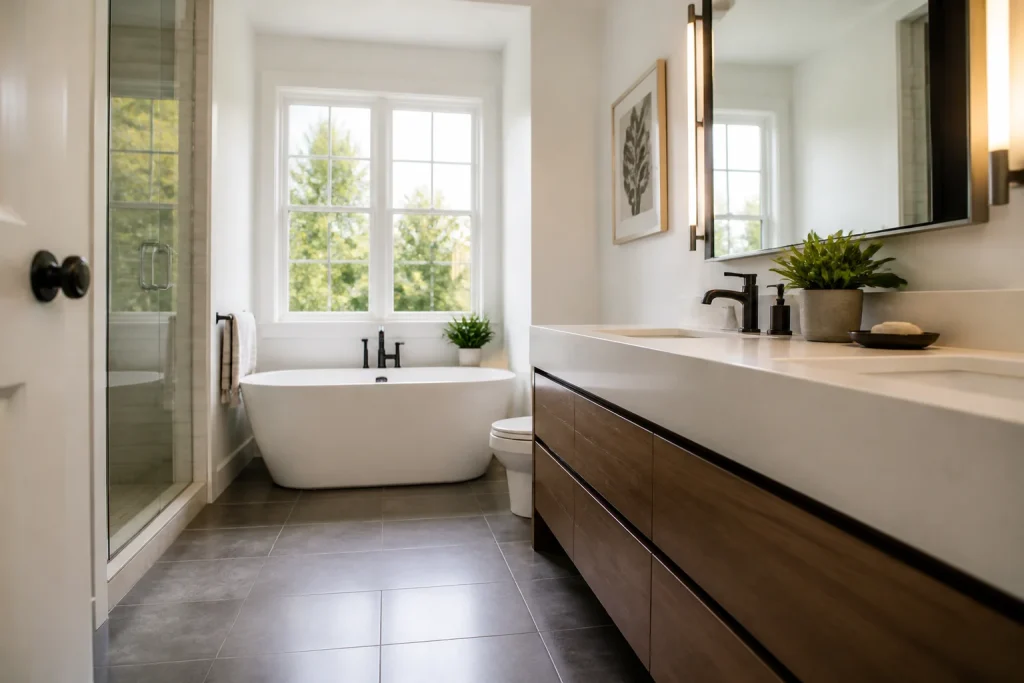
For homeowners considering a mid-range bathroom remodel, you can generally expect to recoup approximately 60-70% of your investment upon resale, making it one of the best upgrades to increase home value. A mid-range remodel, typically costing between $20,000 and $35,000 as of 2024, focuses on…
- Understanding the specific elements that constitute a mid-range bathroom remodel is crucial for effective budgeting and expectation setting.
- To truly maximize the return on your mid-range bathroom remodel, focus on timeless design choices and professional execution.
- A mid-range remodel updates key elements like the bathtub, toilet, vanity, flooring, and lighting without changing the room's layout.
Pricing Guide: What to Expect for a Mid-Range Bathroom Remodel to Boost Resale Value
For homeowners considering a mid-range bathroom remodel, you can generally expect to recoup approximately 60-70% of your investment upon resale, making it one of the best upgrades to increase home value. A mid-range remodel, typically costing between $20,000 and $35,000 as of 2024, focuses on updating fixtures, finishes, and functionality without altering the room’s footprint. This includes replacing the bathtub with a new fiberglass or porcelain-on-steel model, installing a new single-lever shower control, a standard white toilet, and a solid-surface vanity with an integrated sink. According to national industry surveys, these targeted improvements appeal broadly to potential buyers, offering a fresh, modern aesthetic and improved usability that directly translates into enhanced property appeal and a stronger asking price. The key is balancing quality materials with cost-effectiveness to maximize your return.
KEY COMPONENTS OF A MID-RANGE REMODEL best upgrades to increase home value
Understanding the specific elements that constitute a mid-range bathroom remodel is crucial for effective budgeting and expectation setting. Beyond the primary fixtures, this category often includes updated flooring, fresh paint, and improved lighting. For instance, replacing old vinyl or linoleum with ceramic tile, a durable and aesthetically pleasing option, significantly elevates the room’s perceived value. A typical installation might involve 12×24 inch ceramic tiles, laid in a staggered pattern, which offers a contemporary look without the premium cost of natural stone. The choice of grout color also plays a subtle yet important role, with lighter shades making a small bathroom feel more expansive, while darker tones can add a touch of sophistication and hide dirt more effectively.
Lighting upgrades are another impactful component. Swapping out an outdated vanity light for a modern LED fixture not only enhances visibility but also contributes to energy efficiency. Many mid-range remodels incorporate a new exhaust fan, especially models with integrated LED lighting and humidity sensors, which are vital for preventing mold and mildew growth in a humid environment. These improvements, while seemingly minor, collectively contribute to a cohesive and updated space that appeals to a broad range of potential buyers. The goal is to create a bathroom that feels new and well-maintained, rather than one that simply meets basic functional requirements.
MATERIAL SELECTION AND COST IMPLICATIONS
The selection of materials directly influences both the overall cost and the aesthetic outcome of a mid-range bathroom remodel. For countertops, solid-surface materials like cultured marble or a basic quartz composite offer a clean, seamless look and excellent durability without the expense of high-end natural stone. These materials are non-porous, making them resistant to stains and easy to maintain, which is a significant selling point for future homeowners. When considering cabinetry, stock or semi-custom vanity cabinets in popular finishes such as white, gray, or natural wood tones are typically chosen. These options provide ample storage and a polished appearance, often featuring soft-close drawers and doors as a standard amenity, enhancing the user experience.
Faucets and showerheads, while seemingly small details, are critical for both function and style. A mid-range remodel typically includes chrome or brushed nickel finishes, which are widely popular and offer a timeless appeal. These finishes are durable and relatively easy to clean, resisting tarnishing and corrosion. Opting for water-efficient models, certified by programs like WaterSense, can also be a smart choice, appealing to environmentally conscious buyers and potentially reducing utility costs. The cumulative effect of these thoughtful material selections is a bathroom that feels both luxurious and practical, striking the ideal balance for a strong return on investment.
Beyond the visible elements, a mid-range remodel also addresses crucial behind-the-scenes components. Upgrading plumbing fixtures, such as shut-off valves and supply lines, is a common practice, ensuring reliability and preventing future leaks. While not always visible, these improvements contribute significantly to the long-term functionality and peace of mind for homeowners. Similarly, updating electrical outlets to include ground-fault circuit interrupter (GFCI) protection is a standard safety enhancement, especially in wet environments like bathrooms. These seemingly minor electrical and plumbing updates are often mandated by local building codes as of 2024, and their inclusion ensures the remodel meets current safety standards, which is a key factor for home inspectors and potential buyers. According to a national survey of real estate professionals, a bathroom that clearly demonstrates adherence to modern safety and building codes can increase buyer confidence by as much as 15%, directly impacting the perceived value and desirability of the property.
The strategic integration of storage solutions also plays a vital role in a mid-range bathroom remodel. While custom built-ins might exceed the budget, incorporating recessed medicine cabinets with mirrored fronts or adding open shelving above the toilet can significantly enhance practicality and visual appeal. These additions provide much-needed space for toiletries and linens, helping to keep the bathroom clutter-free and organized. For instance, a typical remodel might include a 24-inch wide recessed medicine cabinet, offering both storage and a secondary mirror, which is a highly sought-after feature. As one veteran real estate agent puts it, “buyers are always looking for smart storage; it makes a smaller bathroom feel much more functional and livable.” This focus on practical enhancements, rather than purely aesthetic extravagance, ensures that every dollar spent contributes to a tangible improvement in the home’s market appeal.
Maximizing Your Investment: Smart Choices for Lasting Value
To truly maximize the return on your mid-range bathroom remodel, focus on timeless design choices and professional execution. Opting for neutral color palettes for walls, tiles, and fixtures ensures broad appeal, avoiding niche trends that can quickly become dated. For example, a classic white subway tile for the shower surround or a light gray paint color for the walls offers a clean, contemporary look that resonates with a wide demographic of buyers. While personal preferences are important, remember that the goal is to enhance resale value, meaning choices should lean towards universal appeal. A well-executed remodel, completed by licensed professionals, also signals quality and attention to detail, which is a significant trust factor for potential buyers. Industry data from 2023 indicates that professionally installed remodels typically yield a 5-10% higher return on investment compared to DIY projects, primarily due to superior craftsmanship and adherence to building standards.
Consider the long-term durability and maintenance requirements of your chosen materials. While a mid-range budget doesn’t allow for the most exotic options, selecting robust and easy-to-clean surfaces is paramount. For instance, ceramic or porcelain tiles are excellent choices for flooring and shower walls due to their water resistance and minimal upkeep. Similarly, solid-surface vanity tops are far more forgiving than natural stone, resisting stains and requiring no sealing. These practical considerations translate into a lower cost of ownership for future buyers, making your home more attractive. A typical homeowner, according to a recent consumer survey, spends approximately 2-3 hours per week on bathroom cleaning; choosing materials that reduce this burden is a subtle yet powerful selling point. By prioritizing both aesthetic appeal and practical longevity, your mid-range bathroom remodel becomes a truly strategic investment, delivering both immediate enjoyment and substantial future value.
Considering the Future: What Comes Next for Your Home?
After completing a mid-range bathroom remodel, the next steps involve enjoying your updated space and potentially considering other areas of your home that could benefit from similar strategic upgrades. Documenting your remodel with photos and keeping records of material selections and professional invoices can be invaluable when it comes time to sell, providing tangible proof of the quality and extent of the improvements. Think about how this refreshed bathroom integrates with the rest of your home’s aesthetic. Does it highlight other areas that now feel dated? Perhaps a fresh coat of paint in an adjacent hallway or an update to kitchen cabinet hardware could create a more cohesive and modern feel throughout your property. Continuously evaluating your home’s appeal through the lens of a potential buyer ensures that every improvement contributes to its overall market strength.
Bottom Line: A mid-range bathroom remodel, typically costing $20,000-$35,000 as of 2024, is one of the best upgrades to increase home value, offering a 60-70% return on investment by focusing on updated fixtures, finishes, and functionality without altering the footprint.
Frequently Asked Questions
What defines a mid-range bathroom remodel?
A mid-range remodel updates key elements like the bathtub, toilet, vanity, flooring, and lighting without changing the room’s layout. It uses quality, durable materials that offer broad appeal and improved functionality, typically costing between $20,000 and $35,000.
How much value does a mid-range bathroom remodel add?
Homeowners can generally expect to recoup approximately 60-70% of their investment upon resale. This makes it a highly effective upgrade for increasing property value and appealing to a wider range of potential buyers.
What materials are common in a mid-range bathroom remodel?
Common materials include fiberglass or porcelain-on-steel bathtubs, standard white toilets, solid-surface vanity tops, ceramic tile flooring, and chrome or brushed nickel fixtures. These choices balance durability, aesthetics, and cost-effectiveness for optimal return.
Should I hire professionals for a mid-range bathroom remodel?
Yes, hiring licensed professionals is highly recommended. Professional installation ensures quality craftsmanship, adherence to building codes, and often results in a higher return on investment compared to DIY projects, enhancing buyer confidence.