
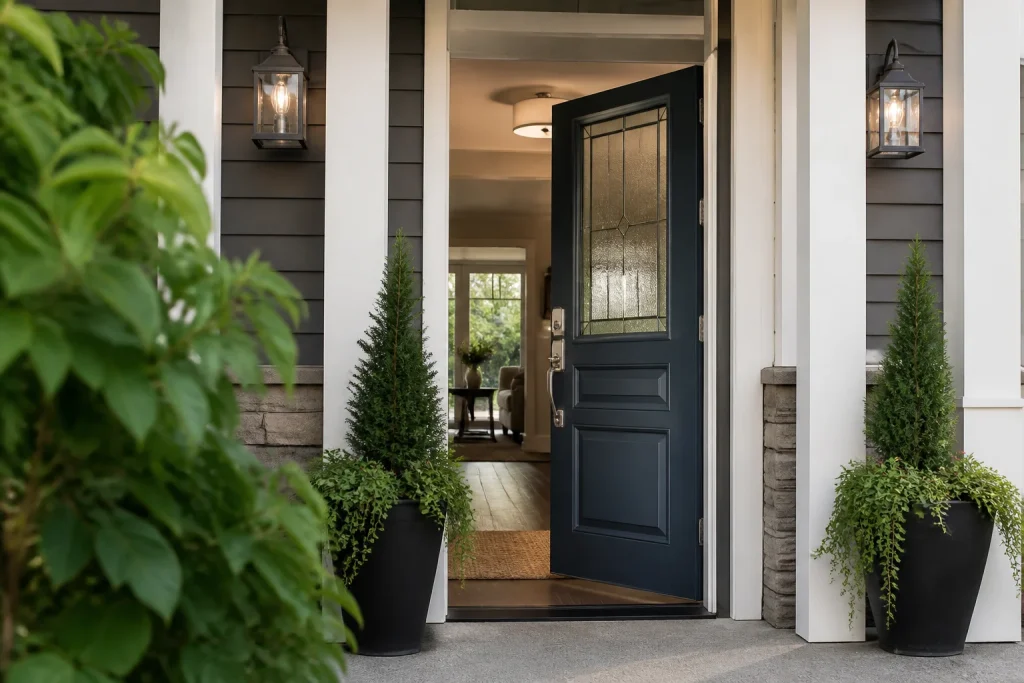
For homeowners in Plano and the broader DFW area looking for the best upgrades to increase home value, replacing an outdated front door is a highly effective strategy, offering an average return on investment (ROI) of 63% to 75% as of 2024, according to industry…
- A front door is more than just an entry point; it's a critical architectural feature that sets the tone for your entire home.
- Beyond the material, several other factors play a crucial role in how much a new front door can boost your home's appeal and value.
- The finest front door material and design can be undermined by poor installation.
- When considering the best upgrades to increase home value, the front door stands out as a prime candidate due to its multifaceted impact.
- Front door replacements typically offer an average return on investment (ROI) ranging from 63% to 75% as of 2024, making it one of the most cost-effective home improvement projects for increasing property value.
What are the Top Front Door Replacements That Instantly Boost Curb Appeal and Value?
For homeowners in Plano and the broader DFW area looking for the best upgrades to increase home value, replacing an outdated front door is a highly effective strategy, offering an average return on investment (ROI) of 63% to 75% as of 2024, according to industry surveys. A new front door significantly enhances curb appeal, creating a welcoming first impression that can attract potential buyers and elevate a home’s perceived value. Options range from classic steel and fiberglass doors, known for their durability and energy efficiency, to elegant wood doors that provide timeless aesthetic appeal. Selecting the right material, style, and finish can transform a home’s exterior, making it stand out in a competitive market and contributing substantially to its overall market worth.
What Makes a Front Door a Smart Investment for Home Value? best upgrades to increase home value
A front door is more than just an entry point; it’s a critical architectural feature that sets the tone for your entire home. When considering the best upgrades to increase home value, the impact of a new front door often surprises homeowners. Beyond its aesthetic contribution, a modern, well-installed front door offers tangible benefits such as improved energy efficiency, enhanced security, and increased durability against the elements, particularly important in the varied Texas climate. For instance, an ENERGY STAR certified door can reduce heat transfer, potentially lowering heating and cooling costs by up to 10% annually, according to EPA guidelines. This energy saving is a significant draw for prospective buyers, who are increasingly prioritizing sustainable and cost-effective home features. Furthermore, a robust door with advanced locking mechanisms provides peace of mind, a non-negotiable aspect for many families in the DFW area.
The visual impact of a new front door cannot be overstated. It acts as a focal point, drawing the eye and creating an immediate sense of quality and care. Imagine a scenario where a typical 3-bedroom home in Plano, built in the 1990s, features a faded, builder-grade front door. Replacing this with a contemporary fiberglass door in a rich, contrasting color, perhaps with decorative glass inserts, instantly modernizes the home’s facade. This single upgrade can make the property appear more updated and well-maintained than comparable homes in the neighborhood, directly influencing buyer perception and offering a competitive edge. Industry professionals often note that a striking front door can increase a home’s perceived value by thousands of dollars, making it one of the most cost-effective exterior enhancements available.
Choosing the right front door involves balancing aesthetics with practical considerations. Materials like steel and fiberglass are popular choices due to their low maintenance requirements and excellent insulation properties. Steel doors, for example, are renowned for their strength and security, often featuring a polyurethane foam core for superior thermal performance. Fiberglass doors, on the other hand, offer the look of real wood without the associated upkeep, resisting warping, rotting, and rusting—a crucial advantage in humid climates. Wood doors, while requiring more maintenance, provide unmatched natural beauty and can be customized to fit any architectural style, from traditional to modern. The decision should align with the home’s existing architecture and the homeowner’s long-term goals, whether it’s preparing for sale or simply enhancing personal enjoyment of the property.
Key Considerations for Maximizing Your Front Door Investment
Beyond the material, several other factors play a crucial role in how much a new front door can boost your home’s appeal and value. The style of the door, for instance, should complement your home’s architectural period and overall aesthetic. A craftsman-style home would benefit from a door with clear lines and perhaps a multi-lite window, while a more contemporary residence might call for a sleek, flush door with minimalist hardware. Mismatched styles can detract from curb appeal, even if the door itself is high quality. Paying attention to details like panel configuration, glass inserts, and decorative trim ensures a cohesive look that enhances the home’s character.
Hardware and finishes also contribute significantly to the door’s overall impact. A high-quality handle set, perhaps in an oil-rubbed bronze or brushed nickel, can elevate the door’s appearance and provide a tactile sense of luxury. Similarly, the color choice is paramount. A bold color can create a striking focal point, while a more subdued tone might blend seamlessly with the existing palette. For example, a deep navy or rich forest green on a light-colored brick home can provide a sophisticated contrast, drawing the eye and signaling attention to detail. Conversely, a neutral tone like charcoal gray or a warm beige can offer understated elegance. The finish, whether matte, semi-gloss, or high-gloss, also affects how the door interacts with light and its perceived texture.
Understanding Energy Efficiency Ratings
When evaluating front door replacements, understanding energy efficiency ratings is vital for long-term value and comfort. The U-factor, for example, measures how well a door prevents heat from escaping a building; lower U-factors indicate better insulation. The Solar Heat Gain Coefficient (SHGC) measures how much solar radiation is admitted through a door, with lower SHGC values being beneficial in warmer climates like DFW, as they reduce unwanted heat gain. Air leakage ratings also indicate how much air passes through the door assembly, with tighter seals leading to less drafts and improved thermal performance. Doors with low-emissivity (Low-E) glass, often found in decorative inserts, further enhance energy performance by reflecting infrared light, keeping interiors cooler in summer and warmer in winter.
An investment in an ENERGY STAR certified door is a tangible benefit that resonates with environmentally conscious buyers and offers immediate savings. These doors meet strict energy efficiency guidelines set by the EPA, ensuring superior insulation and reduced energy consumption. For a typical 2,000-square-foot home in Plano, upgrading to an ENERGY STAR door could translate to noticeable reductions in utility bills, making the home more attractive to prospective buyers who are increasingly focused on operational costs. This commitment to energy efficiency not only adds to the home’s marketability but also contributes to a more comfortable indoor environment year-round, mitigating the impact of extreme Texas temperatures.
Installation Quality and Its Impact on Longevity and Value
The finest front door material and design can be undermined by poor installation. Proper installation ensures the door operates smoothly, provides optimal security, and delivers its intended energy efficiency benefits. A correctly installed door will be plumb, level, and square, with no gaps around the frame that could allow air or moisture infiltration. This precision is critical for preventing issues such as drafts, water damage, and premature wear on hinges and locking mechanisms. Professional installation typically includes sealing and insulating the frame thoroughly, often with expanding foam, to create an airtight barrier against the elements. This attention to detail is paramount for maximizing the door’s lifespan and maintaining its aesthetic and functional integrity over time.
Furthermore, a professional installation often includes proper flashing and weatherstripping, which are essential for protecting the door and the surrounding wall structure from moisture intrusion. In the DFW area, where heavy rains can occur, robust weatherproofing is non-negotiable. Incorrectly installed flashing can lead to water pooling, rot, and costly structural damage, negating any value added by the new door. A reputable installer will also ensure that the door’s locking mechanisms are correctly aligned and function flawlessly, providing the enhanced security that homeowners expect. The peace of mind that comes with a securely installed, weather-tight door is a significant, albeit intangible, boost to a home’s overall value and desirability.
The long-term value of a front door replacement also hinges on the quality of its components. Hinges, for instance, should be heavy-duty and made from corrosion-resistant materials, especially in areas prone to humidity. Locks and deadbolts should meet or exceed industry security standards, such as those set by the Builders Hardware Manufacturers Association (BHMA), ensuring robust protection against forced entry. Even seemingly minor elements like weatherstripping and door sweeps play a significant role in preventing air and moisture leaks, which can compromise energy efficiency and lead to structural damage over time. Investing in high-quality hardware and components from the outset minimizes the need for frequent repairs or replacements, thereby preserving the door’s aesthetic appeal and functional integrity, and ultimately safeguarding the home’s enhanced value for years to come.
Maximizing Your Home’s Appeal with Strategic Front Door Choices
When considering the best upgrades to increase home value, the front door stands out as a prime candidate due to its multifaceted impact. Beyond the immediate visual upgrade, a new door contributes to the home’s overall energy performance, security profile, and long-term durability. For instance, a well-insulated fiberglass door can significantly reduce thermal transfer, leading to a more stable indoor temperature and potentially lowering energy bills by hundreds of dollars annually, according to a national industry survey from 2023. This tangible saving is a powerful selling point for future buyers, who are increasingly scrutinizing a home’s operational costs. Furthermore, the enhanced security offered by modern doors, often featuring multi-point locking systems and reinforced frames, provides peace of mind that is invaluable to homeowners and highly attractive to prospective purchasers. As one veteran real estate agent in the DFW area puts it, “A strong, beautiful front door tells buyers the home has been cared for, inside and out. It’s often the first thing they touch, and that first impression can seal the deal.”
The strategic selection of a front door also involves considering its impact on the home’s architectural narrative. A colonial-style home, for example, might benefit from a classic six-panel door with sidelights, while a mid-century modern residence could be elevated by a sleek, unadorned door with a large, frosted glass insert. The goal is to create a harmonious exterior that feels intentional and well-designed. Mismatched styles can create visual dissonance, diminishing the perceived value even if the door itself is of high quality. Homeowners should also think about how the door’s color and finish interact with the existing brick, siding, and trim. A vibrant red door on a neutral-toned home can create a welcoming pop of color, while a rich, dark wood stain can add a touch of traditional elegance. These thoughtful choices demonstrate a commitment to quality and design, signaling to potential buyers that the home has been meticulously maintained and thoughtfully upgraded, thereby enhancing its market position.
Ultimately, the investment in a new front door is an investment in the home’s future marketability and the homeowner’s immediate enjoyment. The average ROI for a front door replacement consistently ranks among the highest for home improvement projects, often exceeding 60% as of 2024, according to industry reports. This strong return is driven by the door’s ability to simultaneously improve curb appeal, energy efficiency, and security. For homeowners in competitive markets like Plano, a distinctive and high-performing front door can be the differentiating factor that captures buyer attention and justifies a higher asking price. It’s a relatively modest upgrade with a disproportionately large impact, making it one of the smartest decisions a homeowner can make to enhance their property’s overall value and appeal.
Ready to Transform Your Home’s Entrance?
Considering a front door replacement is a proactive step towards enhancing your home’s curb appeal and long-term value. Begin by assessing your current door’s condition, style, and energy efficiency. Research materials like steel, fiberglass, and wood, weighing their benefits against your specific climate and maintenance preferences. Pay close attention to design elements such as paneling, glass inserts, and hardware finishes to ensure they complement your home’s architectural style. Finally, prioritize professional installation to guarantee optimal performance, security, and longevity. Taking these steps will ensure your investment yields maximum returns, both aesthetically and financially.
Bottom Line: Replacing your front door is one of the most effective home upgrades to instantly boost curb appeal and value, offering a high return on investment through enhanced aesthetics, energy efficiency, and security.
Frequently Asked Questions
What is the typical ROI for a front door replacement?
Front door replacements typically offer an average return on investment (ROI) ranging from 63% to 75% as of 2024, making it one of the most cost-effective home improvement projects for increasing property value.
Which front door material is best for energy efficiency?
Fiberglass and steel doors are generally considered the most energy-efficient options. They often feature insulated cores and tight seals, which help reduce heat transfer and improve a home’s thermal performance, especially when ENERGY STAR certified.
How does a new front door improve home security?
Modern front doors enhance security through robust materials like steel, reinforced frames, and advanced locking mechanisms such as multi-point systems. These features make the door more resistant to forced entry, providing greater peace of mind for homeowners.
Should the front door color match the trim or siding?
The front door color does not necessarily need to match the trim or siding. Often, a contrasting color can create a striking focal point and enhance curb appeal. The key is to choose a color that complements the home’s overall architectural style and existing palette.