
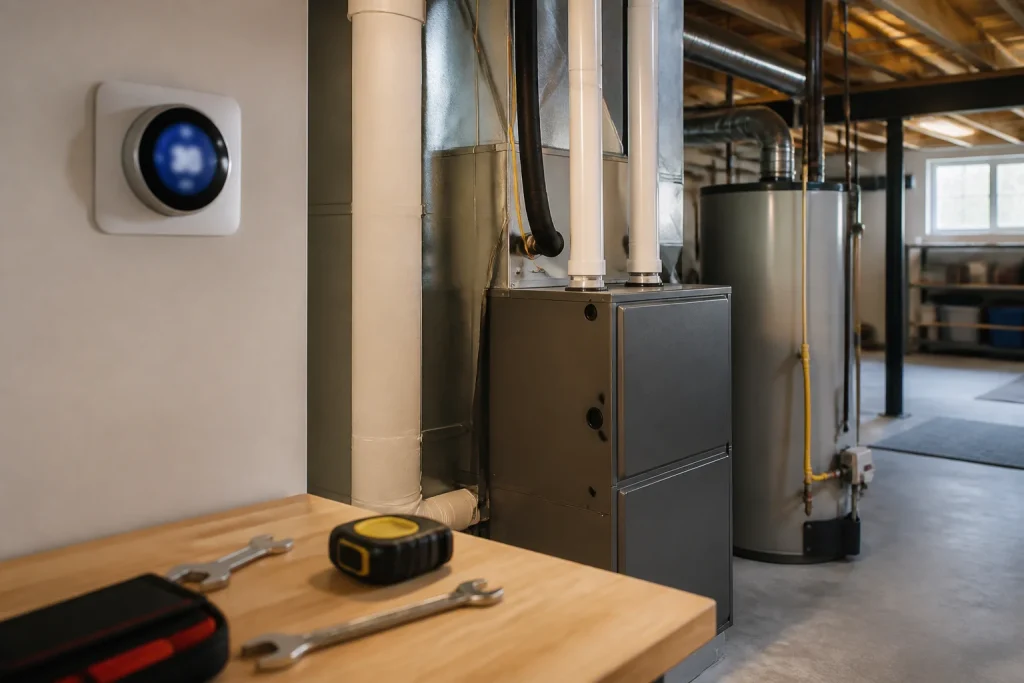
Assessing your HVAC system for upgrades that improve energy efficiency and resale value involves a multi-faceted approach, focusing on key components like the furnace, air conditioner, ductwork, and thermostat. To achieve the best upgrades to increase home value, homeowners should prioritize high-efficiency models such as…
- Prioritize ENERGY STAR® certified HVAC systems for maximum energy efficiency and long-term savings.
- A thorough assessment of your HVAC system begins with a detailed understanding of its primary components and how each contributes to overall energy consumption and indoor comfort.
- While understanding individual components is vital, a holistic view of your home's energy performance requires professional expertise.
- When considering which HVAC upgrades offer the best return on investment and truly increase home value, it's essential to look beyond immediate comfort and consider long-term market appeal.
- Furnaces generally last 15-20 years, while air conditioners and heat pumps typically have a lifespan of 10-15 years.
How to Assess Your HVAC System for Upgrades That Improve Energy Efficiency and Resale Value
Assessing your HVAC system for upgrades that improve energy efficiency and resale value involves a multi-faceted approach, focusing on key components like the furnace, air conditioner, ductwork, and thermostat. To achieve the best upgrades to increase home value, homeowners should prioritize high-efficiency models such as ENERGY STAR® certified heat pumps or furnaces, seal and insulate ductwork to prevent energy loss, and install smart thermostats for optimized climate control. These improvements not only reduce utility bills by an average of 15-20% annually, according to industry surveys, but also significantly enhance a home’s appeal and market value, particularly in competitive real estate markets like Plano, TX, where energy efficiency is a growing concern for prospective buyers. A comprehensive evaluation by a certified HVAC professional is crucial to identify specific areas for improvement, ensuring that any investment yields substantial returns in both comfort and property valuation.
Key Insights
- Prioritize ENERGY STAR® certified HVAC systems for maximum energy efficiency and long-term savings.
- Invest in professional ductwork sealing and insulation to prevent significant energy loss and improve system performance.
- Install smart thermostats to gain precise control over indoor climate, optimize energy usage, and enhance convenience.
- Consider a home energy audit to identify specific areas for improvement beyond just the HVAC system.
- Focus on upgrades that offer a strong return on investment (ROI) by appealing to modern buyers’ preferences for energy-efficient homes.
UNDERSTANDING HVAC SYSTEM COMPONENTS AND THEIR IMPACT ON EFFICIENCY
A thorough assessment of your HVAC system begins with a detailed understanding of its primary components and how each contributes to overall energy consumption and indoor comfort. The furnace, typically responsible for heating, and the air conditioner, handling cooling, are the most significant energy users. Modern furnaces boast Annual Fuel Utilization Efficiency (AFUE) ratings, indicating how efficiently they convert fuel into usable heat. For instance, a furnace with an AFUE of 90% means 90 cents of every dollar spent on fuel goes towards heating your home, with the remaining 10 cents lost through the exhaust. Similarly, air conditioners are rated by their Seasonal Energy Efficiency Ratio (SEER), which measures cooling output over a typical cooling season divided by the total electric energy input during the same period. Higher SEER ratings, like those found in ENERGY STAR® certified models (typically 15 SEER or higher), translate directly to lower electricity bills.
Beyond the main units, the ductwork acts as the circulatory system of your HVAC, distributing conditioned air throughout your home. Leaky or poorly insulated ducts can account for significant energy loss, sometimes as much as 30% of a system’s heating or cooling output. This means that even with a high-efficiency furnace or air conditioner, a substantial portion of the conditioned air might escape into unconditioned spaces like attics or crawl spaces before reaching your living areas. A professional inspection can identify these leaks and areas needing better insulation, often through a process called duct sealing, which uses mastic sealant or specialized tape to close gaps and cracks. This seemingly minor upgrade can dramatically improve system performance and reduce energy waste.
The thermostat, often overlooked, serves as the brain of your HVAC system, dictating when and how long your heating and cooling units operate. Traditional manual thermostats offer basic control, but smart thermostats provide advanced features such as programmable schedules, remote access via smartphone apps, and even learning capabilities that adapt to your preferences and local weather patterns. Some models integrate with home automation systems, allowing for even greater control and energy optimization. For example, a smart thermostat can be programmed to lower the temperature when you’re away at work and begin cooling your home just before you arrive, ensuring comfort without continuous energy expenditure. This level of precision can lead to substantial energy savings and enhanced convenience.
THE ROLE OF PROFESSIONAL HVAC EVALUATION AND HOME ENERGY AUDITS
While understanding individual components is vital, a holistic view of your home’s energy performance requires professional expertise. A certified HVAC professional can conduct a comprehensive evaluation, going beyond a simple visual inspection. This often includes diagnostic tests such as measuring airflow, checking refrigerant levels, and assessing electrical connections. They can pinpoint inefficiencies that might not be obvious to the untrained eye, such as an improperly sized system that cycles too frequently or runs too long, both of which waste energy and shorten equipment lifespan. For instance, an oversized air conditioner might cool your home too quickly, failing to adequately dehumidify the air, leading to a clammy feeling even at lower temperatures and prompting you to set the thermostat even lower, thus consuming more energy.
To gain an even broader perspective, consider a home energy audit. This service, often performed by a certified energy auditor, evaluates your entire home’s energy consumption, not just the HVAC system. It typically involves a blower door test to identify air leaks in the building envelope, infrared thermography to detect insulation deficiencies, and an assessment of your home’s windows, doors, and appliances. The auditor will then provide a detailed report outlining specific recommendations for improvements, prioritized by their potential for energy savings and return on investment. For a typical homeowner in a climate with distinct heating and cooling seasons, like those in the Midwest, an energy audit might reveal that upgrading attic insulation or sealing gaps around windows could be just as impactful as an HVAC upgrade in reducing overall energy bills.
The synergy between a professional HVAC evaluation and a home energy audit is powerful. The HVAC professional focuses on the mechanical systems, ensuring they operate at peak efficiency, while the energy auditor addresses the building’s ability to retain conditioned air. Together, these assessments provide a complete roadmap for maximizing energy efficiency and comfort. For example, if an HVAC technician identifies that your furnace is nearing the end of its lifespan, and an energy audit reveals significant air leakage around your home’s foundation, addressing both issues concurrently can lead to a dramatically more comfortable and energy-efficient living space. This integrated approach ensures that investments are made strategically, yielding the best possible outcomes for both utility savings and property value.
This integrated approach ensures that investments are made strategically, yielding the best possible outcomes for both utility savings and property value. For example, if an HVAC technician identifies that your furnace is nearing the end of its lifespan, and an energy audit reveals significant air leakage around your home’s foundation, addressing both issues concurrently can lead to a dramatically more comfortable and energy-efficient living space. This comprehensive strategy is particularly effective in regions with extreme temperature swings, where both heating and cooling demands are high, such as the Dallas-Fort Worth metroplex. According to a 2023 report by the U.S. Department of Energy, homes that undergo both HVAC upgrades and comprehensive energy efficiency improvements can see an average reduction in energy consumption of up to 30%, significantly impacting long-term utility costs.
Maximizing Your Home’s Value Through Strategic HVAC Upgrades
When considering which HVAC upgrades offer the best return on investment and truly increase home value, it’s essential to look beyond immediate comfort and consider long-term market appeal. Prospective buyers in today’s market are increasingly savvy about energy costs and environmental impact. A home equipped with a modern, high-efficiency HVAC system, particularly one that is ENERGY STAR® certified, stands out. For instance, upgrading an older, inefficient air conditioner (e.g., 10 SEER) to a new, ENERGY STAR® certified model (e.g., 18 SEER or higher) can reduce cooling costs by 30-40% annually, a tangible benefit that resonates with buyers. This is not just about lower bills; it’s about demonstrating a commitment to sustainability and providing a move-in ready solution that doesn’t require immediate, costly system replacements.
Beyond the primary heating and cooling units, enhancements to ductwork and thermostat technology also play a crucial role in boosting property value. Properly sealed and insulated ductwork ensures that the conditioned air reaches its intended destination efficiently, preventing energy waste and improving indoor air quality. A home with a well-maintained and optimized duct system can command a higher price, as it signals a well-cared-for property. Similarly, smart thermostats, with their ability to learn preferences and integrate with smart home ecosystems, are a highly desirable feature. A 2024 real estate survey indicated that homes with smart home technology, including advanced thermostats, can sell for up to 5% more than comparable properties without such features. This appeal stems from the convenience, control, and potential for energy savings that these devices offer, making them a strong selling point.
Ultimately, the best upgrades to increase home value are those that combine energy efficiency with enhanced comfort and modern convenience. This holistic approach ensures that your investment not only reduces your current utility expenses but also positions your home favorably in the competitive real estate market. As one veteran real estate agent in a growing suburban market puts it, “Buyers aren’t just looking at square footage anymore; they’re asking about the age of the HVAC, the insulation, and whether the home is smart-home ready. These energy-efficient features are no longer luxuries; they’re expectations.” Prioritizing these upgrades demonstrates foresight and provides tangible benefits that appeal to a broad range of potential homeowners, from first-time buyers to those seeking long-term savings and comfort.
Preparing Your Home for a More Efficient Future
Embarking on HVAC upgrades is a significant decision that impacts both your daily living and your home’s future marketability. To ensure you make the most informed choices, begin by gathering all available information about your current system, including its age, maintenance history, and any past repairs. This data will be invaluable for your HVAC professional and energy auditor. Consider the specific climate challenges of your region; for instance, homes in humid climates might benefit more from systems with advanced dehumidification capabilities, while those in colder regions might prioritize higher AFUE furnaces or heat pumps designed for low ambient temperatures. Thinking about your family’s specific needs—allergies, preferred temperature settings, or smart home integration desires—will also help tailor recommendations to your lifestyle, ensuring that the upgrades provide maximum comfort and utility.
Once you have a clear understanding of your needs and your home’s current state, engage with certified professionals. Obtain multiple quotes for recommended upgrades, ensuring each quote details the scope of work, specific equipment models, efficiency ratings, and warranties. Don’t hesitate to ask about available rebates or tax credits for energy-efficient improvements, as these can significantly offset the initial investment. For example, as of 2024, federal tax credits are available for certain high-efficiency heat pumps and furnaces, potentially saving homeowners hundreds or even thousands of dollars. By taking a proactive and informed approach, you can transform your HVAC system into a powerful asset that enhances your home’s energy performance, comfort, and overall market appeal for years to come.
Bottom Line: Assessing your HVAC system for upgrades that improve energy efficiency and resale value involves prioritizing ENERGY STAR® certified systems, sealing ductwork, and installing smart thermostats, all guided by professional evaluations and home energy audits to maximize comfort, savings, and market appeal.
Frequently Asked Questions
What is the typical lifespan of an HVAC system?
Furnaces generally last 15-20 years, while air conditioners and heat pumps typically have a lifespan of 10-15 years. Regular maintenance can extend these lifespans, but efficiency often declines significantly in the later years, making upgrades more appealing.
How much can a smart thermostat save on energy bills?
Smart thermostats can save homeowners an average of 10-12% on heating and 15% on cooling costs annually. These savings are achieved through features like programmable schedules, remote access, and learning capabilities that optimize temperature settings.
Is it better to repair or replace an old HVAC system?
If your HVAC system is over 10 years old, requires frequent repairs, or has significantly declining efficiency, replacement is often more cost-effective in the long run. New systems offer better performance, lower energy bills, and come with warranties.