
For homeowners like Sarah in Plano, TX, grappling with an aging water heater and escalating utility bills, choosing the right modern water heater is one of the best upgrades to increase home value and significantly reduce long-term operating costs. Upgrading to an energy-efficient model, such…
- Understanding the distinct characteristics of various energy-efficient water heaters is crucial for making an informed decision.
- To ensure you select the optimal energy-efficient water heater for your home, begin by assessing your household's specific hot water needs.
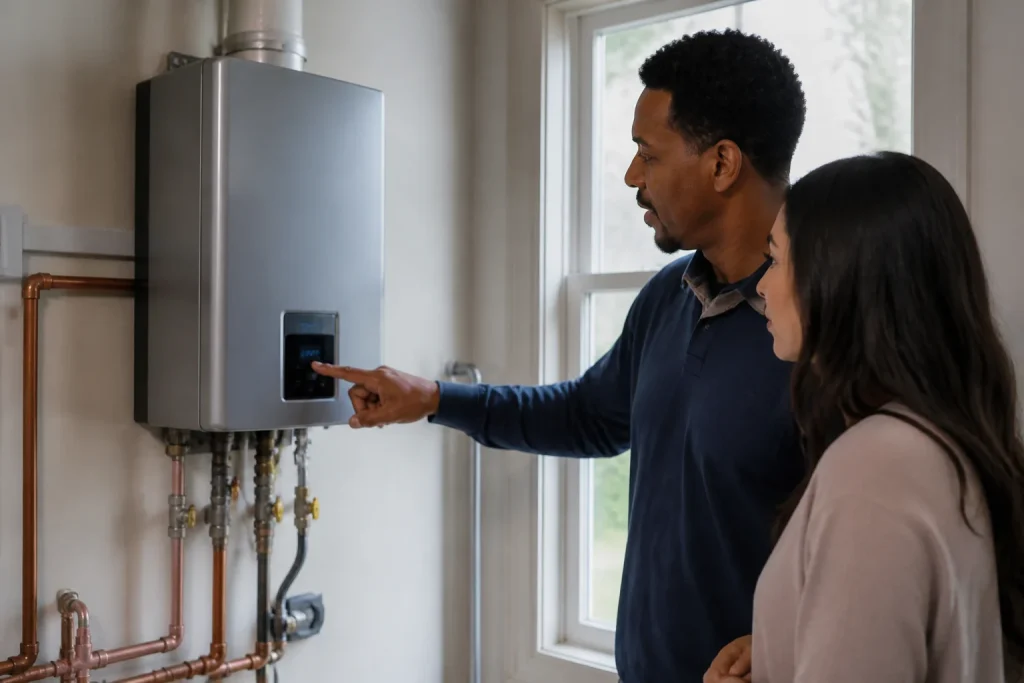
- Tankless water heaters are compact and typically wall-mounted, saving significant space compared to traditional tank units.
Best Water Heater Options for Modern Homes to Reduce Utility Costs and Increase Property Value
For homeowners like Sarah in Plano, TX, grappling with an aging water heater and escalating utility bills, choosing the right modern water heater is one of the best upgrades to increase home value and significantly reduce long-term operating costs. Upgrading to an energy-efficient model, such as a tankless or heat pump water heater, directly addresses the friction of high energy consumption and inconsistent hot water supply. These advanced systems offer substantial savings on monthly utility expenses, with some homeowners reporting reductions of 30% or more on their water heating costs, according to industry surveys from 2023. Beyond immediate savings, a new, efficient water heater enhances property appeal and contributes to a higher resale value, making it a smart investment for any modern home.
TYPES OF ENERGY-EFFICIENT WATER HEATERS best upgrades to increase home value
Understanding the distinct characteristics of various energy-efficient water heaters is crucial for making an informed decision. Each type offers unique advantages in terms of energy consumption, installation requirements, and operational costs, catering to different household needs and regional climates. Evaluating these options against your specific circumstances, such as daily hot water demand and available utility connections, will guide you toward the most suitable and cost-effective solution for your home.
TANKLESS WATER HEATERS (ON-DEMAND)
Tankless water heaters, also known as on-demand water heaters, provide hot water only when it’s needed. Unlike conventional tank systems that continuously heat and store water, tankless units heat water directly as it flows through a heat exchanger. This eliminates standby energy losses, which can account for a significant portion of a traditional water heater’s energy consumption. For a typical family of four, this can translate to annual energy savings of 24% to 34% compared to a conventional storage tank water heater, according to the U.S. Department of Energy. These systems are particularly beneficial for homes with fluctuating hot water demands or those seeking to maximize space, as they are compact and wall-mounted.
While the initial cost of a tankless unit can be higher than a conventional tank, the long-term savings on utility bills often offset this investment. Installation considerations include ensuring adequate gas line size or electrical capacity, as tankless units require a substantial energy input to heat water rapidly. For instance, a gas-fired tankless unit might require a 3/4-inch gas line, whereas a traditional tank might only need a 1/2-inch line. Proper venting is also critical, often requiring specialized stainless steel piping. The lifespan of a tankless water heater typically exceeds that of a conventional tank, often lasting 20 years or more with proper maintenance, further enhancing its value proposition.
HEAT PUMP WATER HEATERS (HYBRID)
Heat pump water heaters (HPWHs), also known as hybrid water heaters, operate by transferring heat from the surrounding air to heat water, rather than generating heat directly. They use electricity to move heat, not to create it, making them significantly more energy-efficient than conventional electric resistance water heaters. A HPWH can be two to three times more efficient than a standard electric model, leading to substantial energy bill reductions. For example, a household in a moderate climate could save an average of $300 per year on electricity bills compared to a standard electric water heater.
These units require specific installation conditions, including ample clear space around them (typically at least 1,000 cubic feet of unconditioned space, such as a basement or garage) to draw in ambient air. They also need a drain for condensate, similar to a high-efficiency furnace. While HPWHs perform optimally in spaces that remain above 40°F (4.4°C) year-round, advancements in technology have introduced models with auxiliary heating elements that can operate effectively in colder environments. The initial cost is generally higher than conventional electric models but lower than many tankless gas units, offering a compelling balance of efficiency and upfront investment.
Heat pump water heaters also offer environmental benefits, as they significantly reduce carbon emissions compared to traditional electric resistance models. Their reliance on ambient air as a primary heat source means less electricity is consumed, aligning with broader sustainability goals for modern homes. While they do have a storage tank, similar to conventional units, the method of heating is fundamentally different, leading to their superior efficiency. The typical lifespan for a HPWH is around 10-15 years, comparable to conventional tank water heaters, but with considerably lower operating costs over its lifetime. Homeowners should consider the noise level, which is similar to a refrigerator, and ensure the installation location can accommodate this.
Choosing between a tankless and a heat pump water heater depends heavily on individual household needs and existing infrastructure. For instance, a large family with high, continuous hot water demand might find a tankless gas unit more suitable due to its ability to provide endless hot water. Conversely, a household in a warmer climate with moderate hot water usage and a suitable unconditioned space would greatly benefit from the energy savings offered by a heat pump water heater. According to the EPA’s Energy Star program, both types represent significant advancements in energy efficiency over conventional models, with certified units often qualifying for local utility rebates and federal tax credits, further reducing the effective upfront cost for homeowners in 2024.
Maximizing Your Investment: Next Steps for Homeowners
To ensure you select the optimal energy-efficient water heater for your home, begin by assessing your household’s specific hot water needs. Consider the number of occupants, typical daily usage patterns, and peak demand times. For example, a family of five with multiple showers running simultaneously in the morning will have different requirements than a couple with staggered hot water use. Next, evaluate your home’s existing infrastructure. Do you have natural gas lines, or is your home primarily electric? What is the available space for installation, particularly for heat pump models that require ample air circulation? Understanding these factors is crucial for narrowing down your options and avoiding costly installation adjustments.
Consulting with a qualified plumbing professional is an invaluable step in this process. An experienced technician can assess your home’s unique characteristics, including current electrical capacity, gas line sizing, and venting requirements, to recommend the most appropriate system. They can also provide accurate estimates for installation costs, which can vary significantly based on the complexity of the job and any necessary upgrades to your home’s utility connections. Many professionals offer energy audits that can pinpoint areas where your home is losing efficiency, providing a holistic view of potential savings. For instance, a professional might identify that your current electrical panel needs an upgrade to support a high-efficiency tankless electric unit, or that your basement is too small for a heat pump model, guiding you towards a more suitable alternative.
Finally, explore available incentives and rebates. Many utility companies and government programs offer financial incentives for installing energy-efficient appliances, including tankless and heat pump water heaters. These can significantly reduce the initial investment, making these advanced systems even more attractive. Websites like Energy Star and the Department of Energy often list federal tax credits and state-specific programs available in 2024. For example, some regions offer rebates of several hundred dollars for installing a qualifying heat pump water heater, while others might provide tax credits covering a percentage of the installation cost. Taking advantage of these programs can make a substantial difference in the overall cost-effectiveness of your upgrade, solidifying it as one of the best upgrades to increase home value.
Bottom Line: Upgrading to an energy-efficient tankless or heat pump water heater is a smart investment that significantly reduces utility costs and increases property value by providing consistent hot water and long-term savings.
Frequently Asked Questions
How much space do tankless water heaters require?
Tankless water heaters are compact and typically wall-mounted, saving significant space compared to traditional tank units. They are roughly the size of a large briefcase, making them ideal for homes with limited utility space or those looking to free up floor area.
Do heat pump water heaters work in cold climates?
Modern heat pump water heaters are designed with auxiliary heating elements that allow them to operate effectively in colder climates, even below 40°F (4.4°C). While their efficiency may decrease slightly in very cold conditions, they still offer substantial energy savings over conventional electric models.
What is the typical lifespan of these energy-efficient water heaters?
Tankless water heaters often last 20 years or more with proper maintenance, while heat pump water heaters typically have a lifespan of 10-15 years. Both generally outlast conventional tank water heaters, which usually last 8-12 years.