
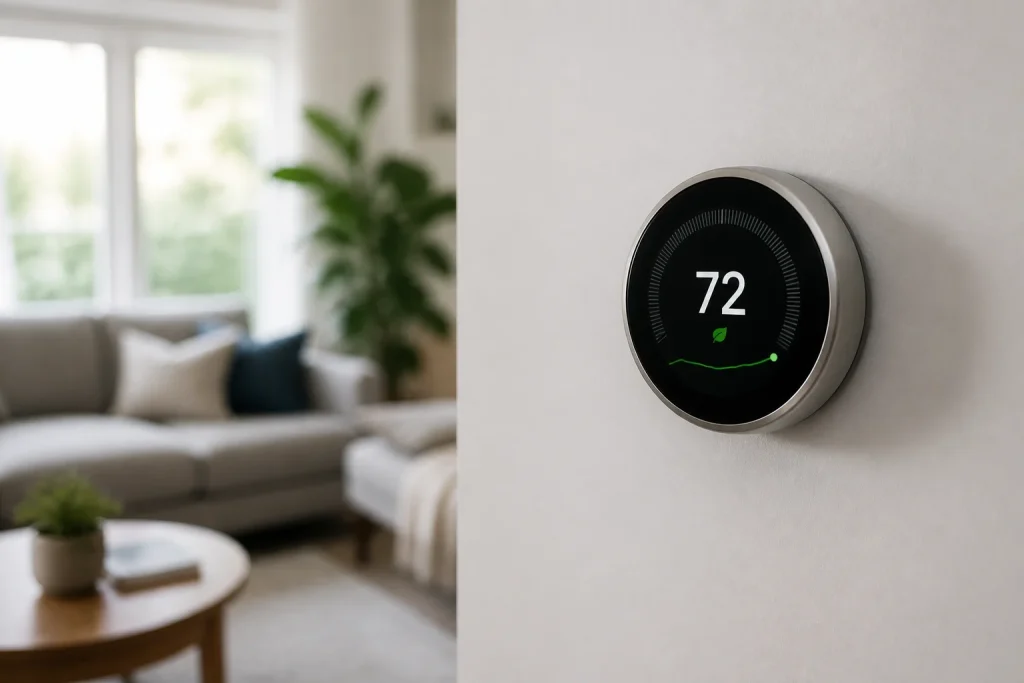
For homeowners like Sarah in Plano, Texas, looking to enhance their property's appeal and reduce utility bills, installing a smart thermostat is among the best upgrades to increase home value and energy efficiency. These devices offer precise climate control, often leading to significant savings on…
- Smart thermostats represent a significant leap from traditional programmable models, offering advanced features that directly translate into both energy savings and enhanced property appeal.
- When selecting a smart thermostat, understanding the array of available features is crucial for maximizing both energy savings and convenience.
- While smart thermostats offer inherent energy-saving capabilities, employing specific strategies can further amplify their benefits.
- Smart thermostats can typically save homeowners 10-12% on heating and 15% on cooling costs annually.
Best Smart Thermostats to Install for Energy Efficiency and Increased Home Value
For homeowners like Sarah in Plano, Texas, looking to enhance their property’s appeal and reduce utility bills, installing a smart thermostat is among the best upgrades to increase home value and energy efficiency. These devices offer precise climate control, often leading to significant savings on heating and cooling costs—up to 10-12% on heating and 15% on cooling, according to industry surveys as of 2024. Beyond immediate savings, smart thermostats contribute to a home’s modern appeal, a key factor for potential buyers in the competitive DFW real estate market. They integrate seamlessly with smart home ecosystems, providing convenience and a tangible return on investment, typically recouping their cost within two years through energy savings alone, as noted by consumer-protection guidance.
What Makes Smart Thermostats a Top Home Value Upgrade? best upgrades to increase home value
Smart thermostats represent a significant leap from traditional programmable models, offering advanced features that directly translate into both energy savings and enhanced property appeal. Unlike older systems that simply follow a set schedule, smart thermostats learn your preferences, adapt to changing weather conditions, and can be controlled remotely via smartphone applications. This level of intelligent automation is highly attractive to modern homebuyers who prioritize convenience and sustainability. For instance, a typical 3-bedroom home in Plano, Texas, with a conventional thermostat might see energy bills fluctuate wildly with the unpredictable DFW weather. By contrast, a smart thermostat can automatically adjust temperatures based on occupancy sensors or geofencing, ensuring optimal comfort only when needed, thereby preventing wasted energy when the home is empty. This proactive energy management is a powerful selling point, signaling a well-maintained and forward-thinking property.
The integration capabilities of smart thermostats further solidify their position as a high-ROI renovation. Many models are compatible with popular smart home platforms like Amazon Alexa, Google Home, and Apple HomeKit, allowing homeowners to manage their climate alongside lighting, security, and entertainment systems from a single interface. This interconnectedness creates a cohesive smart home ecosystem, a feature increasingly sought after by luxury property owners in the DFW area. According to a national industry survey from 2023, homes with integrated smart technology, including smart thermostats, can command a premium of up to 5% over comparable properties without such features. This premium reflects not just the convenience, but also the perceived future-proofing of the home, as technology continues to evolve. Furthermore, the ability to monitor energy usage in real-time and receive detailed reports helps homeowners understand their consumption patterns, empowering them to make informed decisions that further reduce their carbon footprint and utility expenses.
Beyond the technological advantages, the installation of a smart thermostat is a relatively low-cost, high-impact upgrade compared to more extensive renovations like kitchen or bathroom remodels. The average cost for a quality smart thermostat, including professional installation, typically ranges from $200 to $500, a modest investment that yields substantial long-term benefits. This accessibility makes it an appealing option for homeowners seeking to make impactful improvements without undertaking major construction. As one veteran installer puts it, “A smart thermostat is often the first smart home device people consider because its benefits are immediate and tangible—you feel the comfort and see the savings almost right away.” This immediate gratification, combined with the long-term financial and environmental advantages, makes smart thermostats an undeniable asset for any property owner looking to enhance their home’s value and appeal in today’s market.
Key Features to Look for in a Smart Thermostat
When selecting a smart thermostat, understanding the array of available features is crucial for maximizing both energy savings and convenience. Beyond basic remote control, modern devices offer sophisticated functionalities designed to optimize home climate management. One such feature is geofencing, which uses your smartphone’s location to detect when you leave or approach your home. For example, if you’re a homeowner in Dallas commuting to work, a geofencing-enabled thermostat can automatically set back the temperature when you depart and begin cooling or heating before you arrive, ensuring comfort upon entry without wasting energy on an empty house. This proactive adjustment prevents the need for manual changes and ensures efficiency.
Another highly beneficial feature is occupancy sensing. Some smart thermostats incorporate sensors that detect movement within a room, allowing them to adjust temperatures based on whether a space is actively being used. Consider a scenario where a family typically uses their living room in the evenings but leaves it vacant during the day. An occupancy-sensing thermostat can maintain a comfortable temperature only when the living room is occupied, reverting to an energy-saving setting when it’s empty. This granular control over specific zones or rooms further refines energy consumption, moving beyond whole-house adjustments to pinpoint where comfort is truly needed. Additionally, many models offer detailed energy reporting, providing insights into usage patterns and identifying opportunities for further savings.
Compatibility with existing HVAC systems is also paramount. While most smart thermostats are designed to work with a wide range of heating and cooling setups, it’s essential to verify that a chosen model supports your specific system, whether it’s a conventional furnace and air conditioner, a heat pump, or a multi-stage system. Checking your current thermostat’s wiring (often labeled with letters like R, G, Y, W, C) against the smart thermostat’s specifications is a critical step before purchase. The “C-wire” (common wire) is particularly important for providing continuous power to many smart thermostats, and its absence might require professional installation or a power extender kit. Ensuring proper compatibility prevents installation headaches and guarantees optimal performance, safeguarding your investment in smart home technology.
Maximizing Energy Savings with Smart Thermostat Strategies
While smart thermostats offer inherent energy-saving capabilities, employing specific strategies can further amplify their benefits. Leveraging scheduling features is a fundamental approach. Instead of relying solely on adaptive learning, creating a personalized schedule that aligns with your family’s routine can provide a baseline for efficiency. For instance, programming a higher temperature during peak daytime hours when no one is home and lowering it during sleeping hours can significantly reduce energy consumption. Many smart thermostats allow for distinct weekday and weekend schedules, accommodating varied lifestyles and ensuring comfort only when necessary.
Beyond fixed schedules, actively utilizing the remote access functionality is a powerful tool for dynamic energy management. Imagine an unexpected change in plans, such as an impromptu weekend trip. With a traditional thermostat, your HVAC system might continue to operate on its regular schedule, heating or cooling an empty home. A smart thermostat, however, allows you to remotely adjust the temperature from your smartphone, instantly switching to an “away” mode to conserve energy. This real-time control ensures that you’re never heating or cooling an unoccupied space unnecessarily, providing flexibility that traditional systems simply cannot match.
Finally, integrating your smart thermostat with other smart home devices can unlock advanced energy-saving scenarios. For example, linking your thermostat with smart window sensors can trigger an alert or even automatically adjust the temperature if a window is left open while the HVAC system is running, preventing wasted energy. Similarly, connecting it with smart lighting systems can create “away” scenes that dim lights and adjust climate simultaneously. These interconnected systems create a more intelligent and responsive home environment, where devices work in concert to optimize energy usage. By combining smart features with thoughtful usage strategies, homeowners can achieve the highest possible energy efficiency and realize the full potential of their smart thermostat investment.
Bottom Line: Smart thermostats are a top home value upgrade because they offer significant energy savings through intelligent automation and remote control, integrate seamlessly into modern smart home ecosystems, and provide a tangible return on investment, enhancing both property appeal and functionality for potential buyers.
Frequently Asked Questions
How much can a smart thermostat save on energy bills?
Smart thermostats can typically save homeowners 10-12% on heating and 15% on cooling costs annually. These savings are achieved through features like adaptive learning, remote control, and occupancy sensing, which optimize temperature settings based on actual needs and preferences.
Do smart thermostats increase home value?
Yes, smart thermostats contribute to increased home value by enhancing a property’s modern appeal and energy efficiency. Homes with integrated smart technology, including smart thermostats, can command a premium of up to 5% over comparable properties, according to industry surveys.
What is the average cost of a smart thermostat installation?
The average cost for a quality smart thermostat, including professional installation, typically ranges from $200 to $500. This modest investment often recoups its cost within two years through energy savings alone, making it a high-ROI upgrade.
Are smart thermostats compatible with all HVAC systems?
Most smart thermostats are designed to work with a wide range of HVAC systems, but it’s crucial to verify compatibility with your specific setup. Checking your current thermostat’s wiring, especially for a “C-wire,” is an important step to ensure proper function and avoid installation issues.