
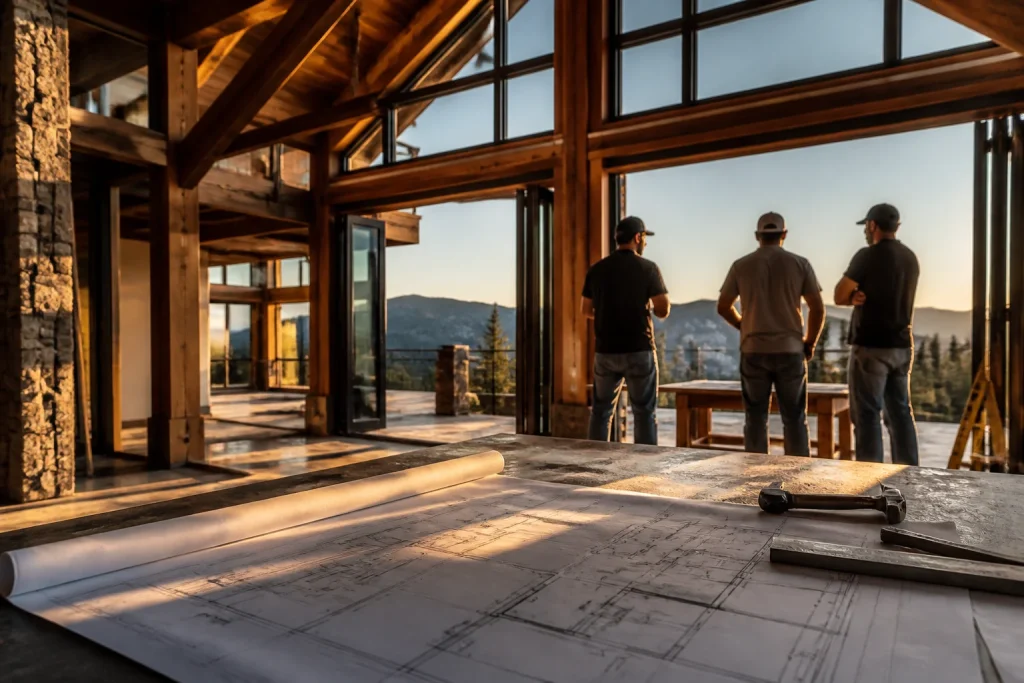
Effective project management for luxury home building involves meticulous planning, precise execution, and rigorous oversight across all phases, from initial architectural design and site selection to final interior finishes and landscaping. It requires a deep understanding of high-end materials, bespoke craftsmanship, and advanced construction techniques,…
- A luxury home building project distinguishes itself through several key characteristics that elevate it beyond standard residential construction.
- Managing a luxury home build is a multi-faceted endeavor, broken down into distinct stages, each requiring specialized oversight.
- Luxury home building projects, while rewarding, are not without their unique set of challenges.
- A luxury home building project typically spans 18-24 months, though this can vary based on complexity, size, site conditions, and the extent of custom features.
Mastering Luxury Home Building Project Management: From Concept to Completion
Effective project management for luxury home building involves meticulous planning, precise execution, and rigorous oversight across all phases, from initial architectural design and site selection to final interior finishes and landscaping. It requires a deep understanding of high-end materials, bespoke craftsmanship, and advanced construction techniques, ensuring that every detail aligns with the client’s vision and exceeds industry standards. Successful management hinges on robust communication protocols, stringent budget controls, and a proactive approach to risk mitigation, often involving specialized consultants and a highly skilled workforce. For instance, a typical luxury build in a desirable area, such as Aspen, Colorado, might involve a budget exceeding $5 million and a timeline of 18-24 months, necessitating constant coordination between architects, interior designers, landscape architects, and various trade specialists to deliver a truly custom residence by the projected completion date, often by late 2025 or early 2026.
What Defines a Luxury Home Building Project?
A luxury home building project distinguishes itself through several key characteristics that elevate it beyond standard residential construction. These projects typically involve custom architectural designs, often unique to the specific site and client preferences, rather than pre-designed floor plans. The scale of investment is significantly higher, with budgets frequently starting in the multi-million dollar range, reflecting the cost of premium materials, advanced technologies, and specialized labor. For example, a high-end kitchen in a luxury home might feature professional-grade appliances from brands like Sub-Zero or Wolf, custom cabinetry crafted from exotic woods, and countertops made from rare natural stone such as Calacatta marble, all contributing to a substantial portion of the overall budget. These elements demand a level of precision and quality control that is paramount throughout the entire construction process.
Beyond the tangible aspects, luxury home building also encompasses an unparalleled focus on client experience and personalization. Homeowners often engage directly with architects and designers to shape every facet of their future residence, from spatial flow and natural light optimization to smart home integration and sustainable building practices. This collaborative approach means that project managers must be adept at translating complex visions into actionable construction plans, managing expectations, and ensuring that the final product reflects the client’s unique lifestyle and aesthetic. A project might incorporate geothermal heating and cooling systems, advanced home automation for lighting and security, or even a dedicated wellness wing with a spa and indoor pool, all requiring expert coordination and specialized installation teams. As of 2024, the demand for integrated smart home technology in luxury properties has seen a consistent increase, with many clients expecting seamless control over their environment.
Furthermore, the selection of materials and finishes in luxury home building is often a critical differentiator. Unlike standard homes that might use off-the-shelf components, luxury projects frequently source materials globally, ranging from hand-cut Italian tiles and bespoke millwork to custom-fabricated metal elements and artisan-crafted fixtures. The emphasis is on durability, aesthetic appeal, and exclusivity. Consider a scenario where a client desires a specific type of reclaimed timber for ceiling beams or a custom-designed mosaic for a bathroom floor; the project manager must navigate complex supply chains, quality assurance, and installation logistics to meet these exacting standards. This commitment to superior quality extends to every detail, ensuring that the home not only looks magnificent but also performs exceptionally well for decades to come, often exceeding standard building codes in terms of energy efficiency and structural integrity.
Key Stages of Luxury Home Construction Project Management
Managing a luxury home build is a multi-faceted endeavor, broken down into distinct stages, each requiring specialized oversight. The initial phase, often termed pre-construction, involves extensive planning and design. This includes detailed architectural blueprints, structural engineering assessments, and comprehensive interior design schemes. During this stage, the project manager facilitates critical decisions regarding material selections, technology integrations, and sustainability features, ensuring all stakeholders—client, architect, and designers—are aligned. For instance, selecting a specific type of foundation system, such as a deep pile foundation for a hillside property, requires early engagement with geotechnical engineers and precise cost estimations to prevent delays and budget overruns later in the project lifecycle.
Following the pre-construction phase, the project transitions into the construction and execution stage. This is where the physical building takes shape, starting with site preparation, foundation pouring, and framing. Subsequent steps involve the installation of mechanical, electrical, and plumbing (MEP) systems, followed by exterior finishes like roofing, siding, and window installation. Interior work then commences, encompassing drywall, flooring, custom cabinetry, and intricate trim work. Throughout this intensive period, the project manager’s role is to coordinate a diverse team of skilled tradespeople, manage material deliveries, and conduct regular site inspections to ensure quality and adherence to the design specifications. A common challenge in this stage is managing lead times for bespoke items, such as custom-fabricated steel staircases or imported stone slabs, which can often extend to several months and necessitate careful scheduling to maintain the overall project timeline.
The final stage, often referred to as post-construction or close-out, focuses on the meticulous finishing touches and client handover. This includes the installation of fixtures, appliances, landscaping, and comprehensive system testing for smart home technology, HVAC, and security systems. A thorough punch list is developed and addressed, ensuring every detail meets the client’s exacting standards. Final inspections by regulatory bodies and the client are conducted, leading to the issuance of occupancy permits. The project manager also oversees the compilation of warranties, operational manuals, and maintenance schedules for all installed systems and materials. For example, a detailed walkthrough might reveal a minor imperfection in a hand-painted mural or a slight misalignment in a custom-built wine cellar, requiring immediate attention and resolution before the final keys are handed over, ensuring complete client satisfaction.
Challenges and Solutions in Luxury Home Building
Luxury home building projects, while rewarding, are not without their unique set of challenges. One significant hurdle is managing the intricate web of specialized trades and consultants. Unlike standard construction, luxury projects often involve artisans for bespoke elements, requiring precise coordination and scheduling to ensure their work integrates seamlessly with the overall build. A solution involves implementing advanced project management software that provides real-time updates on progress, material tracking, and communication logs, allowing for proactive identification and resolution of potential conflicts. Regular, perhaps weekly, coordination meetings with all key stakeholders, including the client, architect, interior designer, and lead contractors, are also crucial for maintaining alignment and addressing emerging issues promptly.
Another common challenge is navigating unexpected site conditions or design changes. Even with extensive pre-construction planning, unforeseen geological issues, or a client’s desire for a significant design modification mid-project, can impact timelines and budgets. To mitigate this, project managers often build contingency allowances into the budget and schedule from the outset, typically ranging from 10-15% of the total project cost. Furthermore, establishing a clear change order process, where all modifications are formally documented, approved by the client, and assessed for their impact on cost and schedule, is essential. For instance, if a client decides to upgrade from standard hardwood flooring to a rare, imported parquet pattern, the change order would detail the additional material cost, labor, and any extended lead times, providing full transparency.
Maintaining stringent quality control throughout the construction process is paramount in luxury home building. The expectation for perfection in materials, finishes, and craftsmanship is exceptionally high. This requires a proactive approach to quality assurance, involving frequent site inspections by the project manager and independent third-party inspectors. Implementing a multi-stage inspection process, where work is checked at various milestones—such as after framing, before drywall, and after finish installations—helps catch potential issues early. For example, before installing expensive custom cabinetry, a detailed inspection of wall plumbness and floor leveling ensures a flawless fit, preventing costly rework and delays. This meticulous attention to detail ensures that the final product not only meets but exceeds the client’s expectations for enduring quality and aesthetic excellence.
Furthermore, managing client expectations is a continuous challenge. Luxury home clients often have very specific, sometimes evolving, visions for their properties. The project manager must act as a skilled diplomat, balancing the client’s desires with practical construction realities, budget constraints, and regulatory requirements. This involves transparent communication about potential trade-offs, providing clear visual aids like 3D renderings or material samples, and offering alternative solutions that still achieve the desired aesthetic and functionality. For instance, if a client requests a feature that significantly exceeds the allocated budget, the project manager might present a phased approach or suggest alternative materials that offer a similar high-end look at a more manageable cost, ensuring the client feels heard and valued while keeping the project on track. This proactive problem-solving approach is vital for maintaining client satisfaction and project momentum.
Embracing Innovation for Future-Proof Luxury Residences
The landscape of luxury home building is constantly evolving, driven by advancements in technology, materials, and sustainable practices. Project managers who embrace innovation are better positioned to deliver residences that are not only opulent but also future-proof. This includes integrating cutting-edge smart home systems that offer unparalleled convenience and energy efficiency, such as AI-powered climate control or biometric security features. It also extends to utilizing advanced building techniques like modular construction for certain components, which can enhance precision and reduce on-site waste, or incorporating renewable energy sources like solar panels and sophisticated rainwater harvesting systems. As of 2024, there is a growing trend towards net-zero energy luxury homes, requiring project managers to collaborate closely with specialized engineers and consultants to achieve these ambitious environmental goals, often involving complex energy modeling and certification processes.
Moreover, the adoption of sustainable and health-focused building materials is becoming a hallmark of modern luxury homes. Clients are increasingly seeking non-toxic, hypoallergenic, and locally sourced materials that contribute to a healthier indoor environment and reduce the home’s ecological footprint. This might involve using low-VOC paints, natural insulation like cellulose or sheep’s wool, and sustainably harvested timber. Project managers must stay abreast of these material innovations, understand their performance characteristics, and manage their procurement and installation, which can sometimes involve longer lead times or specialized installation techniques. For example, sourcing FSC-certified exotic hardwoods for flooring requires careful verification of their origin and ethical sourcing practices, adding another layer of complexity to the supply chain management. This commitment to health and sustainability not only enhances the home’s value but also aligns with the discerning values of many luxury homeowners.
Finally, the integration of digital tools and virtual reality (VR) is transforming how luxury home projects are managed and presented. Project managers can leverage Building Information Modeling (BIM) to create detailed 3D models of the entire home, allowing for better visualization, clash detection, and more accurate cost estimations before construction even begins. VR walkthroughs enable clients to experience their future home virtually, making design decisions with greater confidence and reducing the likelihood of costly changes during construction. This technological adoption streamlines communication, minimizes errors, and enhances the overall client experience, providing a level of transparency and engagement previously unattainable. A project might utilize drone technology for site surveys and progress monitoring, offering a comprehensive aerial view of the construction site and enabling rapid identification of any deviations from the plan, thereby improving efficiency and oversight.
Bottom Line: Mastering luxury home building project management requires a blend of meticulous planning, expert execution, and continuous adaptation to client visions and industry innovations, ensuring the delivery of bespoke, high-quality residences that exceed expectations.
Frequently Asked Questions
What is the typical timeline for a luxury home building project?
A luxury home building project typically spans 18-24 months, though this can vary based on complexity, size, site conditions, and the extent of custom features. Extensive bespoke elements or challenging terrains can extend this duration.
How much does a luxury home building project usually cost?
Budgets for luxury home building projects frequently start in the multi-million dollar range, often exceeding $5 million. The final cost depends heavily on material selections, architectural complexity, location, and integrated technologies.
What are the most common challenges in luxury home construction?
Common challenges include coordinating specialized trades, managing unexpected site conditions, navigating client design changes, and maintaining stringent quality control for bespoke materials. Proactive communication and contingency planning are crucial.
What role does technology play in modern luxury home building?
Technology plays a significant role, from advanced smart home automation and sustainable energy systems to digital project management tools like BIM and VR walkthroughs. These enhance efficiency, client experience, and future-proofing of the residence.