
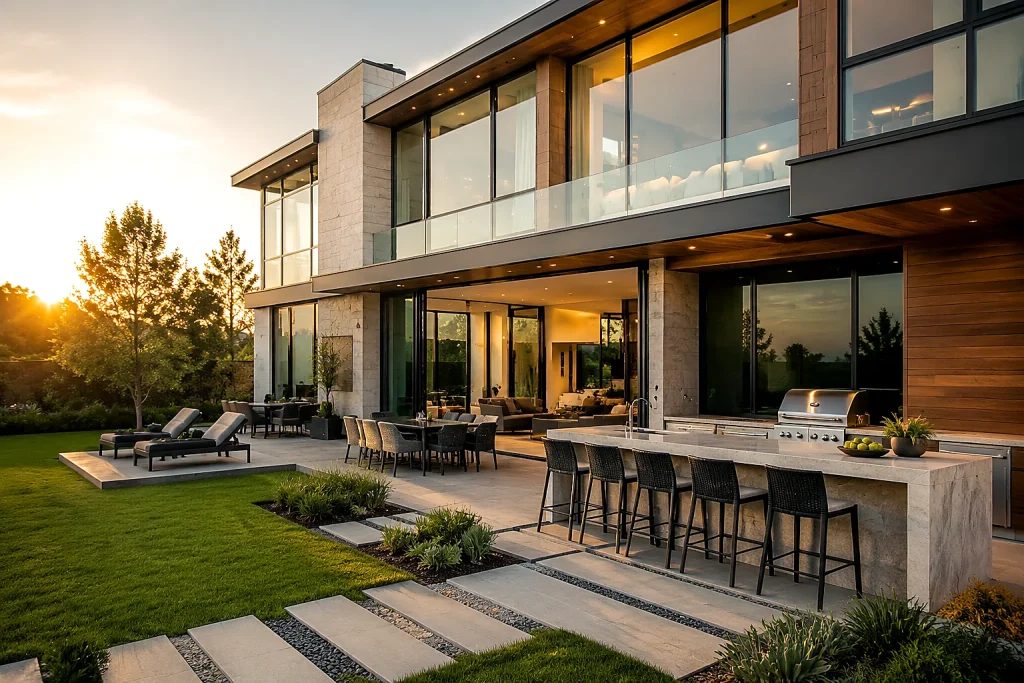
Eco-friendly design significantly reduces high energy costs in luxury home building by integrating advanced insulation, high-efficiency HVAC systems, and renewable energy sources like solar panels, leading to substantial long-term savings and enhanced comfort. For instance, a well-designed custom home in the DFW area incorporating geothermal…
TL;DR
- The foundation of an energy-efficient luxury home lies in its insulation strategy.
- Pairing a well-insulated structure with high-efficiency heating, ventilation, and air conditioning (HVAC) systems is crucial for maximizing energy savings.
- The pursuit of energy independence in luxury home building extends beyond mere cost savings; it embodies a commitment to resilience, self-sufficiency, and a reduced environmental footprint.
- The return on investment for eco-friendly features can vary, but homeowners typically see significant savings on utility bills, often recouping initial costs within 5-10 years.
Sustainable Luxury: How Eco-Friendly Design Solves High Energy Costs in Custom Homes
Eco-friendly design significantly reduces high energy costs in luxury home building by integrating advanced insulation, high-efficiency HVAC systems, and renewable energy sources like solar panels, leading to substantial long-term savings and enhanced comfort. For instance, a well-designed custom home in the DFW area incorporating geothermal heating and cooling can see energy consumption drop by 30-60% compared to a conventional build, translating to thousands of dollars in annual savings. These sustainable approaches not only minimize utility expenses but also increase property value and reduce environmental impact, aligning modern luxury with responsible resource management. By focusing on a holistic design that considers orientation, material selection, and smart home technology, homeowners can achieve a truly energy-independent and opulent living experience.
INTEGRATING ADVANCED INSULATION FOR PEAK PERFORMANCE luxury home building
The foundation of an energy-efficient luxury home lies in its insulation strategy. Beyond standard fiberglass batts, advanced insulation materials and techniques create a superior thermal envelope, drastically reducing heat transfer. For example, spray foam insulation, whether open-cell or closed-cell, expands to fill cavities and seal air leaks, offering R-values significantly higher than traditional options. A custom home in a hot climate like Arizona, utilizing closed-cell spray foam in its attic and wall cavities, can achieve an R-value of R-7 per inch, compared to R-3.5 for fiberglass, effectively preventing heat gain during scorching summers and heat loss during cooler nights. This comprehensive sealing not only lowers heating and cooling loads but also enhances indoor air quality by minimizing the infiltration of dust and allergens.
Another critical aspect is the strategic placement of insulation. Continuous insulation, applied to the exterior of wall sheathing, eliminates thermal bridging through studs, which can account for a substantial portion of heat loss or gain. This method is particularly effective in colder climates, where maintaining consistent interior temperatures is paramount. Furthermore, insulated concrete forms (ICFs) offer a robust and highly insulated wall system, combining structural integrity with exceptional thermal performance. A luxury residence built with ICFs in a region prone to extreme weather, such as the Midwest, benefits from walls that can achieve R-values upwards of R-20, providing unparalleled comfort and resilience against temperature fluctuations while simultaneously reducing the demand on HVAC systems.
HIGH-EFFICIENCY HVAC SYSTEMS AND RENEWABLE ENERGY
Pairing a well-insulated structure with high-efficiency heating, ventilation, and air conditioning (HVAC) systems is crucial for maximizing energy savings. Modern luxury homes often incorporate variable-speed heat pumps, which can precisely adjust their output to match the home’s heating or cooling needs, unlike traditional single-stage systems that operate at full capacity or off. This precise control leads to significant energy reductions and more consistent indoor temperatures. For instance, a high-efficiency, multi-zone heat pump system in a large custom home can allow different areas of the house to be maintained at distinct temperatures, preventing energy waste in unoccupied rooms and catering to individual comfort preferences.
Integrating renewable energy sources further propels a luxury home towards energy independence. Solar photovoltaic (PV) panels are a prominent example, converting sunlight directly into electricity. A typical 10-kilowatt solar array on a custom home in a sunny state like California can offset a substantial portion, if not all, of the home’s electricity consumption, especially when coupled with battery storage solutions. This not only eliminates or drastically reduces monthly electricity bills but also provides a reliable power source during grid outages. Beyond solar, geothermal heating and cooling systems, as previously mentioned, leverage the stable underground temperatures to efficiently heat and cool a home, offering an incredibly stable and low-operating-cost solution that is virtually invisible and silent.
Beyond the direct energy generation, smart home technology plays a pivotal role in optimizing energy consumption within these sophisticated systems. Integrated smart thermostats, for example, learn homeowner preferences and adjust heating and cooling schedules automatically, often integrating with external weather data to pre-condition spaces. Lighting control systems, equipped with occupancy sensors and daylight harvesting capabilities, ensure that lights are only on when and where needed, and at the appropriate brightness. A luxury home in a metropolitan area like Dallas, equipped with a comprehensive smart home system, can see its overall energy footprint reduced by an additional 10-15% through intelligent automation, translating to further savings and a reduced carbon footprint. These systems also offer unparalleled convenience, allowing homeowners to monitor and control their energy usage from anywhere, providing real-time insights into consumption patterns and enabling proactive adjustments.
The synergy between these elements—advanced insulation, high-efficiency HVAC, renewable energy, and smart home technology—creates a truly sustainable and cost-effective living environment. For instance, a custom home designed with passive solar principles, where windows are strategically placed to maximize winter sun exposure and minimize summer heat gain, can significantly reduce the need for active heating and cooling. Coupled with a robust thermal envelope and a geothermal system, such a home might achieve net-zero energy status, producing as much energy as it consumes over a year. This level of integration not only addresses high energy costs but also provides a superior indoor climate, free from drafts and temperature swings, and significantly quieter due to the advanced construction techniques and efficient mechanical systems. The long-term financial benefits, coupled with the enhanced comfort and environmental stewardship, make eco-friendly design an indispensable component of modern luxury home building.
Achieving Energy Independence in
The pursuit of energy independence in luxury home building extends beyond mere cost savings; it embodies a commitment to resilience, self-sufficiency, and a reduced environmental footprint. By meticulously planning every aspect of a home’s design and construction, from its orientation on the lot to the final selection of appliances, homeowners can significantly diminish their reliance on external energy grids. This holistic approach often begins with a detailed energy model, which simulates the home’s performance under various conditions, allowing architects and builders to identify optimal strategies for energy efficiency. For example, a luxury estate in a region prone to severe weather, such as Florida, might incorporate hurricane-resistant windows with low-emissivity coatings that block solar heat gain while providing structural integrity, simultaneously enhancing safety and reducing cooling loads. This foresight in design ensures that the home is not only beautiful but also robust and highly efficient.
Furthermore, the integration of advanced energy storage solutions, such as large-capacity battery banks, complements renewable energy systems by storing excess power generated during peak production times for use during periods of low generation or high demand. A custom home with a 20-kilowatt-hour battery storage system, paired with a solar array, can effectively power essential loads for several days during a grid outage, providing peace of mind and uninterrupted comfort. This capability is particularly appealing to luxury homeowners who value uninterrupted service and self-reliance. Moreover, the careful selection of energy-efficient appliances, certified by programs like Energy Star, further contributes to overall energy reduction. These appliances, ranging from refrigerators to washing machines, are designed to perform their functions using significantly less energy and water, aligning with the broader goals of sustainable living without compromising on performance or luxury features. As of 2024, the average Energy Star certified appliance uses 10-50% less energy than its non-certified counterparts, offering tangible savings over its lifespan.
Embracing a Sustainable Future for Your Home
Considering the long-term benefits of eco-friendly design in luxury home building is essential for any discerning homeowner. The initial investment in sustainable features often yields substantial returns, not only through reduced utility bills but also through increased property value and market appeal. Homes designed with a focus on energy efficiency and environmental responsibility are increasingly sought after, reflecting a growing awareness among buyers about the importance of sustainability. Moreover, the enhanced comfort, superior indoor air quality, and quiet operation of these homes contribute to a higher quality of life for their occupants. The decision to build green is an investment in both personal well-being and the planet’s future, demonstrating a forward-thinking approach to luxury living that prioritizes both indulgence and ecological stewardship. Engaging with architects and builders who specialize in sustainable practices ensures that every aspect of the home, from its foundational elements to its finishing touches, aligns with these high standards of efficiency and environmental care.
Bottom Line: Eco-friendly design in luxury home building effectively solves high energy costs by integrating advanced insulation, high-efficiency HVAC, renewable energy, and smart home technology, leading to substantial long-term savings, enhanced comfort, and increased property value.
Frequently Asked Questions
What is the typical return on investment for eco-friendly features in a luxury home?
The return on investment for eco-friendly features can vary, but homeowners typically see significant savings on utility bills, often recouping initial costs within 5-10 years. Additionally, these homes often command higher resale values, with studies showing a premium of 5-10% compared to conventional homes.
Do eco-friendly luxury homes compromise on aesthetics or comfort?
Absolutely not. Modern eco-friendly luxury homes are designed to integrate sustainable features seamlessly, enhancing aesthetics and comfort. Advanced materials and technologies allow for stunning architectural designs, superior indoor air quality, consistent temperatures, and quiet living environments without compromise.
How does smart home technology contribute to energy savings in a sustainable luxury home?
Smart home technology optimizes energy use by automating systems like HVAC and lighting based on occupancy, weather, and learned preferences. This intelligent control minimizes waste, ensuring energy is only consumed when and where it’s needed, leading to an additional 10-15% reduction in overall energy footprint.