
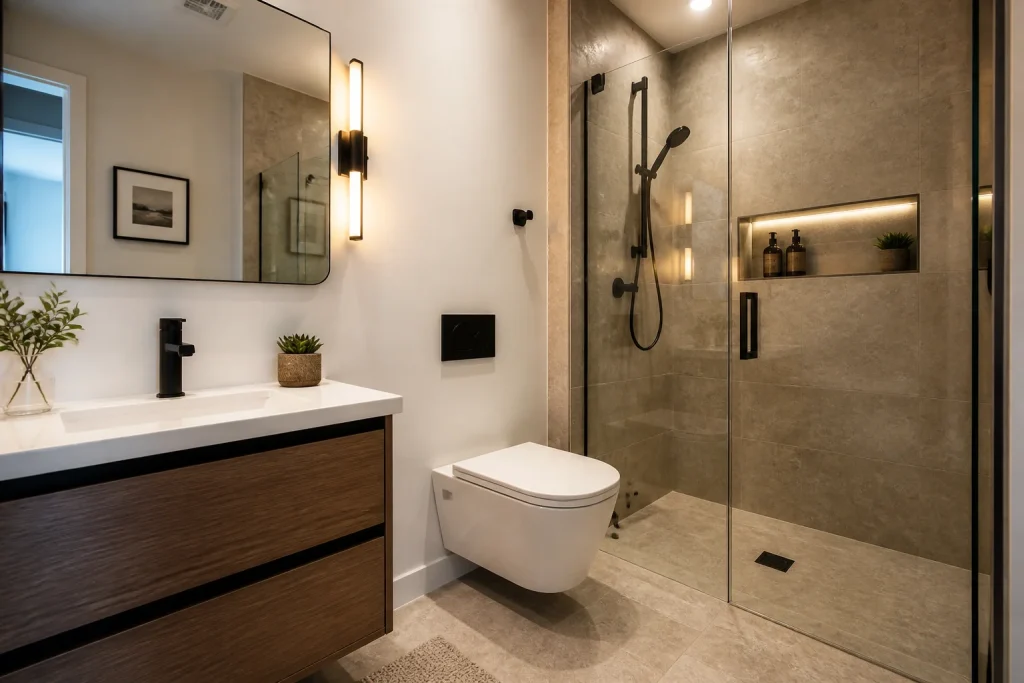
For homeowners like Sarah in Plano, Texas, looking to maximize their property's appeal without overspending, the most impactful best upgrades to increase home value in a small bathroom involve strategic updates to fixtures, lighting, and surface materials. Focusing on a few key areas such as…
- Selecting the right fixtures is paramount in a compact bathroom.
- Effective lighting can dramatically alter the perception of size in a small bathroom.
- The choice of surface materials profoundly impacts both the aesthetic and longevity of a small bathroom.
- In a small bathroom, every inch counts, making an optimized layout and clever storage solutions critical for both functionality and increasing home value.
- Replacing a traditional vanity with a modern, compact unit featuring integrated storage is highly impactful.
Best Bathroom Renovation Ideas for Small Spaces to Boost Home Value on a Budget
For homeowners like Sarah in Plano, Texas, looking to maximize their property’s appeal without overspending, the most impactful best upgrades to increase home value in a small bathroom involve strategic updates to fixtures, lighting, and surface materials. Focusing on a few key areas such as a modern vanity with integrated storage, energy-efficient LED lighting, and a walk-in shower with frameless glass can significantly enhance both aesthetics and functionality. These targeted renovations offer a strong return on investment by creating a perception of spaciousness and luxury, even in compact areas, making the home more attractive to potential buyers. According to industry surveys, minor bathroom remodels can yield an average ROI of 70-75% as of 2024, proving that thoughtful, budget-conscious changes are highly effective.
SMART FIXTURE UPGRADES FOR SMALL BATHROOMS best upgrades to increase home value
Selecting the right fixtures is paramount in a compact bathroom. For instance, a wall-mounted toilet, often called a floating toilet, frees up valuable floor space, making the room appear larger and simplifying cleaning. These units conceal the tank within the wall, offering a sleek, minimalist aesthetic that aligns with modern design trends. Similarly, a pedestal sink, while stylish, might not offer the practical storage needed in a small space. Instead, consider a compact vanity with integrated drawers or shelving. A common mistake is choosing fixtures that are disproportionately large for the room, which can make the space feel cramped and cluttered. Prioritizing functionality and scale ensures every element contributes positively to the overall design.
Beyond the primary fixtures, smaller details also make a significant difference. Opt for a single-handle faucet over a widespread model to save counter space and simplify operation. For showerheads, a multi-unction handheld unit provides flexibility and convenience, especially in a walk-in shower. When selecting hardware, such as towel bars and toilet paper holders, choose slim, wall-mounted designs that do not protrude excessively. Matte black or brushed nickel finishes are popular choices that can elevate the bathroom’s contemporary appeal without adding visual bulk. These thoughtful selections contribute to a cohesive and efficient design, maximizing both utility and style.
ILLUMINATION STRATEGIES TO ENHANCE PERCEPTION OF SPACE
Effective lighting can dramatically alter the perception of size in a small bathroom. Layered lighting is key, combining ambient, task, and accent illumination. Ambient light, typically provided by a flush-mount ceiling fixture or recessed lighting, ensures overall brightness. For task lighting, sconces or an LED strip light positioned above or beside the mirror eliminate shadows, crucial for grooming activities. Accent lighting, such as a small spotlight highlighting a decorative niche or a piece of art, adds depth and visual interest, drawing the eye around the room and preventing it from feeling like a confined box.
Natural light, when available, should be maximized. If privacy is a concern, consider frosted glass or top-down/bottom-up blinds that allow light in while maintaining seclusion. For bathrooms without windows, incorporating mirrors strategically can bounce light around, creating an illusion of greater space. A large, frameless mirror extending across an entire wall, for example, not only serves a functional purpose but also visually doubles the room. The color temperature of artificial light also matters; cooler temperatures (around 4000K) tend to make spaces feel brighter and more expansive than warmer, yellowish tones. Dimmers are also a valuable addition, allowing homeowners to adjust the mood and intensity of light according to their needs, from bright morning routines to relaxing evening soaks.
OPTIMIZING SURFACE MATERIALS FOR DURABILITY AND STYLE
The choice of surface materials profoundly impacts both the aesthetic and longevity of a small bathroom. Large format tiles for floors and shower walls minimize grout lines, creating a more seamless and expansive look. Porcelain or ceramic tiles are excellent choices due to their durability, water resistance, and wide range of styles. For countertops, quartz or solid surface materials offer a non-porous, low-maintenance option that resists stains and mildew, crucial in a high-humidity environment. Lighter colors for all surfaces, including walls and ceilings, reflect more light, contributing to an airy and open feel.
Consider the texture and finish of materials as well. A polished finish on tiles or countertops can reflect light more effectively than a matte finish, further enhancing brightness. However, for flooring, a slightly textured or matte finish might be preferable for slip resistance. When selecting paint, opt for moisture-resistant formulas with a satin or semi-gloss finish, which are easier to clean and more durable in a bathroom setting. Even small details, like the grout color, can influence the overall perception. Matching grout color to the tile color can create a monolithic look, making the space feel larger and more unified. These material choices not only contribute to the visual appeal but also ensure the bathroom remains functional and easy to maintain for years to come, adding tangible value to the home.
Thoughtful material selection extends to the often-overlooked elements like grout. While a contrasting grout can define individual tiles, a grout color that closely matches the tile creates a seamless, expansive surface, visually enlarging the room. For instance, if you’re using large format white subway tiles, opting for a light gray or white grout will make the wall appear as one continuous plane, rather than a collection of smaller units. This technique is particularly effective in shower enclosures, where uninterrupted surfaces contribute to a spa-like, luxurious feel. Furthermore, using epoxy grout, though slightly more expensive, offers superior stain resistance and durability compared to traditional cementitious grout, reducing maintenance and preserving the pristine look over time. This investment in higher-quality materials for critical surfaces ensures the bathroom remains attractive and functional, directly contributing to its long-term value and appeal to future buyers.
Beyond the primary surfaces, consider how smaller material choices impact the overall design. For example, a sleek, minimalist shower niche crafted from the same tile as the shower walls provides convenient storage without visual clutter, unlike bulky shower caddies. Similarly, selecting a vanity top with an integrated sink, rather than an undermount or vessel sink, eliminates seams and simplifies cleaning, presenting a clean, contemporary aesthetic. Even the choice of paint finish plays a role; a satin or semi-gloss finish on walls and trim not only reflects light better but also stands up to moisture and is easier to wipe clean than a flat finish. According to a 2024 industry report on home improvement trends, homeowners are increasingly prioritizing low-maintenance and durable materials, recognizing that these attributes significantly enhance a home’s marketability and perceived value. By focusing on these practical yet stylish material choices, you can create a small bathroom that feels both luxurious and effortlessly functional.
Maximizing Value: Smart Layouts and Storage Solutions
In a small bathroom, every inch counts, making an optimized layout and clever storage solutions critical for both functionality and increasing home value. Reconfiguring the layout to accommodate a walk-in shower, for example, often involves removing a bulky bathtub. This change not only modernizes the space but also creates an illusion of openness, as frameless glass enclosures allow light to pass through, preventing the visual barrier a shower curtain or opaque enclosure would create. For a typical 5×8 foot small bathroom, replacing a standard tub-shower combo with a 30×60 inch walk-in shower can free up significant visual and physical space. This strategic shift aligns with current buyer preferences, as many homeowners, particularly those in urban areas, prioritize spacious showers over bathtubs they rarely use. Industry data from 2024 indicates that homes with walk-in showers are often perceived as more modern and accessible, appealing to a broader demographic of potential buyers.
Integrated storage is another cornerstone of a high-value small bathroom. Instead of relying on freestanding cabinets that consume floor space, consider recessed medicine cabinets, built-in shelving within the shower, or a vanity with deep drawers and hidden compartments. A common mistake is underestimating the need for storage, leading to cluttered countertops that detract from the bathroom’s appeal. For instance, a vanity that extends to the ceiling can offer significantly more storage than a standard height unit, utilizing vertical space effectively. Floating shelves above the toilet can also provide practical storage for towels or decorative items without making the room feel heavy. When planning, think about how everyday items will be stored out of sight, maintaining a clean and organized appearance. As one veteran designer puts it, “In a small bathroom, every storage solution must be dual-purpose – either it hides clutter or it enhances the room’s aesthetic, ideally both.” This approach ensures that the bathroom remains tidy and functional, a key selling point for any home.
Beyond fixed elements, even the smallest details in layout and storage can make a difference. For example, installing a pocket door instead of a traditional swing door can reclaim several square feet of floor space that would otherwise be needed for door clearance. This seemingly minor change can allow for a larger vanity or more comfortable movement within the room. Similarly, utilizing vertical space with tall, narrow storage units or open shelving can provide much-needed organization without overwhelming the footprint. For instance, a slim linen tower can hold towels and toiletries, keeping them accessible yet out of the way. These thoughtful design choices demonstrate an understanding of small-space living, signaling to potential buyers that the home is well-designed and efficient. According to a recent survey of real estate agents, homes that effectively maximize space and offer smart storage solutions often command a higher perceived value, as they address common pain points for buyers in compact living environments.
Unlocking Your Bathroom’s Full Potential
Considering these strategic upgrades for your small bathroom can transform it from a mere utility space into a highlight of your home. By focusing on smart fixture choices, effective lighting, durable materials, and optimized layouts, you are not just renovating; you are investing in your property’s future. Each decision, from a wall-mounted toilet to large format tiles, contributes to a cohesive design that feels more spacious, luxurious, and modern. These targeted improvements offer a tangible return on investment, making your home more attractive and valuable in the competitive real estate market. The key is to approach the renovation with a clear vision of maximizing both aesthetics and functionality within the constraints of a small footprint, ensuring every change serves a purpose and enhances the overall appeal.
Bottom Line: Strategic, budget-conscious upgrades to fixtures, lighting, and surface materials in a small bathroom significantly boost home value by creating a perception of spaciousness and luxury, yielding an average ROI of 70-75% as of 2024.
Frequently Asked Questions
What is the most impactful upgrade for a small bathroom on a budget?
Replacing a traditional vanity with a modern, compact unit featuring integrated storage is highly impactful. This maximizes functionality and visual space, offering a strong return on investment by decluttering and modernizing the room without extensive structural changes.
How can lighting make a small bathroom feel larger?
Layered lighting, combining ambient, task, and accent lights, along with strategic use of large mirrors, can dramatically expand a small bathroom visually. Cooler temperature LED lights and maximizing natural light also contribute to an airy, open feel.
Are walk-in showers a good investment for small bathrooms?
Yes, replacing a bulky bathtub with a walk-in shower, especially with a frameless glass enclosure, is an excellent investment. It modernizes the space, creates an illusion of openness, and aligns with current buyer preferences for spacious, accessible showers.